
Why Human Conversations Still Matter in the Age of AI
AI is changing the way we work, communicate and solve problems. It can help us write faster, organise information, automate tasks and improve productivity. But there is one thing AI cannot truly replace: the human experience of conversation, connection and shared understanding.
In a world where communication is becoming more digital and transactional, the ability to sit with another person, listen deeply and build trust is becoming more valuable than ever. This matters across every sector, but especially across care, where relationships sit at the centre of everything we do.
Failure Is Part of Growth
Failure is often seen as something to avoid, but it is one of the most important parts of learning. Every mistake teaches us something. It changes how we think, how we ask questions, how we solve problems and how we show up for others.
The phrase “seven times down, eight times up” captures this beautifully. Growth does not come from never falling. It comes from finding the courage to get back up and keep going.
For leaders, founders, advocates and care providers, this mindset is essential. Whether you are building a business, supporting families, leading a team or navigating complex systems such as NDIS, aged care or childcare, there will always be moments of uncertainty. The important thing is to keep learning, keep adapting and keep moving forward.
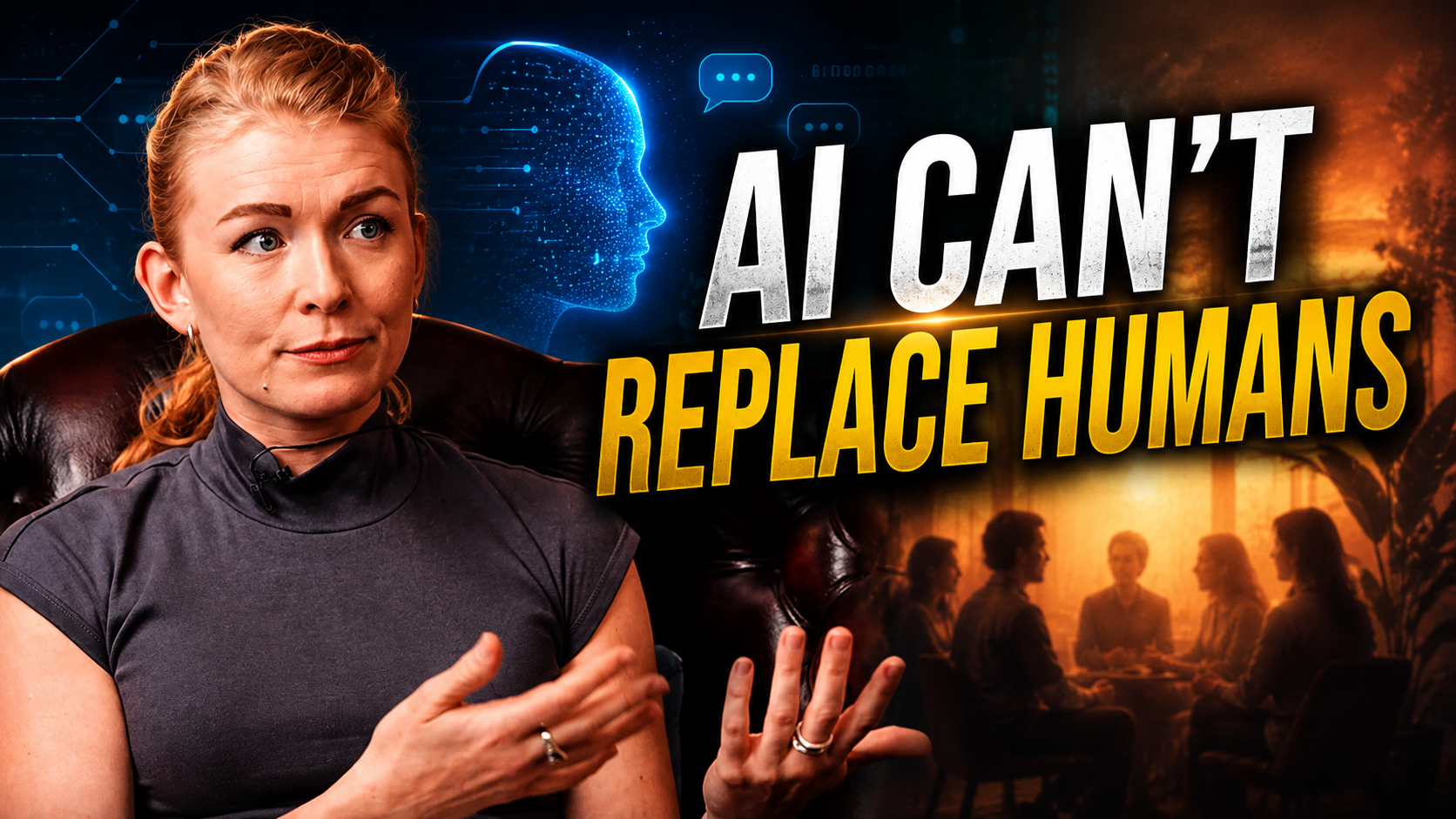
AI Can Support Communication, But It Cannot Replace Connection
AI can be a helpful tool for productivity and content creation, but it cannot hold human space in the way another person can. It cannot fully replace empathy, emotional presence or the subtle energy that comes from being in the same room with someone.
Some people are already using AI to replace companionship or meaningful conversation. That may feel convenient, but it also raises an important question: are we losing the skills that help us connect with one another?
Conversation is not just talking. It is a skill, a muscle and a craft. It requires listening, curiosity, patience and the ability to respond with care. These are not soft extras. They are core leadership skills, especially in sectors where people are vulnerable, ageing, living with disability or caring for children.
Conversations Are Cultural Infrastructure
Strong cultures are built through strong conversations. Every organisation, whether it is a care provider, community organisation, childcare centre, aged care service or NDIS business, depends on the quality of its communication.
Good culture does not happen through policies alone. It happens in the everyday conversations between leaders and teams, providers and families, workers and participants, staff and children, and communities and decision-makers.
When conversations are clear, honest and human, trust grows. When people feel heard, they are more likely to engage, contribute and collaborate. This is why relational skills are becoming more important in the age of AI, not less.
Watch the complete Podcast
Why In-Person Events Are Becoming More Important
After years of digital meetings, remote work and online communication, many people are craving real human connection again. Conferences, networking events and community gatherings are becoming more valuable because they offer something that virtual spaces often cannot provide.
There is an energy in a room that cannot be fully replicated online. The incidental conversations, the shared oxygen, the eye contact, the hallway chats and the feeling of being part of something all matter.
For the care sector, this is especially important. NDIS, aged care and childcare leaders need spaces where they can come together, share challenges, learn from each other and build relationships across the system.
The Care Sector Needs Better Conversations
The future of care will not be shaped by technology alone. It will be shaped by the quality of conversations we are willing to have.
We need conversations about workforce pressure, participant choice, aged care reform, childcare access, family support, provider sustainability, regulation, trust and human dignity. We need leaders who can listen deeply, speak honestly and bring people together around shared purpose.
AI may help with administration, reporting and communication tools, but care itself remains deeply human. The more technology advances, the more intentional we must be about protecting empathy, connection and relational leadership.
Building the Future With Courage and Connection
The next stage of leadership will require courage. Courage to try and fail. Courage to keep getting back up. Courage to have difficult conversations. Courage to build cultures where people feel seen, heard and valued.
Across the care sector, these conversations are not optional. They are the foundation for better services, stronger organisations and more human-centred systems.
Join Us at the National Care Sectors Conference
To continue this important conversation, we invite you to attend the National Care Sectors Conference: NDIS, Aged Care & Childcare on 28 August 2026.
Join us for a moving and inspiring event that brings together leaders, providers, advocates, policymakers and changemakers from across the care sector. Together, we will explore the future of care, the role of human connection, the impact of AI, and how we can build stronger, kinder and more responsive systems for the people and communities we serve.