
Supporting Aboriginal Leadership Without Replacing It
Strong leadership in Aboriginal community-controlled organisations begins with a clear principle: Aboriginal leadership must be supported, respected and upheld, not replaced.
For non-Aboriginal leaders working within Aboriginal organisations, this responsibility requires humility, deep listening and a commitment to ensuring that community voices remain at the centre of every decision.
The role is not to speak on behalf of Aboriginal people. It is to create the conditions in which Aboriginal leadership can thrive, influence systems and shape the services that directly affect Aboriginal communities.
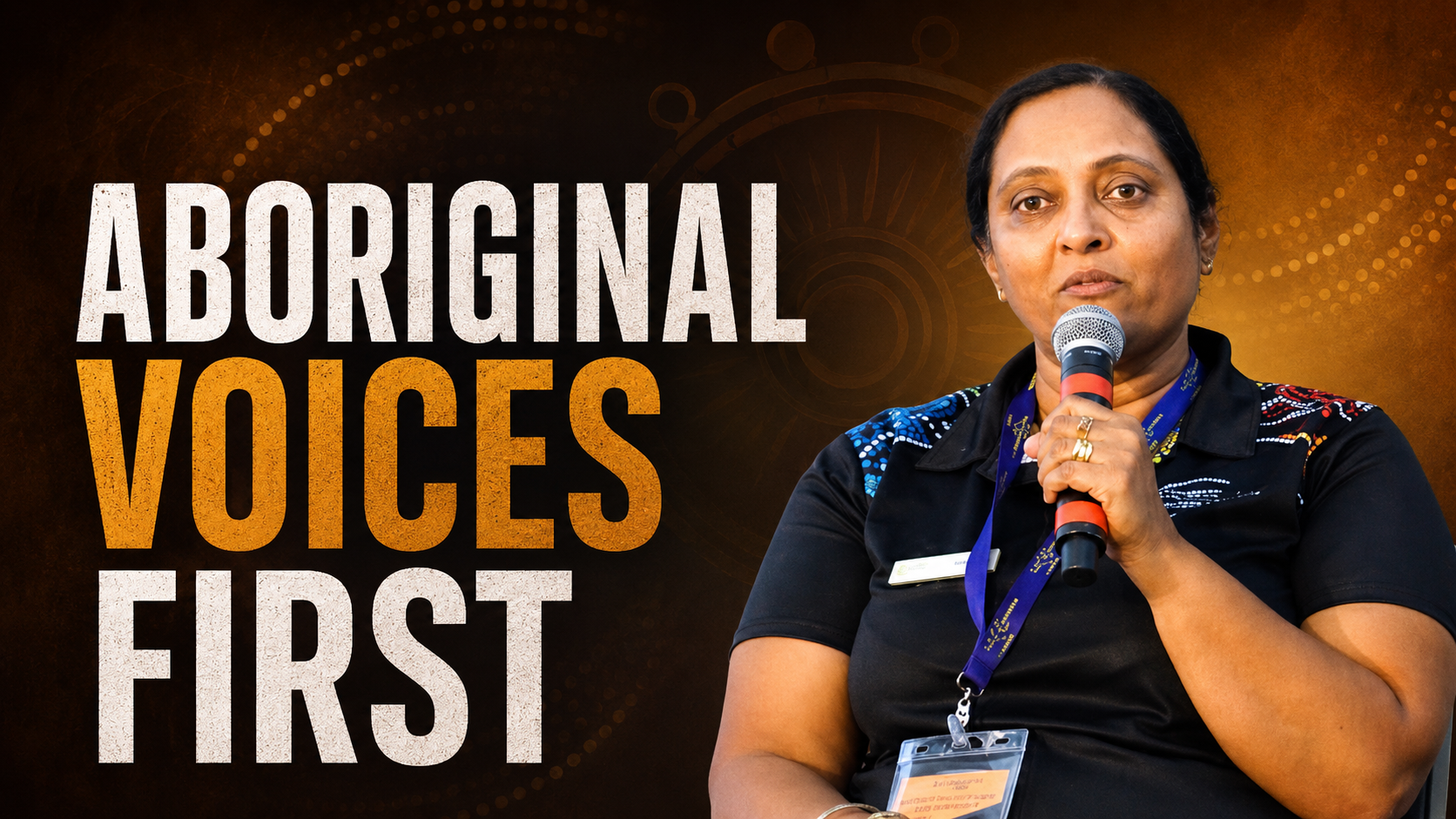
What Does Genuine Allyship Look Like?
Genuine allyship is more than public support or symbolic recognition. It requires leaders to understand where authority sits and to respect the governance structures of Aboriginal community-controlled organisations.
At Southern Aboriginal Corporation, governance sits with the Aboriginal board, while community direction informs the organisation’s work. This means leadership decisions, partnerships, resources and advocacy must align with the priorities established by the community.
For a non-Aboriginal chief executive, the responsibility is to support this structure rather than take control of it.
This involves listening carefully, creating space for Aboriginal decision-making and ensuring that organisational systems strengthen the board’s vision.
Community Direction Must Shape Service Delivery
The Family Violence Prevention Legal Service has operated since 2007, helping Aboriginal victims and survivors of violence gain better access to the justice system.
With services across Albany, Katanning, Narrogin and Bunbury, the programme brings together lawyers, community support officers and counsellors who undertake complex and sensitive work every day.
Their work demonstrates why locally informed and culturally appropriate services matter.
Aboriginal communities understand their own needs, challenges and strengths. Services are therefore more effective when they are shaped by Aboriginal leadership from the beginning, rather than being designed externally and presented to communities after key decisions have already been made.
Consultation Must Begin Before Decisions Are Made
One of the most significant problems in policy development is consultation that happens too late.
Aboriginal community-controlled organisations are sometimes asked to provide input only after governments have already decided the policy direction, funding model or programme structure.
This is not meaningful consultation.
Aboriginal organisations should be involved from the earliest stage of policy design. They should help determine priorities, funding approaches, service models and measures of success.
When consultation happens after decisions have been made, Aboriginal communities are placed in the position of responding to a system they did not help create.
A more respectful and effective approach is to share decision-making power from the beginning.
Aboriginal-Led Policy Creates Better Outcomes
Aboriginal-led policy is not simply about representation. It is about improving the quality, relevance and impact of services.
Community-controlled organisations bring cultural knowledge, local relationships and a deep understanding of the barriers faced by Aboriginal families.
When these organisations lead policy design, services are more likely to reflect the realities of the people they are intended to support.
This approach can strengthen trust, improve access and create better long-term outcomes across family violence prevention, legal support, healthcare, disability services, aged care and child and family services.
The Risk of Treating Aboriginal Identity as a Business Opportunity
A serious concern raised within the sector is the way Aboriginal identity can sometimes be used as a commercial or organisational advantage without genuine Aboriginal control.
Aboriginal people and communities must never be treated as a pathway to funding, credibility or business development.
Organisations should not use Aboriginal participation as a symbolic exercise while retaining decision-making power elsewhere.
True partnership requires transparency, accountability and a willingness to place Aboriginal leaders at the front and centre of decisions.
It also requires organisations to examine whether their structures genuinely transfer influence or simply create the appearance of inclusion.
Leadership Requires Listening and Accountability
For non-Aboriginal leaders, effective leadership is closely connected to accountability.
Leaders must be willing to listen deeply, accept guidance and recognise the limits of their own perspective.
They must also advocate within broader systems when government processes, funding structures or institutional practices fail to respect Aboriginal leadership.
This kind of leadership is not passive. It involves using influence to remove barriers, support Aboriginal-led decisions and ensure that partnerships remain aligned with community priorities.
The most important measure of success is not whether the non-Aboriginal leader is visible. It is whether Aboriginal governance is stronger, Aboriginal voices are heard and community decisions are acted upon.
Why This Conversation Matters Across the Care Sector
The principles of Aboriginal leadership and community control are especially important across Australia’s care sectors.
NDIS services, aged care, childcare, family support and health programmes all affect Aboriginal families and communities.
If these systems are developed without Aboriginal leadership, they risk repeating patterns of exclusion, poor consultation and culturally inappropriate service delivery.
Care sector reform must therefore include Aboriginal community-controlled organisations at every stage.
This includes policy design, funding decisions, workforce planning, service delivery and evaluation.
Aboriginal leadership should not be added at the end of the process. It should guide the process from the beginning.
Building Systems Based on Respect
Respectful systems are built when communities are trusted to lead.
They are strengthened when organisations recognise that lived experience, cultural knowledge and community relationships are essential forms of expertise.
For non-Aboriginal leaders, the responsibility is clear. Support the governance of Aboriginal boards. Align resources with community priorities. Create space for Aboriginal leadership. Challenge systems that consult too late. Use advocacy to strengthen, rather than overshadow, Aboriginal decision-making.
This is how allyship becomes practical, accountable and meaningful.
Join the National Care Sectors Conference
Continue this important conversation at the National Care Sectors Conference: NDIS, Aged Care & Childcare on 28 August 2026.
Join us for a moving and inspiring day of discussion, learning and collaboration focused on leadership, reform, inclusion and the future of Australia’s care sectors.
Hear from sector leaders, advocates and community voices as we explore how services can become more responsive, respectful and shaped by the people they are designed to support.
Be part of the conversation and help build care systems that place community leadership, dignity and lived experience at the centre.