
Young People, Online Safety and the Content They Never Asked to See
Online safety is no longer a side conversation for parents, schools or policymakers. It is now central to how young people grow up, form relationships, understand consent and make sense of the world around them.
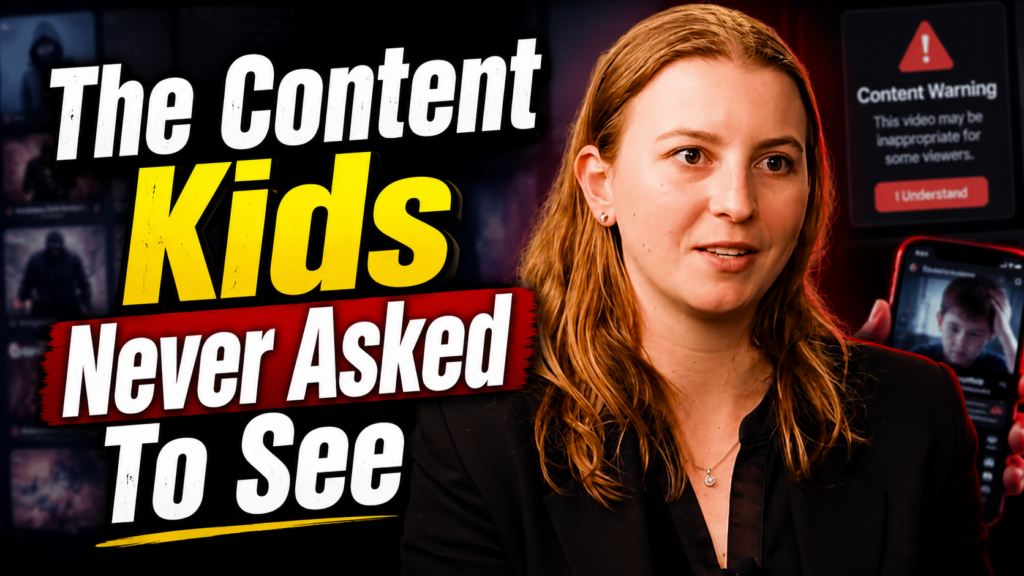
In this conversation, the focus turns to a difficult but important issue: young people being exposed to sexualised content online, often without looking for it. The point raised is simple and confronting. For many young people, their first interaction with pornographic content is not a deliberate search. It appears in their feed. It finds them.
That reality should make us pause.
Why Online Safety Is More Than a Social Media Ban
The discussion highlights an important distinction. A social media ban may deal with one part of the digital world, but it does not automatically solve every online safety issue. Young people do not necessarily need a social media account to come across harmful or sexualised content. Pornographic websites, dating apps, private messaging, search engines and algorithm-driven feeds all form part of the wider digital environment.
This is why online safety needs to be discussed as a broader system, not a single-platform problem.
If policy only focuses on social media accounts, it may miss the other ways young people are exposed to adult content, harmful behaviour and unsafe digital interactions.
“It Found Them”: The Problem of Unsolicited Content
One of the strongest points in the conversation is that many young people are not actively seeking sexualised material. Instead, it comes across their feed. They were not looking for it. It found them.
That matters because unsolicited exposure can be confusing, distressing and harmful, especially for children and teenagers who may not yet have the emotional or social tools to understand what they are seeing.
This is not only a technology issue. It is also a wellbeing issue, an education issue and a safeguarding issue.
When young people are exposed to adult content too early, it can shape how they think about relationships, bodies, intimacy, respect and consent. That is why the conversation cannot be hidden behind shame or silence.
Watch the complete Podcast
Why Open Conversations Matter
The guest makes a powerful point: one of the best ways to address this problem is through open conversation.
If these topics remain secretive, awkward or shameful, young people may be left to process them alone. That can make the harm worse. But when parents, schools and external educators create safe spaces to talk about online content, relationships, consent and digital behaviour, young people are more likely to ask questions, seek support and understand what is healthy and what is not.
This does not mean normalising harmful content. It means normalising the conversation so young people are not left isolated with what they have seen.
Silence does not protect children. Honest, age-appropriate conversation can.
The Role of Parents, Schools and Educators
Parents and carers are often the first line of support, but many feel unsure about how to approach these conversations. Schools also play an important role, yet teachers may need support, resources and clear guidance to address these topics safely.
External facilitators can help bridge that gap by creating structured, age-appropriate conversations with young people about online safety, consent, digital boundaries and the realities of the online world.
The goal is not to scare young people. The goal is to equip them.
Young people need to understand that if harmful content appears online, it is not their fault. They also need to know what to do, who to speak to and how to protect themselves in digital spaces.
Dating Apps, Age Verification and Digital Risk
The conversation also touches on dating apps and the ease with which young people can create profiles by entering a false date of birth. This raises another important issue: age verification.
If a 13-year-old can access platforms intended for older users simply by changing their birth date, then the system is not doing enough. Dating apps, social platforms and other online services need stronger protections to ensure children and young people are not entering spaces designed for adults.
This is not about removing young people from the digital world completely. It is about building safer systems around them.
Regulation Alone Is Not Enough
Government regulation has an important role to play, especially when it comes to platform responsibility, age assurance and harmful content. But regulation alone cannot solve the problem.
Families, schools, communities, technology companies and policymakers all need to be part of the response.
A safer digital environment requires better laws, stronger platform accountability, improved education and more confident conversations at home and in schools.
The issue is too complex for one solution. It requires a joined-up approach.
A Human Approach to Online Safety
At the centre of this conversation are young people. Not statistics. Not platforms. Not policies. Young people.
They are growing up in a world where the online and offline parts of life are deeply connected. They need adults who are willing to listen without judgement, guide without panic and protect without pretending these issues do not exist.
The most meaningful online safety work begins with honesty. It begins when we accept that young people are already seeing and experiencing things online that many adults may find difficult to talk about.
If we want to reduce harm, we need to speak clearly, calmly and humanly.
Final Thoughts
The digital world has changed childhood. Young people can come across content they never searched for, enter platforms not designed for them and face risks that previous generations did not have to navigate in the same way.
That is why online safety needs more than fear-based headlines. It needs practical education, thoughtful regulation and open conversations between young people and the adults who care for them.
When we bring these topics out of silence and into safe, respectful discussion, we give young people a better chance of understanding their world and protecting themselves within it.
Join Us at the National Care Sectors Conference: NDIS, Aged Care & Childcare 2026
The safety, wellbeing and development of children and young people are central to the future of Australia’s care sectors. From childcare and education to disability support, family services, safeguarding and community care, we need stronger conversations about how systems can work together to protect and support the people who rely on them.
Join us for a moving and inspiring experience at the National Care Sectors Conference: NDIS, Aged Care & Childcare 2026 on 28 August 2026.
This national conference will bring together leaders, providers, policymakers, advocates, educators and community voices to explore the future of care, safety, quality, workforce, inclusion and human-centred support.
Be part of the conversation shaping safer, stronger and more connected care systems.