
Political Distraction, Public Trust and the Manipulator’s Playbook
In modern democracy, political communication is rarely just communication. It is theatre, strategy, framing and, at times, distraction. When governments face difficult structural problems, the public is often shown a simpler story: a slogan, a campaign, a press conference, a crisis narrative or a symbolic gesture that feels reassuring on the surface.
The concern is not simply that governments communicate poorly. The deeper concern is that public emotion can be used to manufacture support for policies that may not truly serve the people. When fear, love, safety and national identity are carefully repackaged into political messaging, citizens can be persuaded to support actions they may not have accepted if the full consequences were openly discussed.
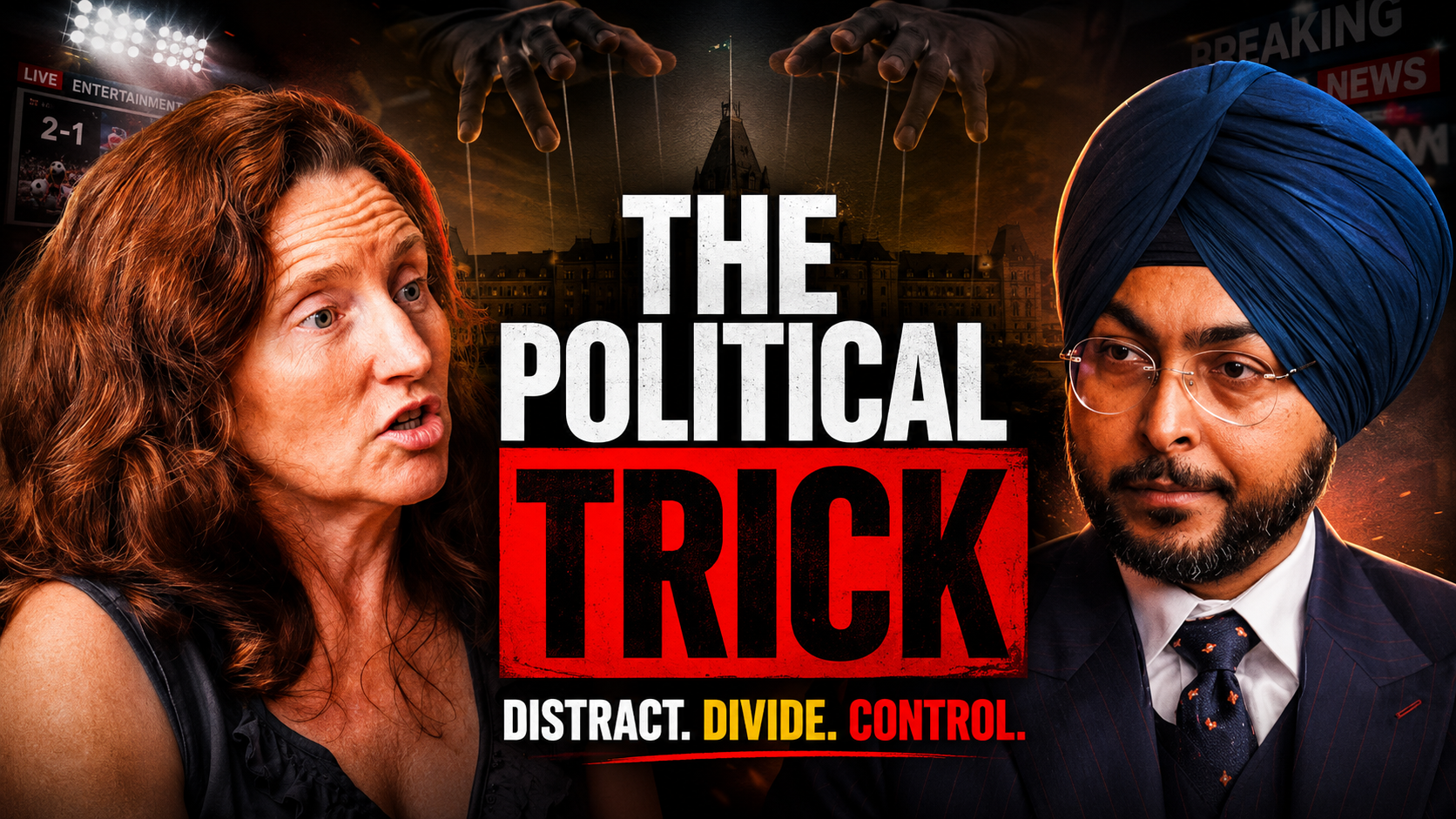
Watch the complete Podcast
The Old Colosseum Idea: When the State Puts on a Show
There is an old idea that when a ruler is doing something questionable behind the scenes, he puts on a show to distract the public. In ancient times, that might have been the Colosseum. Today, it may be sport, media spectacle, daily press conferences, culture wars or emotionally charged headlines.
The point is not that sport or public entertainment is bad. Sport can unite communities and bring joy. The issue arises when public attention is repeatedly pulled away from deeper problems: debt, crime, public service failure, weak institutions, overreach, poor policy and declining trust.
When the show becomes louder than the substance, citizens must ask: what are we not being encouraged to see?
The Playbook of the Manipulator
A powerful idea raised in this conversation is that manipulation often works by hijacking people’s most sacred desires. Our love for family, our desire to protect the vulnerable, our need for safety and our instinct to belong can all be used to build support for political decisions.
This is not always obvious at first. A message may sound compassionate. It may appear moral. It may be wrapped in the language of care, unity or responsibility. But the emotional packaging can sometimes hide the real policy impact.
During COVID, for example, many public messages were built around protecting others, staying safe and doing the right thing. These phrases were emotionally powerful. Yet, according to the discussion, some of the policies introduced during that period were deeply damaging to people, communities and the economy.
This is where political messaging becomes dangerous: when emotion replaces evidence, and authority replaces independent thinking.
When Slogans Replace Consequences
Political slogans are designed to simplify. That can be useful when communicating clearly, but it becomes a problem when slogans stop people from thinking through consequences.
Statements such as “protecting grandma”, “staying safe” or “we are all in this together” can sound noble. But citizens still need to ask hard questions. What is the cost? Who benefits? Who is harmed? What freedoms are being limited? What evidence supports this decision? What happens next?
A healthy democracy depends on citizens who do not simply accept authority at face value. It depends on people who are willing to think beyond the headline.
Symbolic Action Versus Structural Reform
Another major theme in the conversation is the gap between symbolic government action and serious structural reform.
Governments often prefer visible, easy-to-explain actions. These actions create headlines and allow leaders to appear responsive. But they may not solve the real problem.
For example, if a state is facing deep issues around debt, crime, community breakdown or economic weakness, a symbolic gesture will not be enough. Expensive bins, media announcements or carefully staged interventions may create the appearance of action, but they do not necessarily address the structural causes behind the problem.
Real reform is harder. It requires honesty, detail, long-term thinking and public accountability.
Why People Believe the Headlines
Many people grow up trusting authority. They read a government statement or a headline and assume it reflects reality. This is understandable. Most citizens are busy, under pressure and not trained to decode political messaging.
But once people begin to see how political framing works, it becomes difficult to unsee it. They begin noticing distraction techniques everywhere. They begin to see how emotional stories are used to pull attention away from broader failures. They begin to question why certain issues are amplified while others are ignored.
This does not mean becoming cynical about everything. It means becoming more awake, more careful and more responsible as a citizen.
Politics as Theatre
As Shakespeare wrote, “all the men and women are merely players.” That line feels especially relevant on the political stage.
Politics is full of performance. Leaders choose their words carefully. They stand in front of flags. They visit carefully selected locations. They highlight certain victims, certain crises and certain solutions. Every image is part of the message.
The challenge for the public is to look beyond the performance. What is the policy? What is the evidence? What is the outcome? Is this solving the problem, or simply managing perception?
Rebuilding Public Trust
Public trust cannot be restored through slogans alone. It requires transparency, accountability and the courage to deal with difficult problems honestly.
Citizens also have a role to play. We need to ask better questions, resist emotional manipulation and demand deeper conversations. Democracy weakens when people outsource their thinking to politicians, media outlets or authority figures.
A stronger democracy begins when citizens refuse to be distracted by spectacle and instead focus on truth, evidence and long-term public good.
The Need for Independent Thinking in the Digital Age
In the age of artificial intelligence, social media and instant information, the ability to think critically is more important than ever. Technology can inform us, but it can also overwhelm, divide and manipulate us. Algorithms reward emotion, outrage and speed, while democracy requires patience, nuance and reflection.
That is why conversations about leadership, public trust, digital systems, AI and cybersecurity are now deeply connected. The future will not only be shaped by technology itself, but by the quality of the people and institutions guiding it.
Join Us at the National AI & Cybersecurity Leadership Summit 2026
To continue this important conversation about leadership, trust, technology and the future of society, we invite you to attend the National AI & Cybersecurity Leadership Summit 2026 on 19 June 2026.
Join us for a moving and inspiring gathering of leaders, innovators, policymakers, cybersecurity experts, AI thinkers and changemakers. Together, we will explore how responsible leadership, ethical technology and public trust can shape a safer and more resilient future.
Be part of the conversation. Be part of the change.