Creativity, Validation and the Courage to Stay True to Your Art
In a world driven by views, likes, algorithms and constant public feedback, creativity is often pushed into a narrow box. Artists, creators, writers, speakers and performers can feel pressured to produce what the audience already wants, rather than what their creative instinct is asking them to express. But when creativity becomes only about chasing attention, something important is lost.
True creativity is not simply about popularity. It is about honesty, movement, risk and expression. It is about creating because something inside you needs to be said, shaped, written, performed or shared. When we reduce creative work to validation, we risk losing the very thing that made it meaningful in the first place.
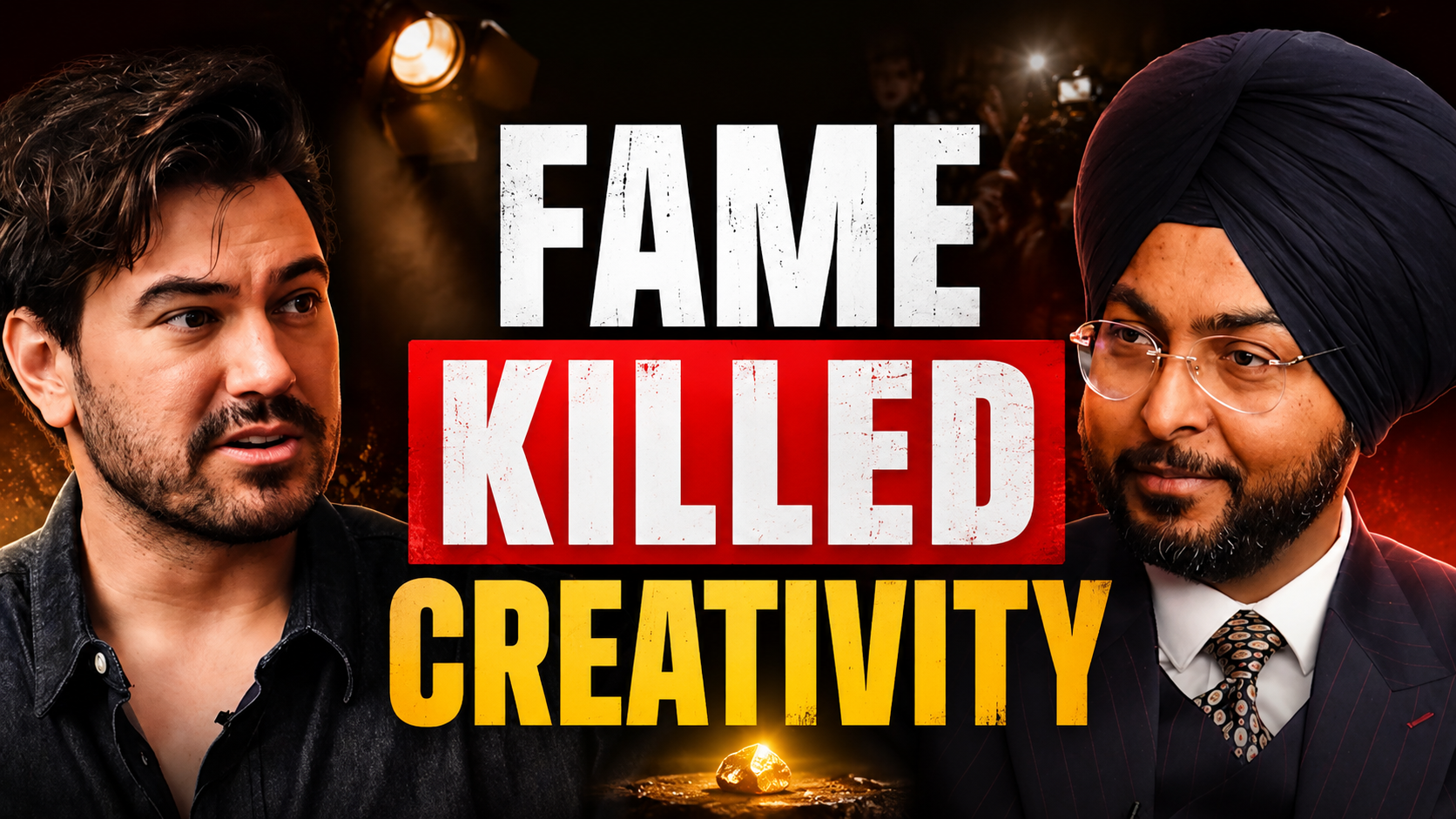
Watch the complete Podcast on YouTube
When the Audience Starts Shaping the Artist
Every creator wants their work to connect with people. That is natural. But there is a difference between serving an audience and being controlled by one.
When a creator starts changing their voice purely because a certain type of content performs better, their creative nature can become limited. The audience may want more of one style, one message or one emotional tone, but that does not always mean it is the most honest direction for the artist.
At that point, the creator may still be pleasing the audience, but they may no longer be true to themselves. Worse, they may no longer be true to their profession. Creativity then stops being about creating for the sake of creating and becomes a performance built around approval.
Creativity Cannot Be Put in a Box
The creative arts are constantly changing. They move across spaces, emotions, formats and ideas. Creativity does not belong in one fixed room. It grows, shifts, breaks rules and finds new ways to exist.
That is why trying to force creativity into a rigid formula can be damaging. Algorithms may prefer repetition. Platforms may reward what is familiar. Audiences may respond to a particular pattern. But creativity needs freedom to move.
Art is not meant to stay still. It is not meant to be reduced to a template. It is alive, and anything alive needs space to grow.
Gold Is Still Gold, Even When No One Sees It
One of the most powerful ideas from this conversation is simple: gold is still gold, even if no one is looking at it.
A piece of gold buried deep in the earth does not lose its value because it is unseen. In the same way, meaningful creative work does not become worthless just because it has not gone viral. Visibility is not the same as value.
Just because something has a spotlight on it does not make it gold. And just because something is quiet, hidden or underappreciated does not mean it lacks worth.
This is an important reminder for every creative person. Do the work because you love it. Do it because it matters. Do it because it is honest. Not every meaningful piece of work will receive applause straight away, but that does not make it any less real.
Art Versus Fame
There is nothing wrong with wanting success. There is nothing wrong with wanting recognition. But there is a difference between art and fame.
Fame is about visibility. Art is about truth.
If someone wants to chase fame, that is their choice. But it should not be confused with the deeper work of being a creative artist. Art asks for sincerity. It asks for patience. It asks for the courage to create even when no one is clapping.
The danger comes when creators begin to believe that validation is the only proof of value. That mindset can lead people away from their real voice and towards whatever gains attention fastest.
Why This Matters in the Age of AI and Digital Platforms
Today, creativity is also being shaped by artificial intelligence, automation and data-driven platforms. These tools can be useful, but they also raise important questions. Are we creating from genuine human experience, or are we simply producing what the system is likely to reward?
As AI becomes more involved in content creation, human creativity becomes even more valuable. The future will not only need faster tools. It will need deeper thinking, ethical leadership, emotional intelligence and original human expression.
This is why conversations about creativity, technology, identity and responsibility matter more than ever.
Staying True to the Work
For creators, the challenge is not to ignore the audience completely. The challenge is to listen without losing yourself.
Create with care. Share with courage. Let your work evolve. But do not allow validation to become the only reason you create. The most powerful creative work often comes from a place that is honest before it is popular.
Gold remains gold, even underground. And real creativity remains valuable, even before the world notices it.
Join Us at the National AI & Cybersecurity Leadership Summit 2026
As we continue to explore the future of creativity, technology, leadership and human expression, we invite you to attend the National AI & Cybersecurity Leadership Summit 2026 on 19 June 2026.
Join us for a moving and inspiring gathering of leaders, innovators, thinkers and changemakers as we discuss the future of AI, cybersecurity, digital trust and responsible leadership. This summit is an opportunity to connect, learn and be part of an important national conversation about how technology can serve people, creativity and society with purpose.
Be part of the conversation. Be part of the future.