
Freedom of Speech, Harm and the Line We Must Draw
Freedom of speech is one of the foundations of a healthy democracy. It allows people to challenge ideas, question power, express unpopular views and take part in public debate. But freedom of speech is not without limits.
The difficult question is where those limits should sit.
When speech directly incites violence, creates a clear risk of harm or targets people with serious abuse, the conversation changes. The classic example often used is shouting “fire” in a crowded theatre. The issue is not simply the words themselves, but the danger those words create.
When Speech Becomes Harm
A democratic society should protect robust debate. It should allow people to express views that others may find uncomfortable, unpopular or even offensive. If every difficult view is shut down through law, public debate becomes weaker, not stronger.
But when speech has a clear link to violence, harassment or real-world harm, it should not be treated as ordinary debate. Incitement, threats and serious abuse can move beyond expression and become a form of harm.
The challenge is to avoid overreach while still protecting people and communities from dangerous behaviour. A free society must be able to hold both ideas at once: defend open debate and recognise that some forms of speech can cause serious damage.
Why Robust Debate Still Matters
In many cases, the better answer to unpopular views is not censorship. It is more debate, stronger argument, public scrutiny and community response.
Ideas can be challenged. False claims can be exposed. Harmful views can be rejected by the public without every issue needing to become a legal offence.
This balance matters because freedom of speech protects everyone, not only those with popular opinions. A society that only protects agreeable speech does not truly protect free speech.
Watch the complete Podcast
Economic Policy Must Fit Its Time
The conversation about freedom, responsibility and reform also connects to economic policy. One important lesson from Australia’s recent history is that economic policy cannot be applied without context.
A policy that works in one decade may not work in another. Economic conditions change. Global markets shift. Technology changes the nature of work. Population growth, inflation, productivity and public expectations all shape what good policy needs to look like.
This is why long-term vision matters.
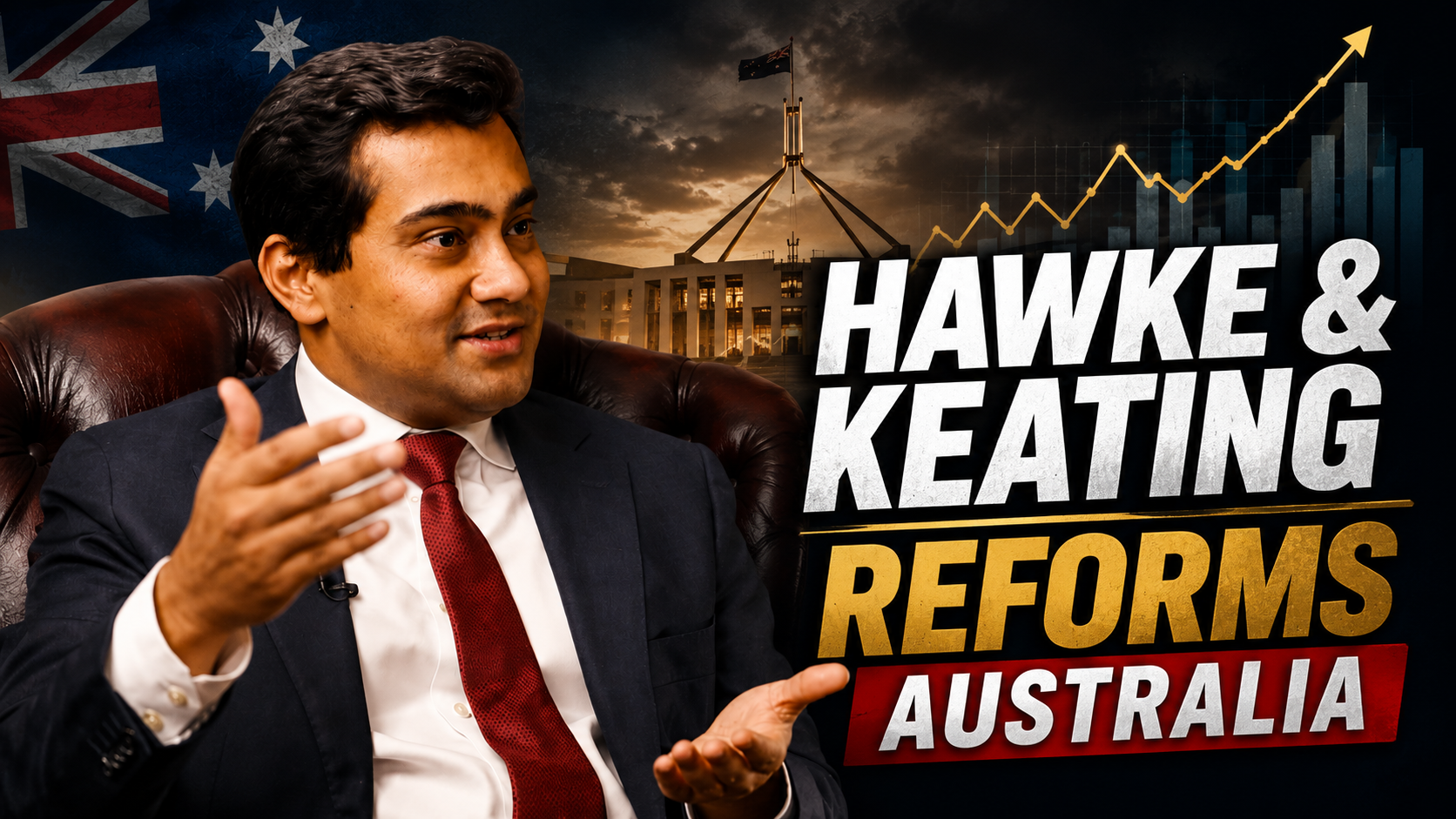
The Hawke and Keating Reform Legacy
The Hawke and Keating era is often remembered as one of the most significant periods of economic reform in modern Australian history. Their reforms opened Australia more fully to the world economy, improved competitiveness and helped shape the living standards many Australians benefit from today.
But their vision was not only about markets. It also included the idea of a social wage. Medicare, education investment and broader social protections were part of a bigger national project.
The goal was not simply to make Australia more economically efficient. It was to build a more prosperous country while ensuring working people were not left behind.
Reform Needs a Bigger National Purpose
One of the strongest lessons from that era is the importance of having a vision beyond one election cycle. Real reform often takes years, sometimes decades, to show its full effect.
Australia needs leaders who can think beyond immediate political pressure and ask bigger questions. What kind of country are we building? How do we grow the economy while protecting social cohesion? How do we support people through change without pretending change can be avoided?
Good reform is not only technical. It is cultural, social and human.
Balancing Freedom, Responsibility and Reform
Whether we are talking about speech, public safety or economic policy, the same principle applies: strong societies need balance.
Freedom matters, but so does responsibility. Debate matters, but so does safety. Economic growth matters, but so does fairness. Reform matters, but so does bringing people with us.
The challenge for Australia is not simply to copy old solutions. It is to learn from the courage, vision and ambition of past reformers while responding honestly to the problems of today.
Join the Conversation
These issues connect deeply with the future of care, community wellbeing, social policy and leadership. A fair and strong society depends on the way we protect rights, support people and design systems that work in real life.
To continue this important conversation, we invite you to attend the National Care Sectors Conference: NDIS, Aged Care & Childcare on 28 August 2026.
Join us for a moving and inspiring gathering of leaders, practitioners, policymakers and community voices as we explore the future of care, dignity, support and service delivery across Australia.