
Introduction
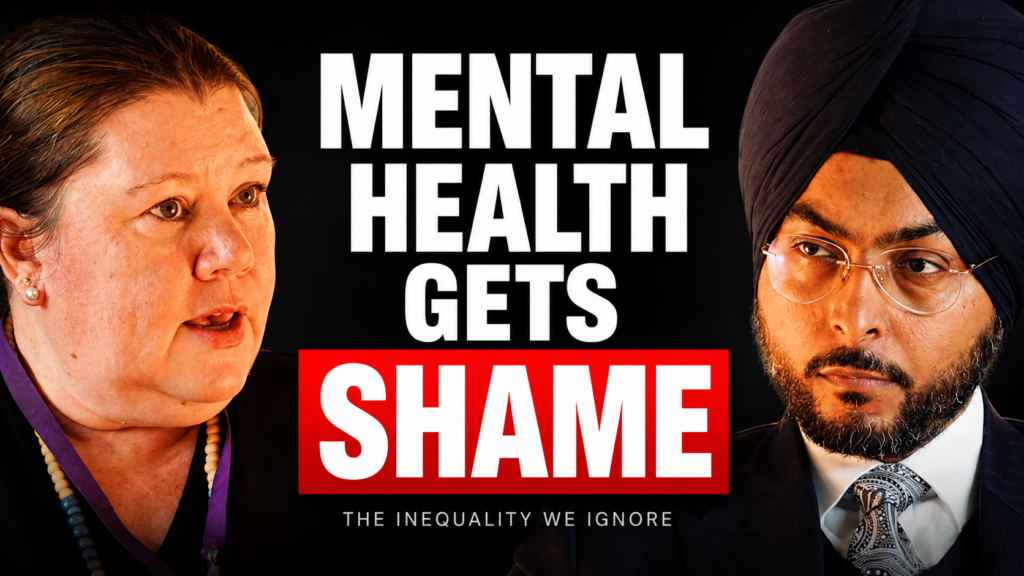
Mental health care is often spoken about as a priority, yet many people living with serious mental health challenges still face stigma, discrimination, and a lack of compassionate support. In this deeply personal reflection, the conversation highlights a powerful comparison between the care offered in a breast clinic and the care often experienced by people living with psychosis. The difference is not just medical — it is human. One setting offers wraparound care, trained staff, dignity, choice, and emotional safety. The other can leave people feeling judged, experimented on, or treated as a condition rather than a person. This raises an important question: why do we not offer the same level of respect, care coordination, and trauma-informed support to people facing mental health challenges?
What Does Compassionate Healthcare Really Look Like?
Compassionate healthcare is not only about diagnosis and treatment. It is about how a person is greeted, listened to, supported, and respected from the moment they walk through the door.
In the conversation, the speaker shares a personal experience of attending a breast clinic. Although the situation was worrying, the care felt organised, sensitive, and deeply human. Even the receptionist appeared trained in a trauma-informed way. There was a feeling of safety, respect, and understanding.
The speaker also had a preference for women to provide the medical care, and that preference was respected. That small detail matters. It shows how healthcare can support dignity and choice, especially when people are feeling vulnerable.
This experience became even more powerful when compared with the way people experiencing psychosis are often treated. It asks us to reflect on a simple truth: people facing mental health challenges deserve the same compassion as anyone facing a physical health concern.
Why Is Trauma-Informed Care So Important?
Trauma-informed care recognises that many people entering healthcare settings may already be frightened, overwhelmed, or carrying past trauma. It means staff are trained to respond with patience, sensitivity, and respect rather than judgement or force.
In the breast clinic example, the speaker felt that even the first point of contact — the receptionist — understood how to communicate with care. That kind of approach can change the whole experience for a patient.
For people living with psychosis or other serious mental health conditions, trauma-informed care is especially important. They may already be dealing with fear, confusion, stigma, or a history of being misunderstood. If the system responds coldly, it can make their distress worse.
A trauma-informed approach reminds us that treatment should never strip away a person’s humanity. It should create trust, reduce fear, and help people feel safe enough to receive care.
How Does Mental Health Stigma Affect Treatment?
Mental health stigma can deeply affect how people are treated within the healthcare system. In the conversation, the speaker compares their respectful experience in breast care with Amber’s experience of psychosis treatment. The contrast is painful.
Amber is described as being treated with discrimination and stigma. At times, she is not treated as a whole person, but almost like a human experiment. That phrase is confronting, but it captures how dehumanising mental health treatment can feel when care lacks empathy, consistency, and respect.
Stigma can lead to people being dismissed, spoken over, or reduced to their diagnosis. Instead of being asked what they need, they may be managed as a problem.
This is why language, training, and systems matter. Mental health patients are not cases to be controlled. They are people with stories, families, preferences, fears, and hopes.
Why Do We Have Advanced Cancer Care but Not the Same Support for Mental Health?
The speaker points out that treatment for conditions such as breast cancer has become highly advanced over decades. There is often structured care, specialist support, emotional understanding, and clear pathways for patients.
In contrast, mental health care can feel fragmented and impersonal. People experiencing psychosis may not receive the same level of coordinated support, even though the impact on their lives and families can be enormous.
This comparison is not about taking anything away from cancer care. Instead, it asks why the same standard of dignity and coordination cannot be applied to mental health.
If wraparound care is possible in one part of the health system, it should be possible elsewhere too. Serious mental health challenges deserve proper treatment, but they also deserve kindness, continuity, and respect.
The question is not whether mental health care matters. The question is why we still treat it as secondary.
Should Every Person With a Mental Health Challenge Have a Navigator?
One of the strongest points raised in the conversation is the idea of a navigator nurse or support navigator for every person facing a mental health challenge.
In cancer care, a navigator can help guide patients through appointments, treatment options, emotional support, and practical decisions. This can reduce fear and confusion at a time when life feels uncertain.
The speaker asks: why do we not have the same support for mental health?
For someone living with psychosis, a navigator could make a huge difference. They could help explain treatment, coordinate services, support families, and ensure the person is not lost in the system. They could also help protect dignity by making sure the patient is heard and understood.
Mental health care should not feel like a maze. A navigator could help people move through the system with more confidence, clarity, and humanity.
What Can We Learn From the Breast Clinic Experience?
The breast clinic experience shows that healthcare can be both clinically advanced and emotionally sensitive. The speaker was fortunate to learn that the cyst was benign, but the larger lesson came from the way the care was delivered.
There was structure. There was kindness. There was respect. There was a sense that the patient mattered as a person.
That is the standard mental health care should aim for too.
People experiencing psychosis, depression, trauma, anxiety, or any other mental health challenge should not be treated with suspicion or stigma. They should be met with the same level of professionalism and compassion offered in other areas of medicine.
This conversation reminds us that dignity is not an optional extra in healthcare. It is part of care itself.
Final Thoughts: Mental Health Care Must Become More Human
This moving conversation asks a question we cannot ignore: why are people with mental health challenges not always treated with the same respect, coordination, and compassion as people with physical health conditions?
The answer should push us to do better. Mental health care must be trauma-informed, person-centred, and free from stigma. People like Amber deserve to be seen not as experiments, problems, or diagnoses, but as human beings worthy of dignity, choice, and proper support.
As we continue discussing the future of healthcare, leadership, technology, and human wellbeing, these conversations matter more than ever.
Join us for a moving and inspiring conversation at the National AI & Cybersecurity Leadership Summit 2026 on 19th June 2026. This event will bring together leaders, thinkers, and changemakers to explore the future of technology, care, safety, and society.
I would love to hear your insights. How can we make mental health care more compassionate, coordinated, and human?