
Social Media Algorithms, App Timers and the Under-16 Ban: How Young People Can Avoid the Doom Scroll
Introduction
Social media can be useful, entertaining and creative, but it can also pull people into rabbit holes they never meant to enter. In this conversation, the discussion explores how platforms shape what users see, why algorithm resets can help, and why young people may need more support to build healthier online habits. Instagram’s option to reset recommendations is raised as a useful tool, especially when someone has ended up seeing too much of one type of content. But the deeper issue remains: platforms are designed to keep people scrolling. For young people, especially those under 16, the challenge is even greater because they may not yet have the fully developed skills to recognise when they are trapped in a cycle and step away.
What Is an Instagram Algorithm Reset?
An Instagram algorithm reset is a feature that allows users to refresh the type of content being recommended to them.
In the conversation, the speaker gives a simple example. If someone watches one crocheting video and suddenly their feed becomes full of crocheting content, they may eventually become tired of it. Resetting the algorithm can help them start again and move away from a feed that no longer reflects what they want to see.
This can be especially useful when someone has fallen into a rabbit hole. Social media platforms often learn from small actions, such as a search, a like or a few seconds of watch time. Before long, the platform may begin feeding similar content repeatedly.
An algorithm reset is not a perfect solution, but it can create a fresh starting point. It gives users a way to take back some control over their online experience.
Why Do Social Media Rabbit Holes Keep Coming Back?
Social media rabbit holes keep coming back because the platforms are built to keep people engaged for as long as possible.
In the conversation, the point is made that large organisations have a financial incentive to keep users on the platform. The longer someone stays, the more ads can be shown. This means the design of the platform is not always aligned with a person’s wellbeing, focus or critical thinking.
Even if a reset helps, the same pattern can return. A user watches one type of content, the platform detects interest, and similar content begins to appear again. Over time, this can create an echo chamber where a person keeps seeing similar views, topics or emotions.
That is why digital wellbeing requires more than one tool. Resetting the algorithm may help, but users also need habits that create space, pause and reflection.
How Can People Avoid the Doom Scroll Cycle?
Avoiding the doom scroll cycle requires creating space before the platform takes over your attention.
The speaker says this is tricky because people can easily become caught in the cycle. One practical way to create space is through physical distance from the device. Putting the phone away, stepping into another room or doing something offline can interrupt the automatic habit of scrolling.
The idea is to give your mind a pause. When someone is scrolling continuously, they may stop thinking critically about what they are watching. They may simply react, click, swipe and continue.
Creating space helps a person ask better questions: Do I actually want to watch this? Is this helping me? Am I stuck in an echo chamber? Should I check another source?
The goal is not to stop using social media completely. It is to use it more consciously.
Watch the complete Podcast
Why Is the Under-16 Social Media Ban Being Discussed?
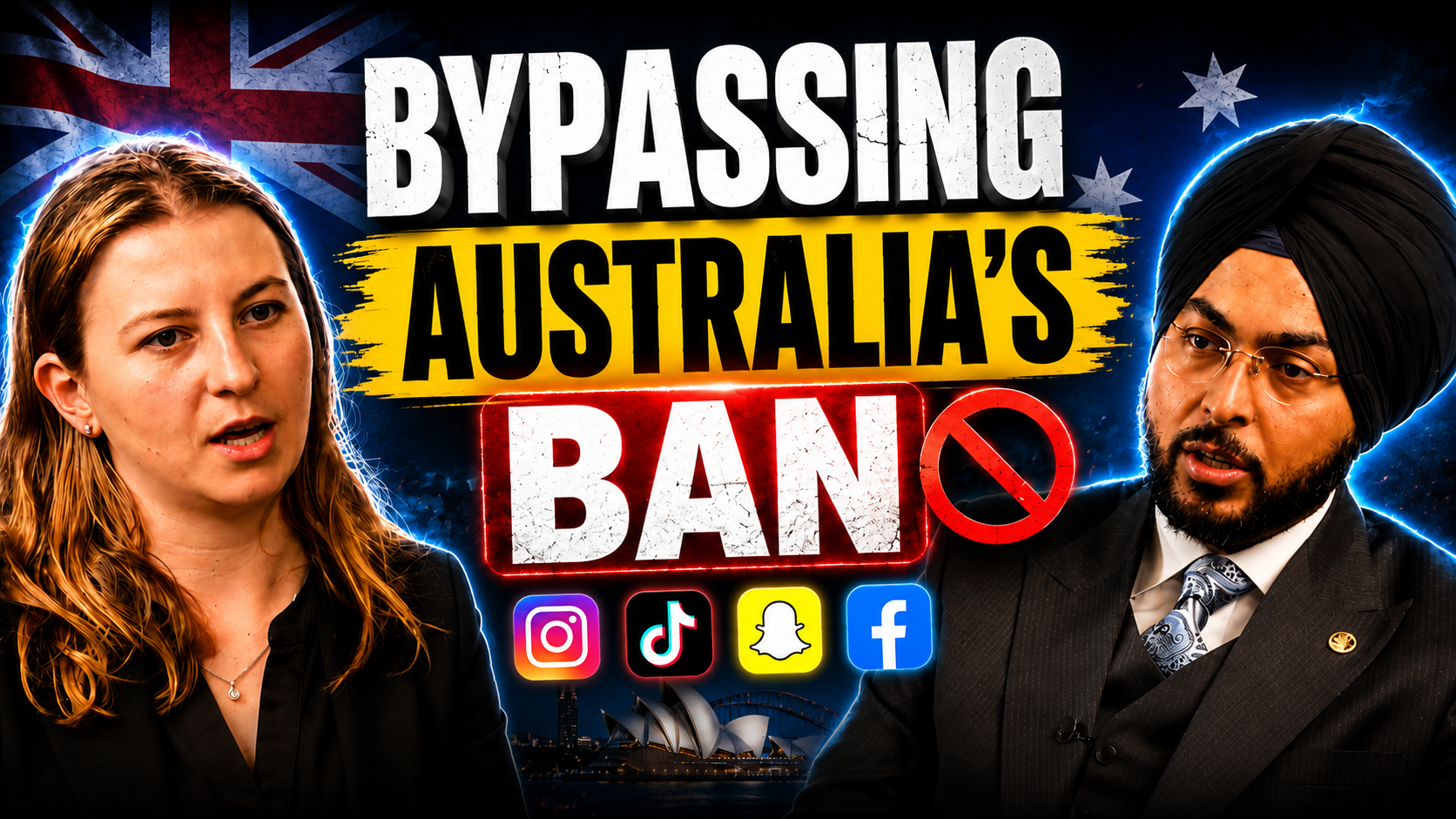
The under-16 social media ban is discussed in the conversation as a way to give young people more time to develop the skills needed to manage online platforms.
The speaker explains that young people may not yet have the fully developed prefrontal cortex needed to recognise when they are trapped in a social media cycle. They may struggle to say, “I am in this, and I want to get out of it,” or to watch something while also considering other views.
This is why the speaker sees the ban as important. The idea is that giving young people extra years before full access may help them develop better critical thinking, self-control and awareness.
The point is not just about removing apps. It is about giving young people a better chance to recognise when content needs fact-checking, when another opinion is needed, and when they should step away.
How Can App Timers Help With Social Media Use?
App timers can help by giving users a clear reminder when they have reached the limit they set for themselves.
In the conversation, the speaker explains that both Apple and Android devices allow people to set time limits for apps. For example, a person might decide to spend no more than one hour a day on social media, split into 20 minutes on TikTok, 20 minutes on Instagram and 20 minutes on Snapchat.
Once the time is used, the device can interrupt access and remind the user to stop. This does not force someone permanently off the app, because they may still choose to add more time. But it creates a pause.
That pause matters. It reminds the person of the promise they made to themselves. It is like a snooze button on an alarm. You can ignore it, but it still gives you the chance to wake up.
Why Is Critical Thinking Important Online?
Critical thinking is important online because social media feeds can shape what people believe, feel and pay attention to.
In the conversation, the concern is not only about screen time. It is also about echo chambers. A person might keep seeing the same kind of content and begin to believe that it represents the whole picture.
Critical thinking helps users ask whether they are being fed one perspective too often. It encourages them to check other sources, listen to different viewpoints and avoid accepting everything at face value.
This is especially important for young people. If they are watching content about news, health, identity, politics or social issues, they need the ability to question, compare and fact-check.
Social media can expose people to useful ideas, but it can also narrow their thinking if they do not actively seek balance.
Are Gaming Platforms Included in the Social Media Ban?
In the conversation, the speaker explains that gaming platforms are included as the ban is currently written, but the government has said it intends to make exceptions for gaming platforms.
Discord is mentioned as an example of a platform that could fall within the ban as currently written. The speaker also says exceptions are expected for messaging platforms, such as Facebook Messenger and WhatsApp, as well as platforms with a mainly educational or health-related purpose.
The example of Strava is also discussed. Although it has social features such as likes, comments and photo posting, it is mainly a fitness app. Because of that, it may receive an exception if those changes are made.
This shows how complicated the issue is. Many platforms now include social features, even if social media is not their main purpose.
Could Young People Move From Social Media to Gaming and YouTube?
Yes, the conversation raises concern that young people may simply shift their time from social media to gaming platforms, YouTube, Netflix or other forms of online entertainment.
The speaker explains that if gaming platforms receive an exception, young people may leave traditional social media and move straight into gaming spaces. YouTube is also discussed. Under the ban, users may not be able to use an account to like, subscribe, comment or upload, but they may still be able to watch without logging in through a browser.
This creates an important challenge. If young people suddenly have extra time after losing access to social media, what will fill that gap?
The speaker suggests that parents, schools and local governments need to be ready. If adults are not present with better options at that critical moment, the ban may not have as much positive effect as it could.
Why Do Parents, Schools and Communities Matter?
Parents, schools and local communities matter because young people need support, not just restriction.
The conversation makes it clear that removing access to social media is only one part of the issue. If young people are left with empty time and no guidance, they may simply replace one digital habit with another.
This is where adults have an important role. Parents can help create routines and conversations around healthy technology use. Schools can teach critical thinking, media literacy and digital wellbeing. Local governments and community groups can run programmes that give young people meaningful offline activities.
The goal should be to help young people build healthier habits, not simply take something away.
A social media ban may create an opening, but what happens next depends on the support systems around young people.
Final Thoughts
This conversation reminds us that social media is not just a personal habit. It is shaped by algorithms, platform incentives, attention design and the skills users have to manage what they see. Tools such as Instagram’s algorithm reset and app timers can help, but they are not enough on their own.
Young people need time, guidance and support to develop the critical thinking skills required to recognise rabbit holes, step away from doom scrolling and seek balanced information. If social media access changes, families, schools and communities must be ready to help them use that time in healthier and more meaningful ways.
Join us for a moving and inspiring conversation at the National AI & Cybersecurity Leadership Summit 2026 on 19th June 2026. The summit will bring together leaders, educators, policymakers, technologists and changemakers to explore digital safety, AI, cybersecurity, leadership and the future of young people online.
I would love to hear your insights. How can we help young people build healthier digital habits and think more critically about what they see online?