
Introduction
History is not only about dates, battles and governments. It is also about names, families, memory and respect. In this conversation, the discussion turns to the work of the Commonwealth War Graves Commission and its role in recognising the soldiers of the British Empire who served and died in the world wars. The speaker highlights an important truth: these forces were not only British, nor were they only from the white Commonwealth. India was one of the largest contributors, and the records of Indian soldiers deserve the same attention, accuracy and dignity as those of Britain, Australia, New Zealand and other countries. This conversation reminds us why historical research matters, especially when it helps families, communities and future generations reconnect with those who served.
By Dev Singh
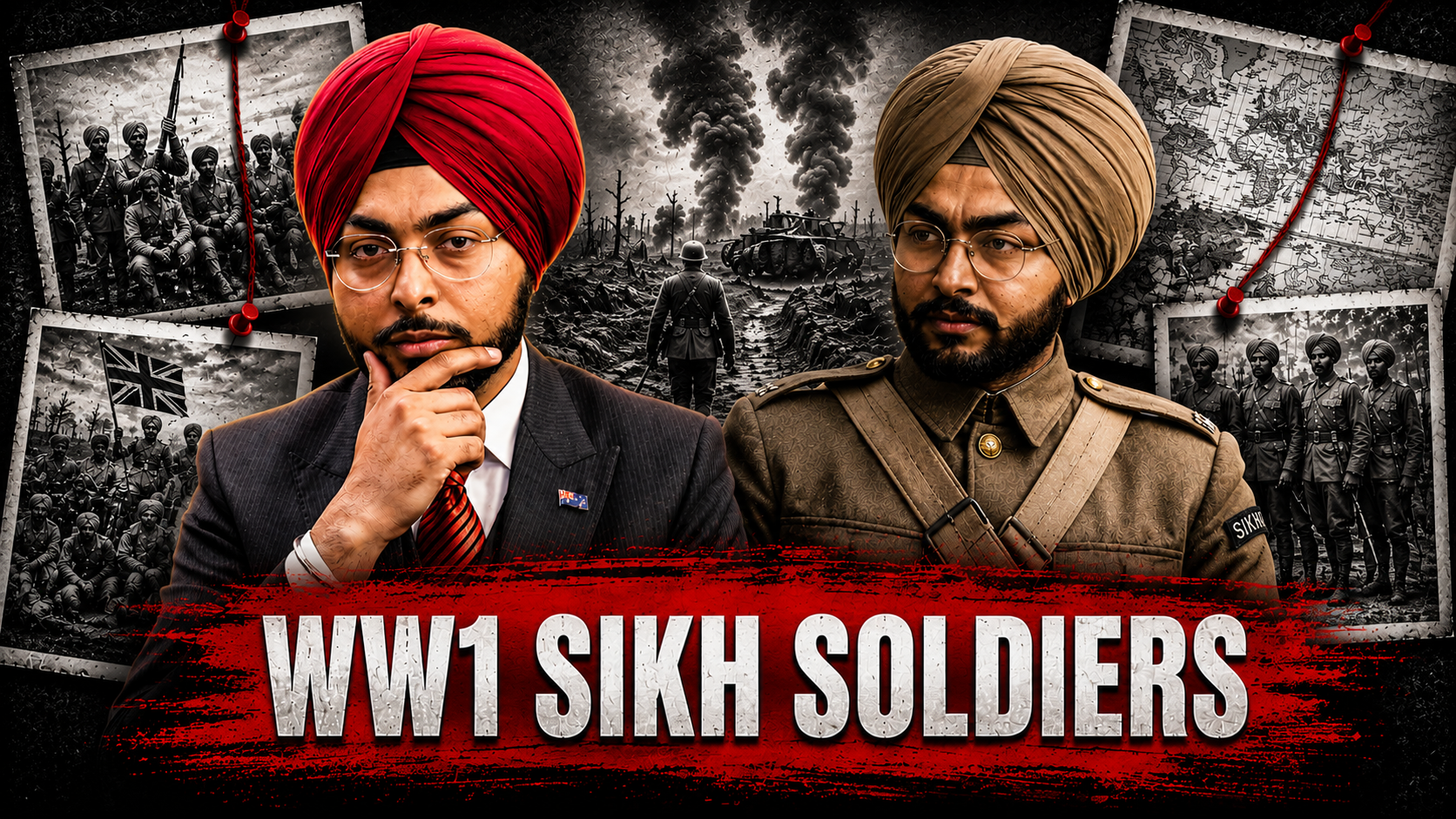
Why Is the Commonwealth War Graves Commission Important?
The Commonwealth War Graves Commission is important because it helps preserve the memory of soldiers who died during war and ensures their names, burial places and service are recorded.
In the conversation, the speaker explains that Britain is the headquarters of the Commonwealth War Graves Commission. This matters because the Commission has played a major role in maintaining records and memorials connected to Commonwealth military service.
The discussion also highlights that the work is not only about maintaining cemeteries or memorials. It is about historical justice. Records need to be accurate. Names need to be correct. Casualty numbers need to be properly understood. Families and researchers should be able to find reliable information about those who died.
When records are incomplete or unequal, memory becomes uneven. That is why the work of the Commission matters so deeply.
Why Do Indian Soldiers Need Greater Recognition in War History?
Indian soldiers need greater recognition because the British Empire forces in both world wars were not made up only of British troops or the white Commonwealth.
The speaker makes this point clearly. The forces included the Dominions, and the biggest contribution came from India. This is an important correction to how many people understand war history. Too often, the service of Indian troops has been overlooked, simplified or placed at the margins.
Recognising Indian soldiers is not about rewriting history unfairly. It is about completing the record. Their service, sacrifice and deaths were part of the larger story of the world wars.
When Indian soldiers are properly named and remembered, families gain a stronger connection to their past. Communities also gain a fuller understanding of their place in global history.
Respect begins with recognition.
Watch the complete Podcast
What Has Changed in the Commonwealth War Graves Commission’s Approach?
The speaker explains that over the last 10 to 15 years, the Commonwealth War Graves Commission has taken more seriously the fact that British Empire forces were diverse.
This has led to a more active effort to investigate records, identify casualties, check names and review whether equal respect was paid to the dead of India and other Commonwealth countries.
That effort is described as “correcting the record”. This phrase matters because history can become incomplete when some groups are remembered more clearly than others.
The Commission has supported historians, including Indian historians, to investigate military unit records and the Commission’s own records. This research helps confirm who died, where they were buried, whether the names are correct and whether the numbers are accurate.
This is patient, careful work, but it carries great human meaning.
Why Is Correcting Historical Records So Important?
Correcting historical records is important because every name represents a person, a family and a story.
In the conversation, the speaker talks about checking military unit records and memorial registers to ensure names and casualty details are accurate. This is not only an academic exercise. It is an act of respect.
When a soldier’s name is missing, misspelt or difficult to find, their memory becomes harder for descendants to claim. Correct records help families understand where their ancestors served, where they died and how they were remembered.
This work also helps address unequal treatment in historical memory. The speaker raises the question of whether the dead of India received the same respect as those from Britain, Australia and New Zealand.
That question is deeply important. Remembrance should not depend on race, empire, geography or political power. It should honour all who served and died.
How Can Families and Researchers Access These War Records Today?
The conversation explains that families and researchers can now access many details through the Commonwealth War Graves Commission website.
The speaker notes that Indian researchers and Indian families can go online and find details that were once harder to locate. The information may have existed before, but access has become easier because grave registers and memorial registers are now available on the internet.
This is significant for younger researchers, students, families and writers. It opens the door for more people to explore military history and tell stories that may have been forgotten or overlooked.
The host also expresses interest in identifying young boys and girls who want to write stories and begin research at a younger age. This is a powerful idea. When young people engage with history early, they can help carry memory forward.
Accessible records turn remembrance into something living and shared.
Why Was Gallipoli Important in This Discussion?
Gallipoli appears in the conversation as one of the campaigns where Indian troops served and died.
The speaker explains that in their book, they made sure to include the names of all Indian troops who died either on Gallipoli or as a result of the Gallipoli campaign. This shows a clear commitment to naming people, not just describing events.
Campaign histories can sometimes focus on strategy, leadership and national narratives. But including names brings the human cost back into view.
For Indian soldiers, being named in connection with Gallipoli helps restore visibility to a part of the campaign that may not always receive enough attention.
This kind of research helps broaden public memory. It reminds readers that major campaigns were shaped by many peoples, many backgrounds and many sacrifices.
Are There Similar Government-Funded Research Projects in Australia?
According to the speaker, there do not appear to be many similar projects in Australia.
The reason given is that Australia may not have the same critical mass of military historians interested in this particular work, or communities large and influential enough to support it. The speaker contrasts this with Britain, where the Commonwealth War Graves Commission is headquartered and where more support exists for this kind of research.
This point is important because historical projects often need funding, expertise and community interest. Without those conditions, important work may not happen at the scale it deserves.
However, the conversation also suggests opportunity. If young researchers, writers, communities and academics become more engaged, new work may emerge.
History needs people willing to ask questions, search records and tell stories that have not been fully told.
What Does Equal Respect for the War Dead Mean?
Equal respect means that every soldier who died should be remembered with the same dignity, regardless of nationality, race or background.
The speaker raises the question of whether equal respect was paid to the dead of India as it was to those from Britain, Australia, New Zealand and other Commonwealth countries. This is a powerful moral question.
War remembrance should not create a hierarchy of sacrifice. If soldiers served under the same broad imperial forces and died in the same wars, their names and resting places deserve equal care.
Equal respect includes accurate records, accessible registers, proper burial details and public recognition. It also means telling the wider story honestly.
The work being done by the Commonwealth War Graves Commission is described positively because it is helping multiply that attention and respect across Commonwealth countries in Africa, Asia, India and beyond.
Final Thoughts
This conversation reminds us that remembrance is an act of responsibility. The soldiers of the British Empire were not only British, and the story of the world wars cannot be fully understood without recognising the service and sacrifice of Indian troops and other Commonwealth soldiers.
The work of the Commonwealth War Graves Commission, especially in correcting records and making information more accessible, matters because it restores names, dignity and memory. It allows families, researchers and future generations to connect with history in a more complete and respectful way.
Join us for a moving and inspiring conversation at the National AI & Cybersecurity Leadership Summit 2026 on 19th June 2026. The summit will bring together leaders, historians, researchers, innovators and changemakers to explore leadership, technology, memory, security, trust and the future of society.
I would love to hear your insights. How can we encourage more young people to research and write the untold stories of Indian soldiers and Commonwealth history?