
Finding the Middle Ground: Culture, Assimilation and Belonging in Australia
Introduction
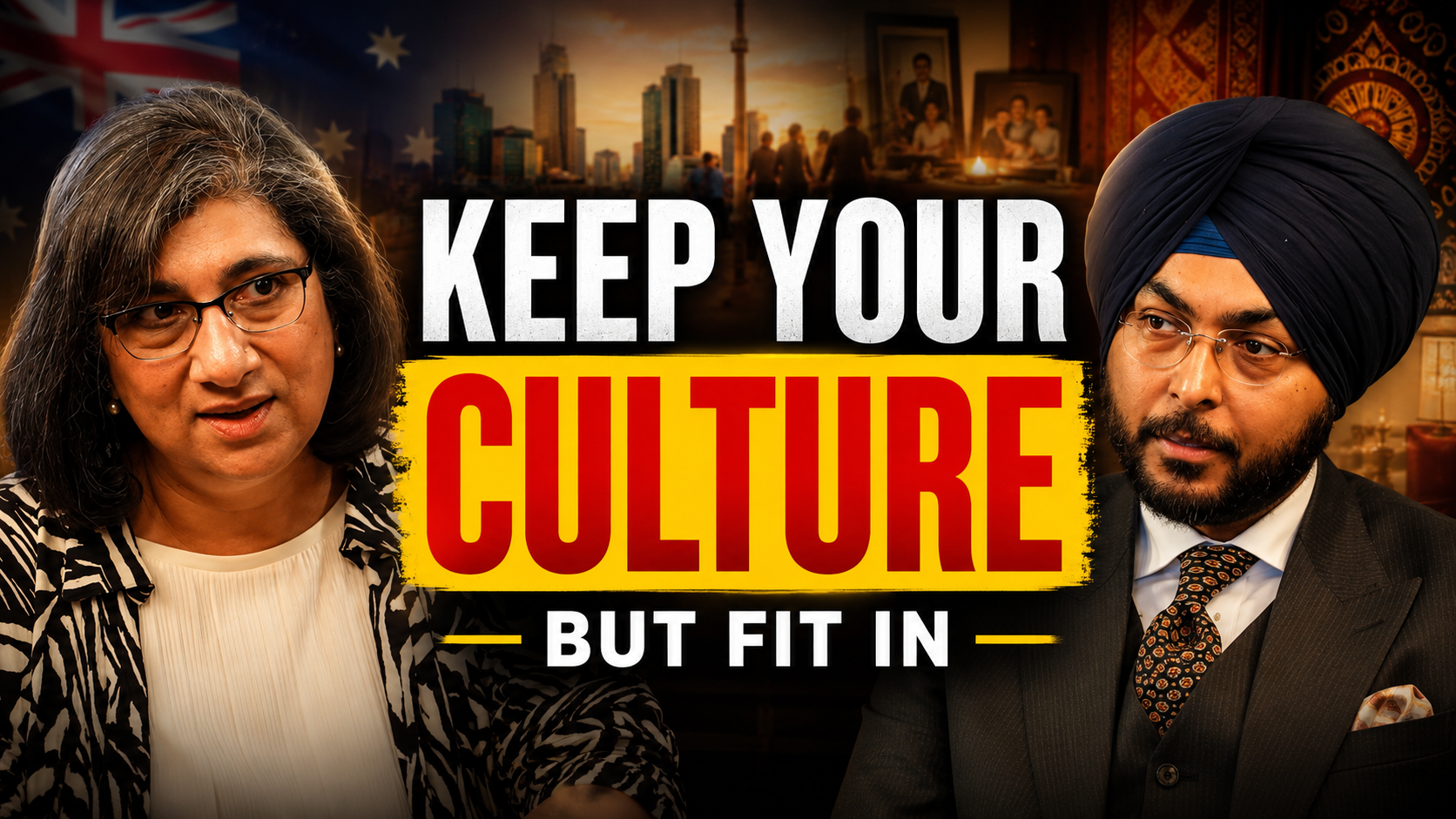
Migration is not only about moving from one country to another. It is also about learning how to belong while still holding on to who you are. In this conversation, the discussion explores what it means for migrants and foreigners to choose Australia as their home, and how they can find a healthy balance between preserving their own culture and adapting to the culture of the country they now live in. The key idea is not about giving up identity. It is about finding the middle ground. Culture can continue inside families, through language, food, values and traditions, while public life requires shared understanding, respect and acceptable behaviour. This balance is what helps people feel connected to both their heritage and their new home.
Why Is Cultural Balance Important for Migrants?
Cultural balance matters because migrants often carry deep connections to their language, traditions and family identity. Moving to a new country does not mean those things should disappear.
In the conversation, the speaker explains that it is important to retain your culture while also learning how to live within the new one. This is the middle ground. It allows people to honour where they come from while also respecting the society they have chosen to join.
For many migrants, culture is not just personal. It is connected to memory, family, faith, language, food and belonging. Letting go of everything can feel like losing part of yourself.
At the same time, living only within your old cultural framework can make it harder to connect with the wider community. True belonging comes from both remembering your roots and understanding your new environment.
What Stops Some Migrants From Assimilating?
Some migrants may struggle to assimilate because they find it difficult to balance their original culture with the culture of their new country.
The conversation raises the idea of “blinkers”, meaning the habits, assumptions or fixed ways of thinking that may stop someone from adapting. These can include language barriers, dress, behaviour in public spaces, or simply being very set in one’s ways.
This is especially true for older migrants. Grandparents who move with their children may find assimilation particularly difficult. They may not be fluent in English, may dress in ways that feel different from the wider culture, and may find public life unfamiliar.
The speaker does not describe this as right or wrong. Instead, the point is about finding the correct mix. Assimilation does not require someone to abandon their culture, but it does require openness, flexibility and a willingness to understand the society around them.
Can Migrants Keep Their Culture While Adapting to Australia?
Yes, migrants can keep their culture while adapting to Australia. The challenge is learning where and how that culture fits within family life and public life.
In the conversation, the speaker gives the example of speaking Gujarati to their grandsons. Even if it is not always working, they still value the effort because language carries culture, memory and identity.
Keeping culture alive may happen through language, stories, festivals, food, clothing, religion or family traditions. These things can continue across generations and help children understand where they come from.
However, the speaker also makes an important point: you cannot only have your own culture without understanding the new one. A person needs to participate in the country they now call home.
The goal is not cultural replacement. It is cultural balance. A migrant can be proud of their heritage and still learn how to belong in Australia.
Why Is Language So Important for Assimilation?
Language is one of the biggest factors in assimilation because it helps people communicate, work, build relationships and understand public life.
In the conversation, both speakers agree that language is critical, especially across generations. For grandparents and younger family members, language can either connect or separate people. If older migrants are not fluent in English and younger children are not comfortable in the heritage language, communication can become difficult.
Language also affects confidence outside the home. At work, in shops, at appointments or in community settings, English fluency can help migrants feel less isolated and more independent.
At the same time, heritage languages such as Gujarati can play an important role inside the family. They preserve identity and allow younger generations to stay connected to their roots.
The healthiest approach may be bilingual confidence: keeping the family language alive while also building strong English skills for public life.
What Is the Difference Between Culture at Home and Culture in Public Life?
The conversation makes a useful distinction between culture inside the household and behaviour outside the household.
Inside the home, families may choose the traditions, language, food, clothing and customs that feel right for them. This private cultural space is important. It allows families to preserve identity and raise children with a sense of heritage.
Outside the home, however, public life requires shared expectations. At work, in shops, in schools, on public transport and in civic spaces, people need to understand acceptable behaviour and the basic rules of civil society.
This does not mean people must become the same. It means there needs to be mutual respect. Public life works best when people understand how to behave with fairness, politeness and consideration for others.
A strong multicultural society allows private cultural expression while also expecting shared standards in public spaces.
Does Clothing Affect Assimilation?
Clothing can sometimes affect assimilation, not because one style is right or wrong, but because dress can influence how easily people feel they fit into a new environment.
In the conversation, the speaker says that even something as simple as a form of dress may make assimilation more difficult. The point is not to judge traditional clothing. It is about understanding context.
A person may choose to wear certain cultural dress at home, at religious events or within community gatherings, while choosing something different in workplaces or public settings. This is part of finding the right mix.
For many migrants, clothing is tied to identity and dignity. It should not be dismissed. But adapting to the expectations of different settings can help people move more comfortably through society.
Assimilation is not about shame. It is about practical awareness, cultural confidence and knowing how to navigate different spaces.
Why Is Assimilation Harder for Older Migrants?
Assimilation can be harder for older migrants because they may arrive in a new country after a lifetime of habits, language, customs and social expectations.
The speaker reflects that older people can become set in their ways. When grandparents move with their children, they may face a completely unfamiliar environment. They may not speak English fluently. They may not understand local systems. They may feel dependent on their children and disconnected from the wider community.
This can create loneliness and frustration. It can also make it harder for them to participate in public life.
Families can help by encouraging language learning, community connection and intergenerational communication. Younger family members can also play a role by showing patience and respect.
Older migrants should not be expected to adapt overnight. But small steps towards understanding the new culture can help them feel more included.
What Does Civil Society Mean in a Multicultural Country?
Civil society means having shared rules, respectful behaviour and a basic understanding of how people live together peacefully.
In a multicultural country like Australia, people come from many backgrounds. That diversity is a strength, but it also requires common ground. In the conversation, the speakers discuss the need for people to agree on basic rules, acceptable behaviour and what public life should look and sound like.
This includes how people behave at work, in shops and in public spaces. Respect, fairness, patience and awareness are all part of living well together.
Multiculturalism works best when people do not have to erase their culture, but also do not ignore the culture and expectations of the country they now live in.
Belonging is built through both freedom and responsibility.
Final Thoughts: Belonging Requires Both Roots and Adaptation
This conversation reminds us that assimilation does not mean giving up who you are. It means finding a thoughtful balance between cultural identity and participation in the wider society. Migrants can honour their language, traditions and family values while also learning the behaviours, expectations and shared rules of their new home.
The middle ground is where belonging becomes possible. It allows culture to continue without isolation, and adaptation to happen without losing identity.
Join us for a moving and inspiring conversation at the National AI & Cybersecurity Leadership Summit 2026 on 19th June 2026. The summit will bring together leaders, thinkers and changemakers to explore technology, leadership, community, identity, safety and the future of society.
I would love to hear your insights. How can migrants preserve their culture while also building a strong sense of belonging in Australia?