How Energy Systems Have Evolved: From Coal and Nuclear to Solar, Wind and the Future of Power
Energy systems have shaped modern life for decades. They power our homes, hospitals, schools, businesses, transport networks and industries. Yet the way we produce energy has not evolved evenly across all technologies.
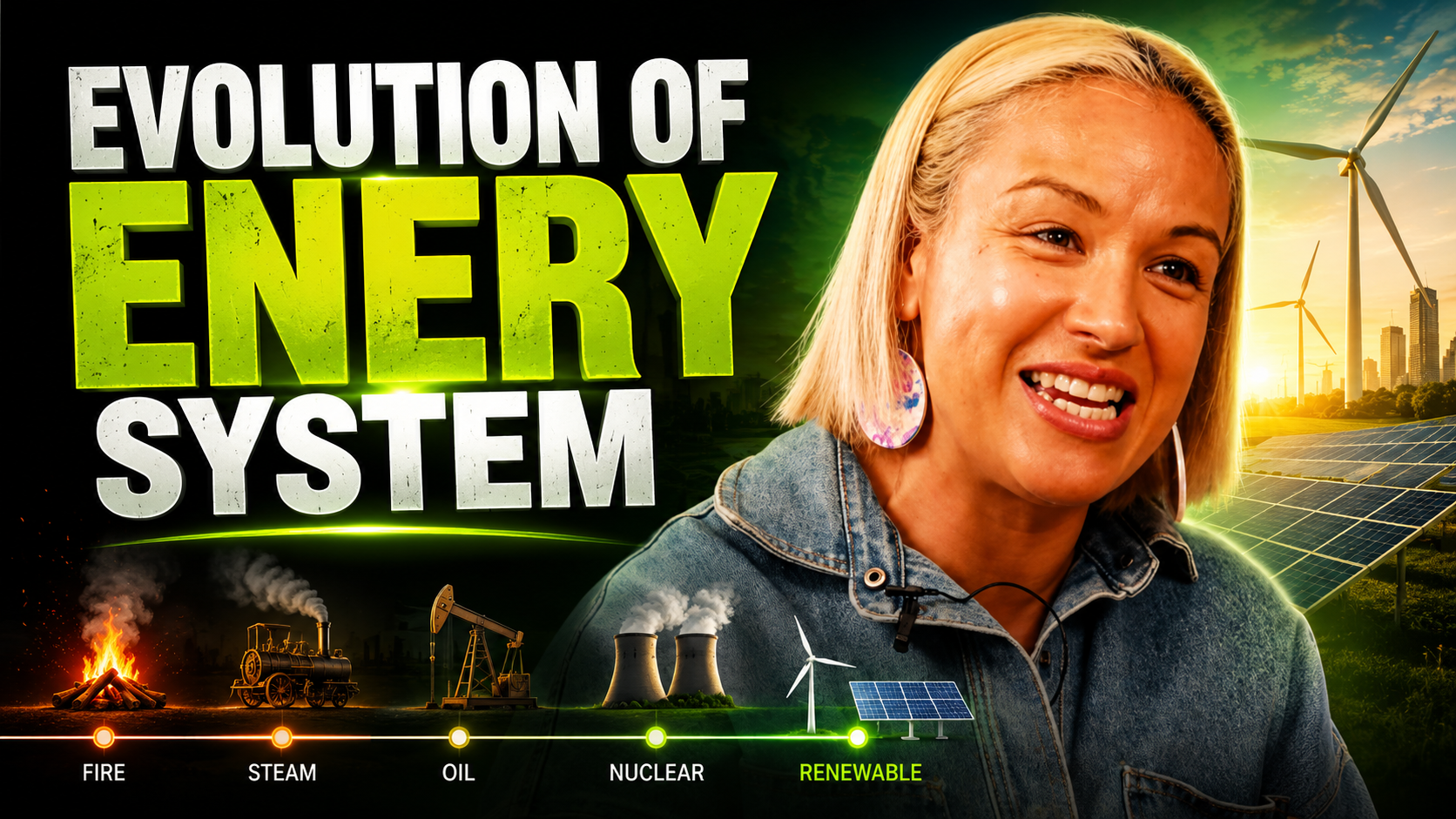
In this conversation, the discussion explores how energy systems have changed across the West, particularly since the post-war era. It looks at nuclear power, coal-fired generation, solar, wind and the wider question of how society influences the technologies we choose to develop, challenge and trust.
At the centre of the conversation is an important idea: some energy systems have been forced to evolve because of public scrutiny, safety concerns and social expectations, while others have remained largely unchanged for generations.
The Post-War Rise of Nuclear Power
After the Second World War, many countries invested heavily in large-scale nuclear power plants. Through the 1970s and 1980s, nuclear energy became a major part of the energy conversation, especially in parts of Europe and Asia.
Countries such as France and South Korea continued building nuclear reactors and developed strong nuclear industries. They treated nuclear power as a long-term part of their national energy systems.
However, events such as Chernobyl changed public confidence dramatically. In many Western countries, nuclear development slowed or stopped. The accident created fear, political resistance and deep public concern about whether nuclear power could ever be considered safe enough.
That moment shaped energy policy for decades.
How Nuclear Technology Has Changed
One of the key points raised in the conversation is that the nuclear industry has had to learn from past accidents and incidents. Because of the risks involved, modern nuclear systems have been pushed to become safer, more carefully regulated and more socially acceptable.
New nuclear designs now include passive safety measures. These systems are designed to reduce risk and improve safety without relying only on human intervention or active mechanical systems.
This matters because nuclear technology has not been allowed to stay the same. It has been challenged by governments, regulators, communities and industry experts. As a result, the sector has had to improve how reactors are designed, licensed and operated.
That evolution is significant.
Watch the complete Podcast
Coal-Fired Power and the Lack of Pressure to Evolve
The conversation also makes a strong comparison with coal-fired power plants.
Coal has been the workhorse of energy systems across the world for a very long time. In many countries, it still plays a major role in electricity generation. But unlike nuclear power, coal has not faced the same level of pressure to redesign itself from the ground up.
Coal-fired plants have remained broadly similar for generations. They have provided stable power, supported industrial development and become embedded in national economies. Yet their environmental impact has become harder to ignore.
The point raised in the conversation is that society has not always challenged traditional energy sources in the same way it has challenged nuclear. Coal was normalised for so long that its risks and impacts were often treated as part of the cost of progress.
That is now changing, but slowly.
Solar and Wind: Growth, Efficiency and Manufacturing Challenges
Solar and wind power have grown rapidly in recent years. Their efficiency has improved, their costs have fallen, and they are now central to many clean energy strategies.
But the conversation also highlights a practical challenge: the systems may be improving, but how they are produced has not necessarily become simple or fully localised.
Many solar panels and wind turbines are produced offshore, particularly in China. Domestic manufacturing remains difficult because these technologies are complex to produce at scale. A solar panel is not just a few cells attached to a roof. It requires advanced manufacturing, supply chains, materials, quality control and technical precision.
This raises important questions about energy independence, supply chain resilience and whether countries can truly control their clean energy transition if they rely heavily on offshore production.
Energy Is Not Just About Technology
Energy policy is often framed as a technical debate. Which source is cheaper? Which source is cleaner? Which source is safer? Which one can scale faster?
But this conversation reminds us that energy is also social, political and economic.
A technology can be technically strong but socially rejected. It can be efficient but difficult to manufacture locally. It can be widely used but environmentally damaging. It can be safe on paper but still lack public trust.
That is why energy systems do not evolve only because engineers improve them. They evolve because society demands something different.
Safety, Trust and Social Licence
The nuclear industry offers a useful example of how safety and social licence are connected.
Because nuclear power has faced intense public scrutiny, it has had to become more transparent, regulated and safety-focused. The industry has had to show that it can learn from past failures and design systems that meet modern expectations.
This is an important leadership lesson for every sector, not just energy.
Public trust is not automatic. It has to be earned through evidence, accountability, safety, communication and continuous improvement.
What Energy Evolution Teaches Us About Systems Change
The broader lesson from this conversation is that systems change when pressure builds.
Coal became dominant because it powered industrial growth. Nuclear slowed in many countries because public trust collapsed after major incidents. Solar and wind grew because climate concerns, policy support and technology improvements created momentum. New nuclear designs are emerging because energy demand, safety expectations and decarbonisation pressures are forcing a fresh conversation.
Energy systems are not static. They reflect the values, fears, priorities and choices of the societies that build them.
Why This Matters Beyond the Energy Sector
Although this conversation focuses on energy, the lessons apply across many sectors.
In care, health, disability support, aged care and childcare, systems also need to evolve. They need to become safer, more efficient, more trusted and more human-centred. Just like energy systems, care systems cannot rely on old models forever.
When public expectations change, systems must change with them.
Whether we are talking about electricity, hospitals, education, disability services or childcare, the question is similar: are our systems learning, adapting and improving fast enough to meet the needs of the people who rely on them?
Final Thoughts
The history of energy systems shows us that technology does not evolve in isolation. It evolves through pressure, demand, failure, innovation and public expectation.
Nuclear power has had to change because society demanded stronger safety and accountability. Coal remained dominant for decades because it was reliable and familiar, but its environmental impact is now forcing a major rethink. Solar and wind continue to grow, but they bring their own challenges around manufacturing, supply chains and system integration.
The future of energy will not be shaped by one technology alone. It will be shaped by how well we balance safety, reliability, affordability, sustainability and public trust.
Join Us at the National Care Sectors Conference: NDIS, Aged Care & Childcare 2026
Systems change is not only an energy issue. It is also one of the biggest challenges facing Australia’s care economy.
Across the NDIS, aged care, childcare, disability services, early childhood education and community support, we need systems that are safer, smarter, more connected and more human-centred.
Join us for a moving and inspiring experience at the National Care Sectors Conference: NDIS, Aged Care & Childcare 2026 on 28 August 2026.
This national conference will bring together providers, policymakers, sector leaders, advocates, innovators and community voices to explore the future of care, workforce, quality, governance, funding, inclusion and human-centred leadership.
Be part of the conversation shaping stronger, safer and more connected care systems.