
School Smartphone Rules: Why Banning Is Only the Beginning
The conversation around young people, smartphones and social media is becoming one of the most important issues in education. Schools, parents and policymakers are all trying to answer the same question: how do we protect children from the harms of technology while still preparing them to use it well?
In this discussion, the focus turns to what schools can practically do as social media restrictions and new rules continue to develop. The answer is not simply to ban everything and hope for the best. The real challenge is to guide young people step by step, with parents and schools working together.
Technology is part of their future. The question is how we introduce it in a safer, healthier and more age-appropriate way.
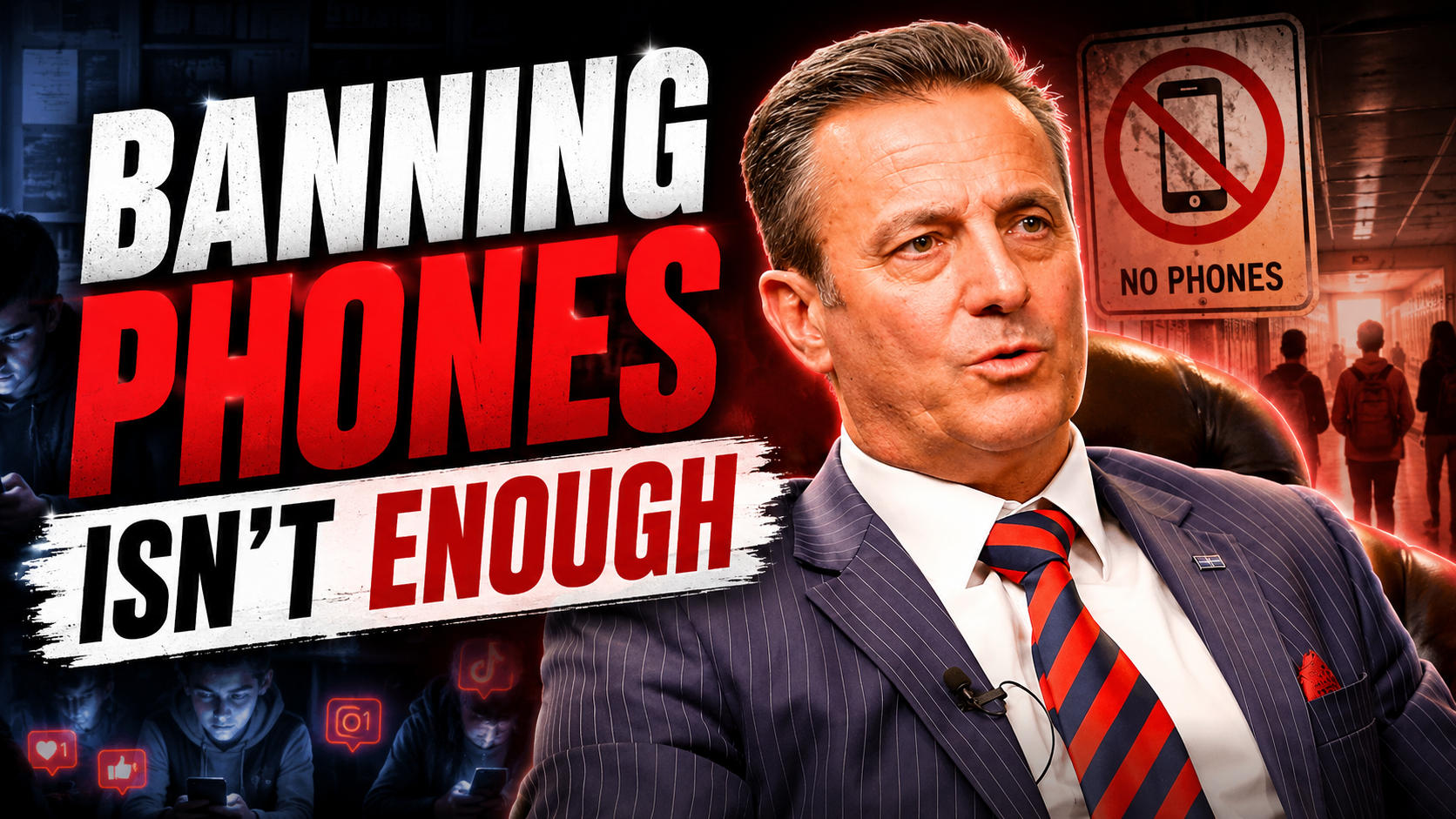
Why the Social Media Conversation Is Complex
Social media rules may sound simple from the outside, but schools know the practical reality is far more complex.
A law or policy may set the direction, but the real work happens in families, classrooms and school communities. What devices should students be allowed to bring? What apps should they access? How do schools manage communication, learning tools and online safety at the same time?
These are not small questions.
The concern is not only whether a student has a phone. It is what that phone gives them access to, how often they use it, what content reaches them, and whether they have the maturity to manage the digital world in front of them.
A Practical School Approach: Laptops for Learning, Retro Phones for Communication
One practical idea raised in the conversation is giving students from Year 8 down a laptop for school learning, while encouraging parents who choose to provide a phone to consider a retro phone.
A retro phone allows students to talk and text, but removes access to social media and many of the distractions that come with a fully connected smartphone.
This is a sensible middle ground. It recognises that some parents want their children to have a phone for safety and communication. At the same time, it reduces exposure to social media, constant notifications, apps and online pressures during the school day.
This approach does not reject technology. It separates learning technology from social media access.
Watch the complete Podcast
Why a Full Ban May Not Be Enough
One of the strongest points in the conversation is that banning smartphones until a certain age may not solve the problem by itself.
If young people are given no access, no practice and no guidance, then suddenly receive a fully loaded smart device at 16, 17 or 18, the risk does not disappear. It may simply arrive later and all at once.
That is why a staged approach makes sense.
Students need to learn how to use technology safely before they are fully immersed in it. They need support to understand privacy, digital footprints, online behaviour, content risks, communication boundaries and the emotional impact of social media.
Digital maturity does not appear overnight. It has to be taught.
The Role of Parents as Partners
Schools cannot do this work alone. Parents need to be part of the journey.
The conversation makes it clear that the school wants to work with parents over time, slowly introducing more technology and more apps as students get older and more capable.
This partnership matters because students move between school and home. A school may set clear boundaries during the day, but young people still need consistent messages at home. If schools and parents are not aligned, the child receives mixed signals.
When parents and schools work together, technology rules become easier to understand and more likely to succeed.
Teaching Digital Footprint and Safe Use
Digital safety is not only about removing access. It is about education.
Students need to understand that what they do online can last. Their comments, images, searches, posts and messages can shape how others see them. This is their digital footprint.
They also need to learn that technology can be positive. Social media can help people connect, create, learn and share ideas. Apps can support organisation, learning, creativity and communication. The problem is not technology itself. The problem is unmanaged, age-inappropriate and harmful use.
A strong digital safety approach should teach both sides: the benefits and the risks.
Finding the Right Devices for Each Stage
The conversation also points to a future where schools research different devices that can grow with students.
This is important because not every device has to be all or nothing. Some devices may allow limited apps. Others may support communication and learning without opening the full social media environment. Over time, students can be given more access as they show more maturity and understanding.
This staged model reflects how young people develop.
A Year 7 student does not need the same access as a Year 11 student. The rules should recognise age, maturity, learning needs and safety.
Why This Matters for Student Wellbeing
Phones and smart devices are not just a classroom management issue. They are a wellbeing issue.
Many schools are seeing the impact of constant connectivity on attention, sleep, anxiety, social pressure, bullying, comparison and emotional regulation. Students are not only using devices. They are being shaped by them.
That is why schools are looking for better ways to manage access, delay social media exposure and teach responsible use.
The goal is not to punish students. The goal is to protect their ability to learn, build friendships, develop confidence and grow without being overwhelmed by the digital world too early.
A Better Path Forward
The most thoughtful approach is not fear-based. It is developmental.
Give students the tools they need for learning.
Allow communication where needed.
Delay social media where possible.
Teach digital safety early.
Partner with parents.
Increase access gradually as students mature.
This kind of approach respects both realities: young people need protection, and they also need preparation.
We cannot pretend technology is not part of their future. But we can be much more careful about how we introduce it.
Final Thoughts
The debate around smartphones, social media and young people will continue. But schools are already doing the hard work of turning policy conversations into practical decisions.
A simple ban may reduce some harm, but education is what builds long-term safety. Young people need adults who can guide them, not just restrict them. They need boundaries, but they also need understanding.
The future of digital safety in schools will depend on balance. Less harmful access too early, more education at the right time, and stronger partnerships between schools and parents.
That is how we help students become not only safer online, but wiser online.
Join Us at the National Care Sectors Conference: NDIS, Aged Care & Childcare 2026
The wellbeing, safety and development of young people depend on systems that work together. Across childcare, education, disability support, family services, aged care, mental health and community care, we need stronger conversations about how to support people in a changing digital world.
Join us for a moving and inspiring experience at the National Care Sectors Conference: NDIS, Aged Care & Childcare 2026 on 28 August 2026.
This national conference will bring together providers, policymakers, sector leaders, advocates, educators and community voices to explore the future of care, workforce, quality, governance, safeguarding, inclusion, digital safety and human-centred leadership.
Be part of the conversation shaping stronger, safer and more connected care systems.