
Climate, Coal and the Global Atmosphere: Why the Energy Debate Needs More Honesty
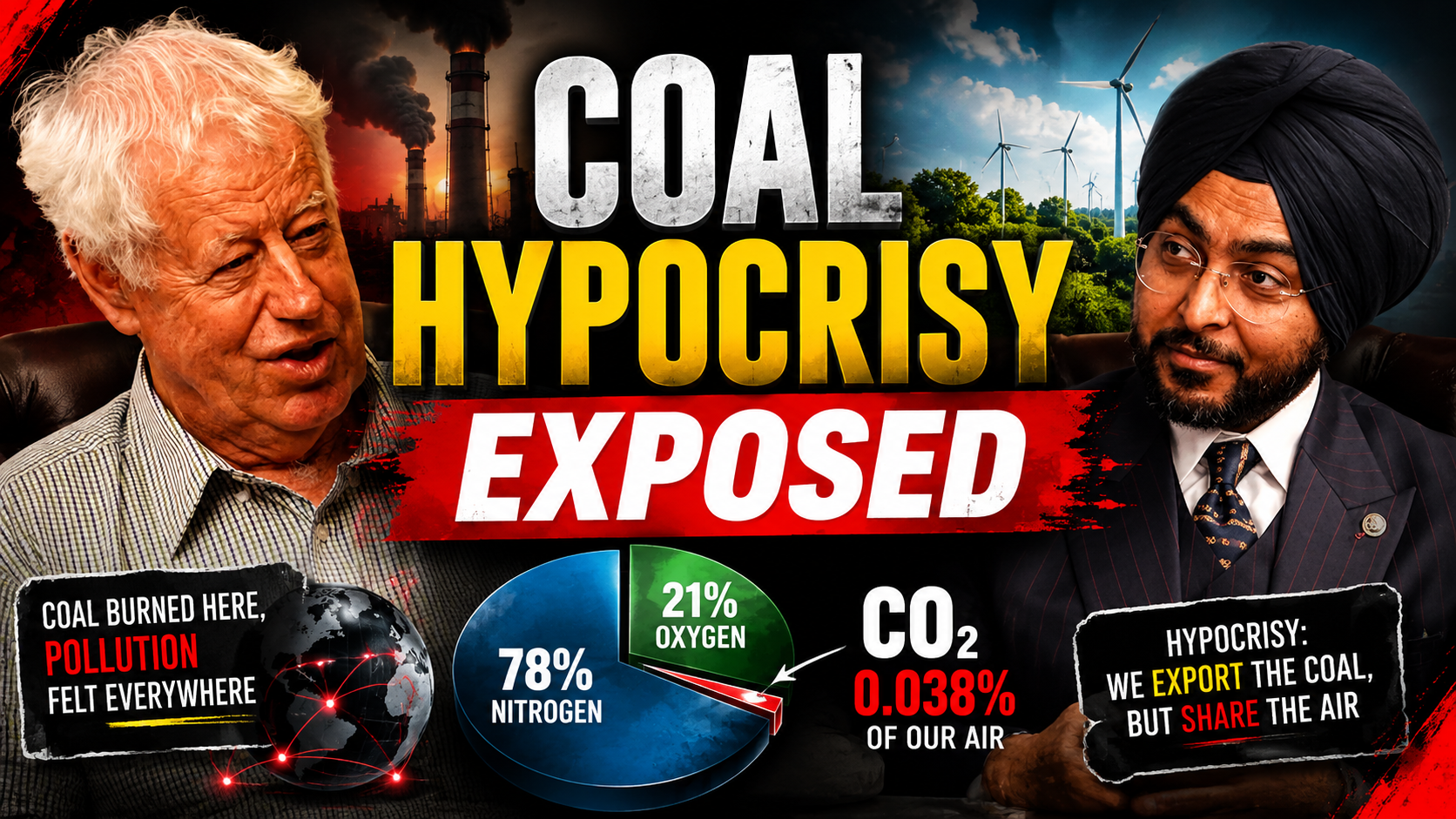
Climate change, coal, carbon dioxide and energy policy are some of the most debated topics of our time. Yet, too often, the conversation becomes emotional before it becomes practical. In a recent discussion, a powerful point was raised: while many countries claim to be moving away from coal, the reality is that coal may simply be burned somewhere else. The atmosphere does not recognise borders. If emissions are moved from one country to another, the global air system is still affected.
This raises an important question: are we genuinely reducing emissions, or are we outsourcing them?
The Atmosphere Has No Borders
One of the strongest points in the conversation was that air moves freely around the planet. What happens in one country does not stay in one country. This matters when developed nations reduce local coal use but continue importing products from countries where coal is still heavily used.
From an environmental perspective, this can create a form of climate hypocrisy. A country may appear cleaner on paper, while the emissions linked to its consumption continue elsewhere. If the aim is to protect the planet, then the focus must be on total global impact, not just domestic accounting.
Understanding the Composition of the Atmosphere
The discussion also touched on the basic composition of the atmosphere. Most of the air we breathe is made up of nitrogen and oxygen. Nitrogen accounts for around 78%, while oxygen makes up roughly 21%. Together, they form about 99% of the atmosphere.
Carbon dioxide is present in a much smaller concentration, but it plays a major role in climate science, plant growth and public debate. The conversation challenged the way CO2 is often framed only as a harmful gas, pointing out that it is also essential for plant life and is used in greenhouses to support growth.
This is where nuance matters. CO2 is not simply “good” or “bad”. It is a natural part of life on Earth, but the debate centres on how rising concentrations may affect climate systems over time.
Coal, Consumption and Global Responsibility
A key issue is whether countries are being honest about their energy transition. If one nation shuts down coal-fired power stations but imports goods produced using coal elsewhere, then the emissions have not disappeared. They have simply been shifted.
This is especially important for policy makers, businesses and voters. A serious energy conversation must look at supply chains, manufacturing, imports, exports and the real cost of transition. It is not enough to say, “We no longer burn coal here,” if the same demand is being met through coal-powered production overseas.
Why Public Debate Needs Better Questions
The climate and energy debate often becomes polarised. Some people focus only on emissions reduction, while others focus only on economic cost. But the real conversation should ask better questions:
Are emissions actually being reduced globally?
Are we measuring consumption-based emissions honestly?
Are energy policies affordable and reliable?
Are we creating cleaner systems, or just moving the problem?
Are citizens being given the full picture?
These are the kinds of questions that can lead to stronger public policy and more informed decision-making.
Moving Beyond Slogans
Energy policy cannot be reduced to slogans. The reality is complex. We need reliable energy, economic stability, environmental responsibility and honest accounting. We also need leaders who are willing to explain trade-offs clearly instead of relying on fear, blame or political theatre.
The conversation around coal and CO2 should not be about denying concerns or exaggerating them. It should be about clarity. It should be about understanding the science, the economics and the global consequences of policy choices.
Conclusion: A Call for Honest Leadership
The debate around climate, coal and carbon dioxide shows why honest leadership matters. Whether we are discussing energy, technology, security or the future of public policy, we need conversations that are informed, practical and grounded in reality.
To continue these important conversations around leadership, technology, risk and the future, we invite you to attend the National AI & Cybersecurity Leadership Summit 2026 on 19th June 2026. Join us for a moving and inspiring gathering of leaders, innovators and decision-makers as we explore the challenges shaping our world and the solutions needed for a safer, smarter future.