
Forgotten Voices: Indian Soldiers on Gallipoli and the Search for Lost Letters
Indian soldiers played a powerful but often overlooked role in the First World War. Their courage, sacrifice, and service stretched across many battlefields, including France, Belgium, Mesopotamia, East Africa, and Gallipoli. Yet, while their presence is known in military history, their personal voices are still waiting to be fully heard.
One of the most meaningful ways to understand these soldiers is through their letters home. These letters were more than military records. They carried fear, hope, longing, faith, pain, and love. They were written by men who had travelled far from their villages, families, and familiar worlds into the harsh reality of war.
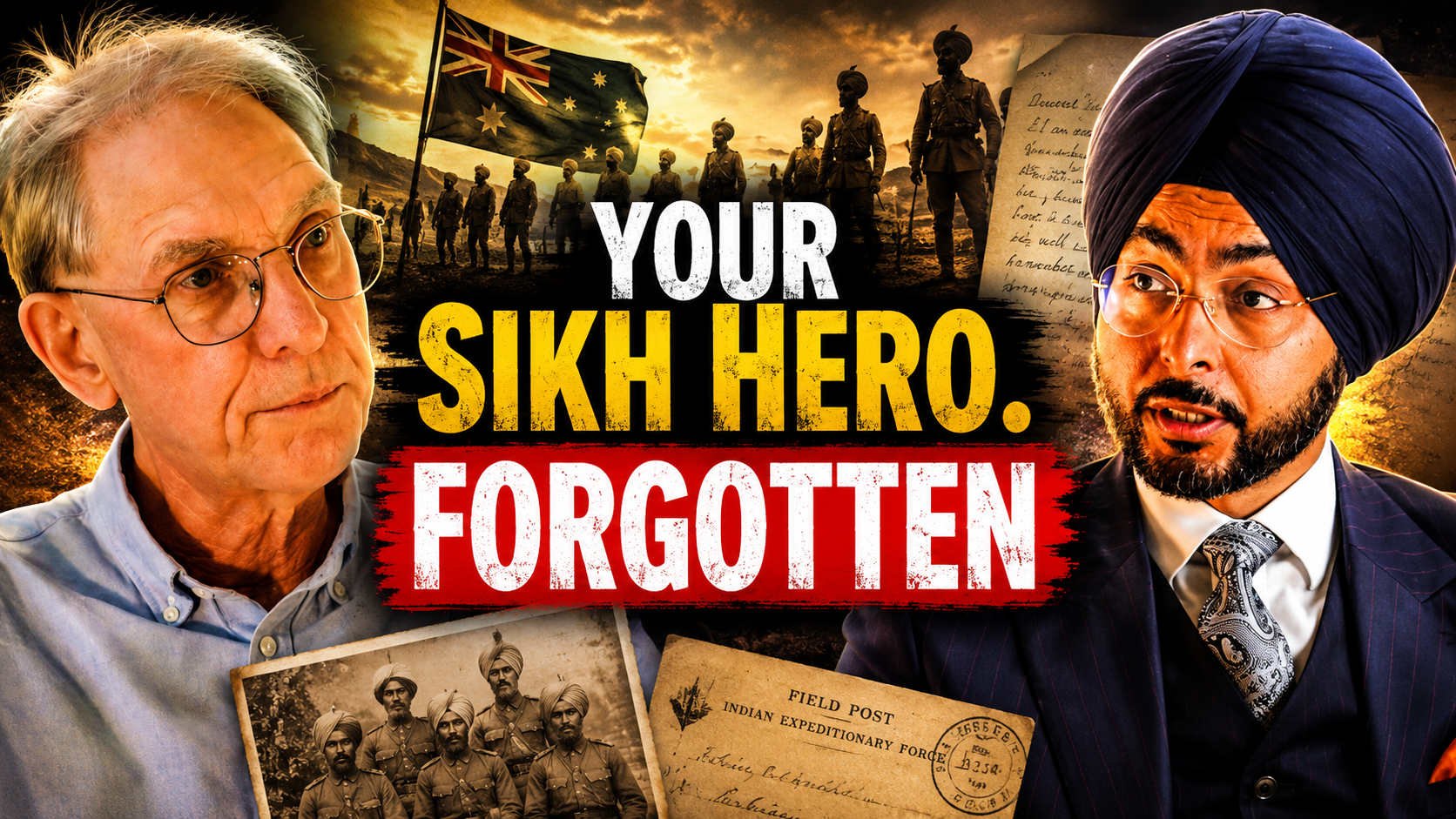
Indian Soldiers and the Gallipoli Campaign
The Gallipoli campaign is often remembered through Australian, New Zealand, British, and Turkish experiences. However, Indian soldiers were also present and active in this difficult theatre of war. Their contribution deserves far greater recognition.
Indian troops served in challenging conditions, facing unfamiliar terrain, intense fighting, disease, exhaustion, and separation from home. Many came from communities across Punjab and other parts of India, including Sikh soldiers whose families may still hold memories, documents, photographs, or letters passed down through generations.
The challenge is not that these stories never existed. The challenge is that many of them remain hidden.
The Lost Letters of Indian Soldiers
We know that Indian soldiers wrote letters from the front. Historian David Omissi’s work on Indian soldiers’ letters from the Western Front has shown how deeply personal and revealing these writings can be. In France and Belgium, military censors copied and reviewed many letters before they were sent home. Sensitive information, such as exact locations or military details, was removed, but the letters still reached families.
Gallipoli presents a different problem. There were no similar censor records for Indian soldiers’ letters from Gallipoli. This means that if these soldiers wrote home, those original letters may have gone directly to villages and families across India.
Thousands of such letters may once have existed. Some may still survive today in family papers, old suitcases, trunks, store rooms, or forgotten household collections. They may be sitting quietly in homes, inherited but unread, preserved without anyone realising their historical importance.
Watch the complete Podcast on YouTube.
Why Family Archives Matter
Family archives are often the missing link in history. Official records can tell us where a unit fought, how many men served, and what military decisions were made. But family letters tell us what soldiers felt, feared, believed, and endured.
A letter from Gallipoli could reveal:
- How Indian soldiers described the battlefield to their families
- What they missed most about home
- How they understood the war
- What they thought of their officers, comrades, and conditions
- How faith, community, and duty shaped their experience
- How families in India received news from the front
These are not small details. They are the human heart of history.
The Role of Indian Communities in Recovering History
Researchers such as Rana Chhina have worked to uncover this hidden material, especially through close relationships with Indian and Sikh communities. This kind of work requires trust, cultural understanding, language skills, and deep community rapport.
Many families may not realise that a letter, photograph, medal, diary, or military document in their possession could help reshape our understanding of the First World War. Community-led research can bring these private memories into public history with respect and care.
This is especially important because some stories can only be told properly by those connected to the communities themselves. Historians can study records, but families hold memories, emotions, and inherited knowledge that no archive can fully replace.
Why These Stories Must Be Told
The story of Indian soldiers on Gallipoli is not only a military story. It is also a story of migration, empire, identity, sacrifice, memory, and belonging.
For too long, Indian soldiers have appeared in the margins of First World War history. Their numbers are acknowledged, but their voices are often missing. Recovering their letters would allow us to hear them not as statistics, but as sons, fathers, brothers, husbands, and human beings.
Their words could help future generations understand the true global scale of the war and the extraordinary role played by soldiers from India.
A Call to Families and Communities
If your family has old letters, photographs, military papers, medals, postcards, diaries, or oral stories connected to Indian soldiers in the First World War, they may be historically significant.
These materials do not need to be perfect. Even a damaged letter, a name, a regiment, a photograph, or a half-remembered family story can open a door to the past.
The search for Indian soldiers’ letters from Gallipoli is also a search for dignity, memory, and recognition. It is about giving voice to those who served, suffered, and wrote home from the edge of history.
Conclusion: Remembering the Past, Leading the Future
The forgotten letters of Indian soldiers on Gallipoli remind us that history is not only found in official archives. Sometimes, it is hidden in family homes, waiting for someone to ask the right question.
By recovering these stories, we honour the courage of Indian soldiers and reconnect families with a powerful part of their heritage. Their voices deserve to be heard, remembered, and shared.
To continue conversations around leadership, history, technology, resilience, and the future, we invite you to attend the National AI & Cybersecurity Leadership Summit 2026 on 19th June 2026.
Join us for a moving and inspiring gathering of leaders, thinkers, and changemakers as we explore the future of AI, cybersecurity, and responsible leadership.