
Introduction
Across Australia and many other democracies, young people are increasingly feeling disconnected from politics and public institutions. Many feel that political leaders are not listening to their concerns, especially around housing, employment, climate, digital rights, privacy and personal freedom.
Recent debates around compulsory national service and social media restrictions for young people have raised important questions. Can governments inspire young people through obligation? Can social media risks be solved through bans? And how do leaders protect children and families without creating deeper distrust?
This conversation highlights a growing tension between safety, freedom, privacy and political trust.
Would Compulsory National Service Work in Australia?
The idea of compulsory national service has returned to public debate in some countries. In the United Kingdom, the Conservative Party proposed a form of compulsory national service or volunteer work for young people.
However, bringing a similar policy to Australia would likely be controversial. Many young people today are living in a very different world from previous generations. They are facing rising costs of living, housing stress, job insecurity, digital pressures and growing distrust towards major political parties.
Forcing young people into national service may not create inspiration or connection. Instead, it could deepen resentment if they feel the policy is being imposed on them without addressing the real issues affecting their lives.
True civic engagement cannot be built through pressure alone. It requires purpose, respect and trust.
Young People Need Reasons to Feel Inspired
One of the strongest points raised in the conversation is that it is up to politicians to give young people reasons to feel inspired and connected.
This is a crucial leadership lesson. Young people are not simply disengaged because they do not care. Many are deeply aware of social, economic and environmental challenges. What they often lack is faith that political systems are working for them.
If leaders want young people to participate, they must offer more than slogans. They must offer genuine pathways for involvement, meaningful consultation and policies that reflect the realities young Australians are living through.
Watch the complete Podcast on YouTube.
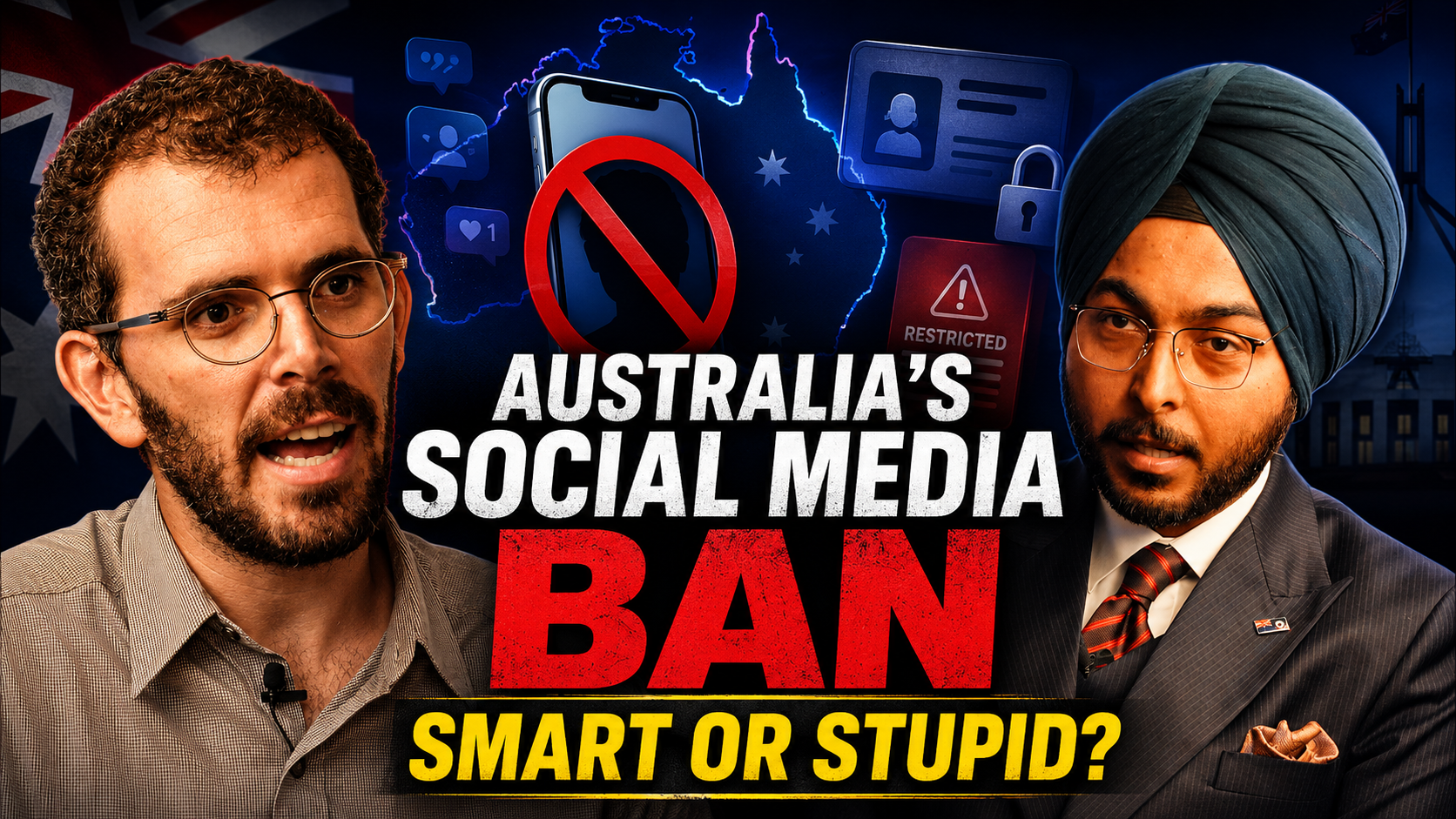
The Debate Around Social Media Bans for Under-16s
The proposed social media ban for under-16s is another example of a policy that may sound appealing at first but becomes complicated in practice.
There are real concerns around social media. Parents, educators and health professionals are right to worry about online harm, cyberbullying, exploitation, misinformation and the impact of social platforms on mental health.
However, banning social media for under-16s raises serious practical and ethical questions.
How would such a ban be enforced? Would young people simply use VPNs or other tools to bypass restrictions? Would platforms require users to provide identity documents? And what would happen to personal privacy if millions of people were forced to verify their age online?
These questions matter because digital safety cannot come at the cost of digital rights.
Digital Privacy and Identity Checks
A major concern raised in the discussion is the idea of giving personal identification to large technology companies.
Many people are already uncomfortable with how much data is collected by platforms such as TikTok, Facebook, Instagram, Google and Microsoft. Requiring users to provide official ID could create even greater concerns around surveillance, data security and misuse of personal information.
Parents may also object to sharing their children’s identity documents with private technology companies. Even if the intention is to protect young people, the process could create new risks.
In the age of artificial intelligence and cybersecurity threats, personal data is incredibly valuable. Governments and businesses must be extremely careful when designing policies that require people to hand over more sensitive information.
Why Young Voters May Push Back
The conversation also raises an important political point: young people affected by these policies today may soon become voters.
A teenager who feels unfairly restricted, ignored or distrusted by government may carry that frustration into the next election. Policies that appear to protect young people could unintentionally increase their dissatisfaction with major political parties.
This is why leadership requires more than quick solutions. It requires listening, transparency and long-term thinking.
If governments want young people to trust them, they must involve young people in the policy conversation, not simply make decisions on their behalf.
Safety Must Be Balanced With Freedom
There is no doubt that online safety is important. Children and young people deserve protection from harmful content, exploitation and abuse. Families need support, and platforms must be held accountable.
But safety policies must also be practical, fair and respectful of privacy.
A better approach may include stronger digital education, better parental tools, improved platform accountability, age-appropriate design, transparent algorithms and stronger enforcement against online abuse.
Rather than simply banning access, leaders should focus on building safer digital environments while preserving individual rights.
Leadership in the Age of AI and Cybersecurity
This debate is not only about social media. It is about the future of leadership in a digital world.
Artificial intelligence, cybersecurity, online privacy and digital identity are now central issues for governments, families, businesses and communities. Poorly designed policies can create unintended consequences. Strong leadership must balance innovation, safety, privacy and trust.
As technology becomes more powerful, leaders must ask:
- How do we protect children without overreaching?
- How do we regulate technology without damaging privacy?
- How do we build trust with young people?
- How do we create digital systems that are safe, fair and transparent?
These are some of the most important questions of our time.
Conclusion: Building Trust Through Smarter Leadership
Young people do not need to be forced into connection. They need to be heard, respected and inspired. Whether the issue is national service, social media regulation, digital identity or online safety, the future depends on leadership that understands both protection and freedom.
The challenge for governments, organisations and communities is to create policies that are practical, ethical and trusted by the people they affect.
To continue these important conversations around technology, privacy, leadership and digital safety, we invite you to attend the National AI & Cybersecurity Leadership Summit 2026 on 19th June 2026.
Join us for a moving and inspiring event that brings together leaders, experts, innovators and changemakers to explore how we can build a safer, smarter and more trusted digital future.