Women’s Health, Inequality, and Resilience: A Global Perspective from India to Africa
Women’s health is deeply shaped by social, economic, and cultural realities. Across the world, from India to parts of Africa, the challenges women face may differ in form, but they are often rooted in inequality, limited access to resources, and systemic barriers. This conversation offers a powerful global perspective highlighting how education, healthcare, and social structures intersect to influence women’s lives. Understanding these realities is essential if we are to build more equitable systems and support meaningful change.
Education as Empowerment: A Foundation for Change
Working within a women’s university in Mumbai revealed the transformative power of education. Institutions dedicated to women’s higher learning play a critical role in enabling independence, confidence, and access to opportunities.
While primary and secondary education are important, tertiary education is often the turning point. It equips women not only with knowledge but with the ability to participate in the workforce and make informed life choices.
However, even in urban centres like Mumbai, access to education does not eliminate inequality—it simply highlights the contrasts that still exist.
Health Disparities in India: A Silent Crisis
India continues to face significant disparities in women’s health, many of which begin early in life.
- Widespread anaemia among women remains a major concern
- Malnutrition in early childhood leads to long-term developmental challenges
- Low birth weight continues across generations due to poor maternal health
The first thousand days of a child’s life are critical. When young girls do not receive adequate nutrition, the effects are lifelong impacting not only their health but also that of future generations.
Alongside these health challenges, cultural factors still play a role. Despite progress, patriarchal norms continue to influence access to healthcare, nutrition, and opportunities.
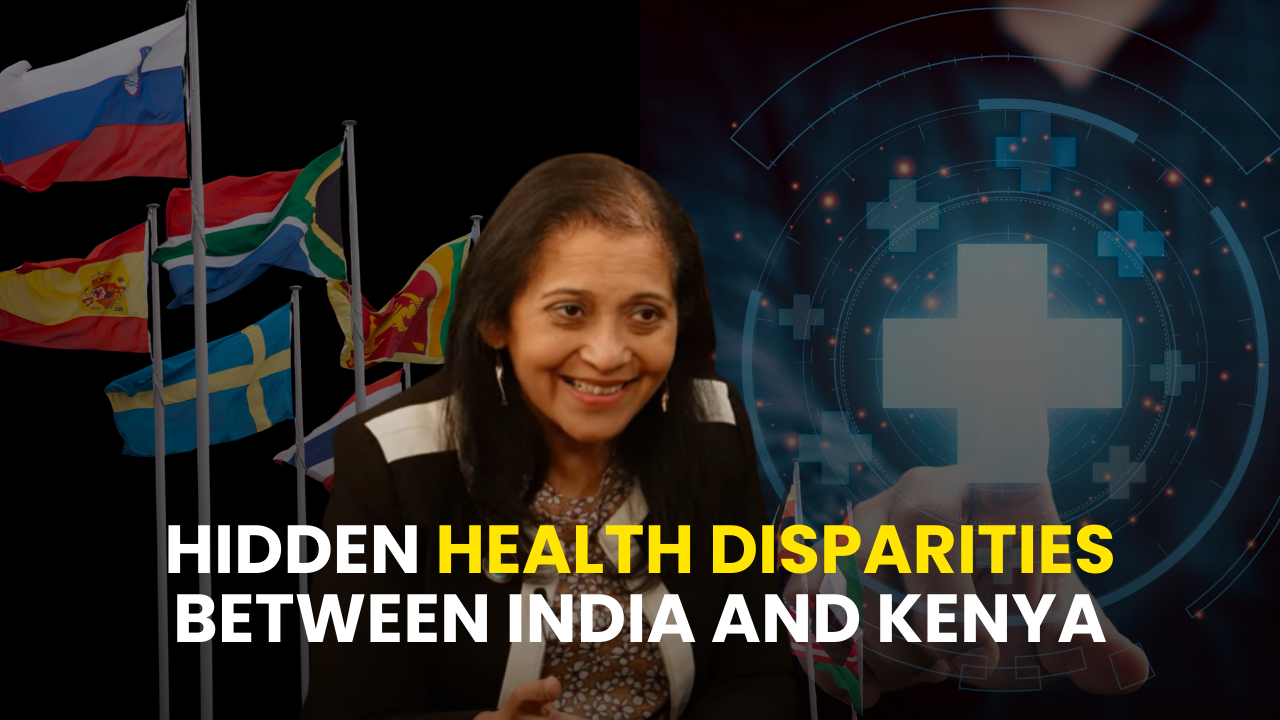
Watch the complete Podcast on YouTube.
Cultural Pressures and Gender Inequality
Even as women enter the workforce, many continue to carry the dual burden of professional and domestic responsibilities. Long commutes, childcare, and household duties create immense pressure.
At the same time, deeply rooted social issues persist:
- Dowry-related violence
- Sex-selective practices
- Limited legal and social support for women leaving abusive environments
These challenges often force women to remain in difficult situations due to financial dependency or concern for their children.
A Shift in Perspective: Experiences Across Africa
Moving from India to parts of Africa, such as Kenya, presents a different yet equally complex reality.
One of the most confronting observations is the visible scale of poverty and vulnerability—particularly the presence of street children who have been abandoned and left without support systems.
Unlike in many Indian communities, where families often remain connected despite hardship, here the absence of family structures can be stark.
Additionally, the level of violence in some regions is significantly higher, with a stronger visible presence of armed security, police, and military forces. This creates an environment where safety and stability are constant concerns.
Global Health Challenges: HIV, Malaria, and Access to Care
Exposure to global health issues further highlights the differences across regions.
- In parts of Africa, HIV transmission has largely been heterosexual, affecting families and communities broadly
- Malaria remains a major public health concern
- Limited access to healthcare services continues to impact outcomes
In contrast, while India faces its own health crises, the nature and scale of certain diseases differ. These experiences underscore how health challenges are shaped by geography, infrastructure, and policy.
Shared Realities: What Connects These Experiences
Despite the differences between India and African nations, several common threads emerge:
- Women often face systemic inequality
- Health outcomes are closely tied to socio-economic conditions
- Education remains a key pathway to empowerment
- Cultural norms continue to influence women’s autonomy
These shared realities remind us that while contexts may vary, the need for change is universal.
Why These Conversations Matter
Global conversations about women’s health and inequality are essential. They help us:
- Recognise patterns across different regions
- Learn from diverse experiences
- Advocate for stronger policies and support systems
- Build a more inclusive and informed society
When we listen to these stories, we move beyond statistics and begin to understand the human impact behind them.
Join Us at Our Upcoming Events
Join Us at the National Child & Family Safety Leadership Summit 2026 will bring together leaders, practitioners, policymakers, researchers and community voices from across the country. This important gathering creates space for meaningful dialogue on the most pressing issues impacting children and families including domestic violence, coercive control, child protection, and community wellbeing.
We look forward to welcoming you to this moving and inspiring celebration of women’s achievements and contributions. Don’t miss this opportunity to hear from one of WA’s most influential scientific leaders, Miquela Riley.