
The conversation around family violence is changing.
Across Australia, practitioners, policymakers, advocates, and survivors are calling for greater recognition of coercive control as one of the most serious and complex forms of abuse affecting individuals and families today.
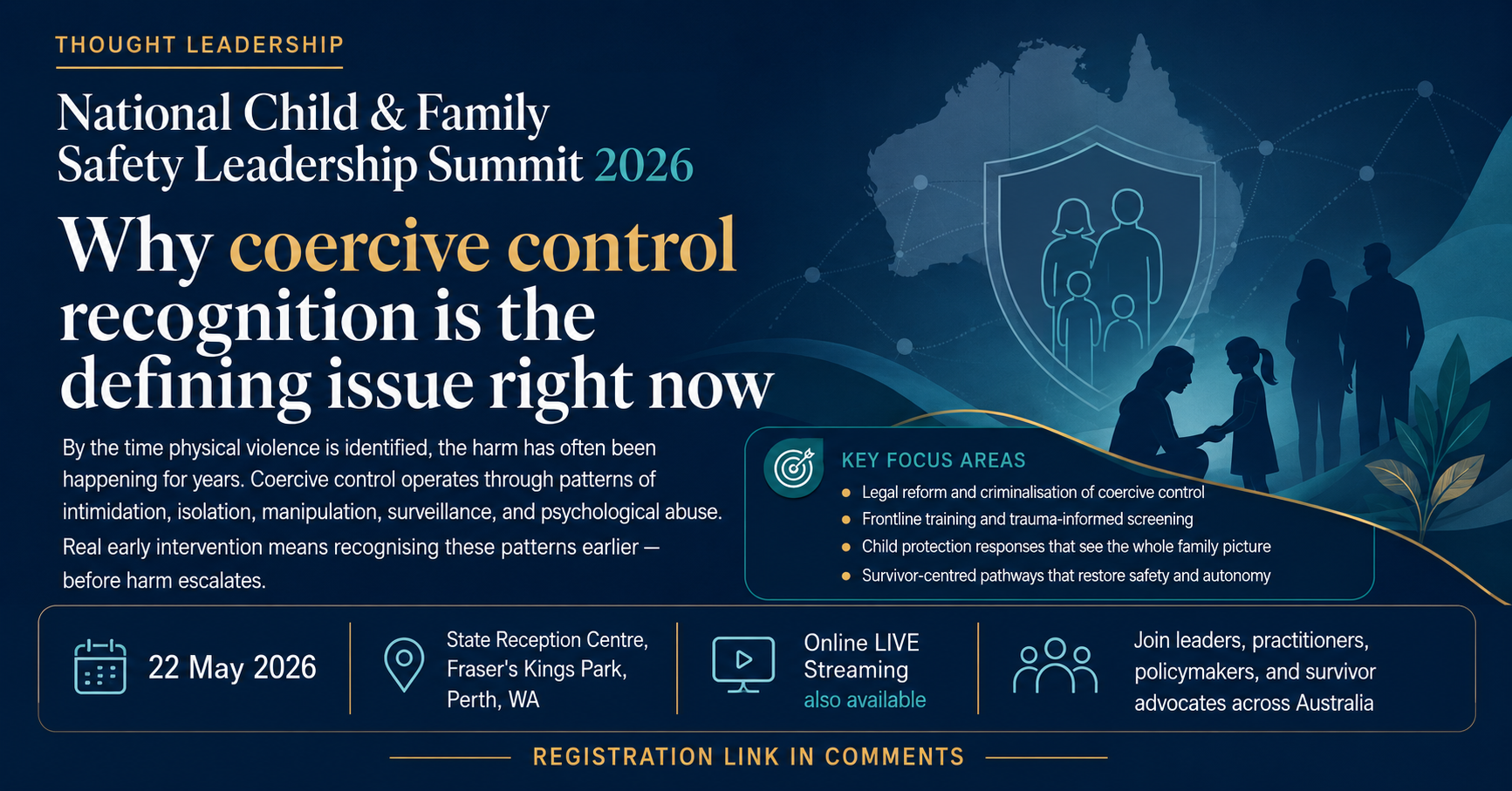
At the National Child & Family Safety Leadership Summit 2026, this issue sits at the centre of critical national discussions on safety, accountability, and system reform.
Coercive control is not always visible. It often occurs through patterns of intimidation, isolation, manipulation, surveillance, and psychological abuse that build over time. For many victim survivors, these behaviours are experienced long before physical violence is recognised.
This is why many leaders across the sector believe reform cannot wait.
Why This Matters Now
Recognition of coercive control is reshaping how Australia approaches family violence prevention, intervention, policing, legal reform, and support services.
There is growing understanding that systems must move beyond responding only to incidents and instead recognise patterns of behaviour that create ongoing fear, control, and harm.
This requires:
Stronger cross sector collaboration
Earlier intervention pathways
Better training and awareness across frontline services
More coordinated legal and policy responses
Trauma informed and survivor centred approaches
A Defining Issue for Practitioners and Policymakers
For practitioners, coercive control recognition changes how risk is identified and understood.
For policymakers, it raises important questions about legislation, system accountability, workforce capability, and long term reform.
For survivors, recognition validates lived experiences that have historically been overlooked or misunderstood.
Continuing the Conversation
The National Child & Family Safety Leadership Summit 2026 will bring together leaders and frontline voices to explore how Australia can strengthen responses to coercive control and build safer systems for children and families.