
Understanding the Atmosphere: Moving Beyond Simplistic Climate Narratives
In today’s climate conversation, few topics are as widely discussed and as often misunderstood as the composition of Earth’s atmosphere. Public discourse frequently centres on carbon dioxide (CO₂), often portrayed as the central driver of environmental change. Yet, when we step back and examine the science more closely, a more nuanced and balanced picture begins to emerge.
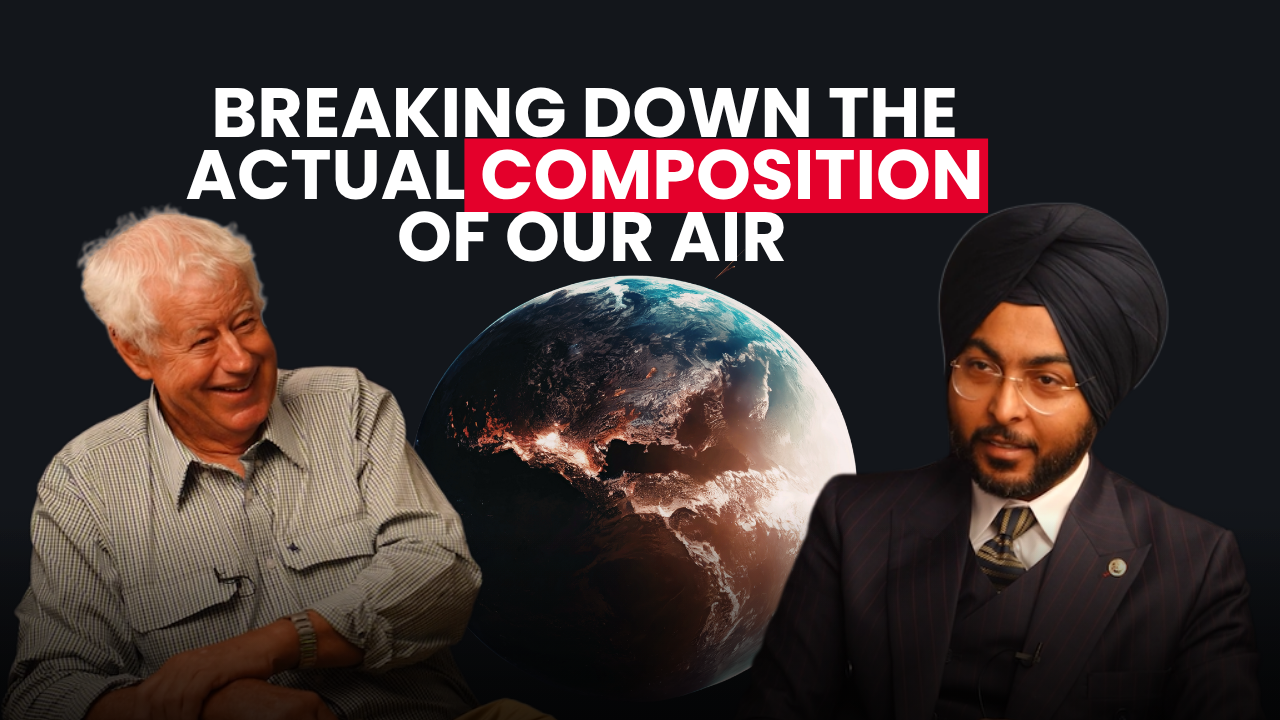
What Is the Atmosphere Made Of?
The air we breathe is composed primarily of two gases:
- Nitrogen (N₂): approximately 78%
- Oxygen (O₂): approximately 21%
Together, these two elements make up around 99% of the Earth’s atmosphere. The remaining 1% consists of trace gases, including argon, neon, helium, methane, and carbon dioxide.
Carbon dioxide, in particular, exists in very small concentrations around 0.04% of the atmosphere (or roughly 400 parts per million). While this is a tiny fraction, its role in climate systems has made it a focal point of global discussion.
The Role of CO₂: Context Matters
It is important to acknowledge that carbon dioxide is not inherently harmful. In fact, it is essential to life on Earth. Plants rely on CO₂ for photosynthesis, and controlled increases of CO₂ are often used in greenhouses to enhance plant growth.
However, the debate arises not from its existence, but from changes in its concentration over time and the potential impacts on global climate systems. Even small shifts in atmospheric composition can influence temperature, weather patterns, and ecological balance though the scale, speed, and consequences of these changes remain subjects of ongoing scientific exploration and discussion.
Watch the complete Podcast on YouTube.
A Global Atmosphere Without Borders
One critical truth often overlooked is that the atmosphere is shared globally. Air does not recognise political boundaries. Emissions produced in one region can affect air quality and climate patterns across the world.
This raises important questions about responsibility and accountability. For instance, relocating industrial activity from one country to another does not eliminate emissions—it simply shifts their origin. The environmental impact remains part of a shared global system.
Encouraging Thoughtful Dialogue
Conversations about climate change can sometimes become polarised, reducing complex scientific realities to simplified narratives. Whether one emphasises the risks of rising CO₂ levels or the benefits of its role in biological systems, it is essential to approach the topic with curiosity, critical thinking, and respect for evidence.
Even humour such as the ironic observation that humans exhale significantly more CO₂ than they inhale can serve as a reminder of how interconnected we are with the natural systems we seek to understand.
Ultimately, the goal should not be to silence debate, but to elevate it grounding discussions in science while remaining open to diverse perspectives.
Join Us at Our Upcoming Events
Join Us at the National Child & Family Safety Leadership Summit 2026 will bring together leaders, practitioners, policymakers, researchers and community voices from across the country. This important gathering creates space for meaningful dialogue on the most pressing issues impacting children and families including domestic violence, coercive control, child protection, and community wellbeing.
We look forward to welcoming you to this moving and inspiring celebration of women’s achievements and contributions. Don’t miss this opportunity to hear from one of WA’s most influential scientific leaders, Miquela Riley.