
The Rise of Independent Politics in Australia: A Shift Towards Diverse Democracy
Australia’s political landscape is undergoing a noticeable transformation. Increasingly, voters are stepping away from traditional party loyalties and embracing a broader spectrum of voices particularly community independents and minor parties. This shift signals not just political change, but a deeper evolution in how Australians engage with democracy.
Moving Beyond Party Politics
For many Australians, political engagement is no longer about aligning strictly with a party. Instead, there is a growing focus on:
- Issues over ideology
- Values over party lines
- Representation over tradition
This reflects a broader understanding that individuals including political leaders are constantly evolving. Just as people grow and change their views over time, so too should politicians be allowed the space to adapt based on new information, experiences, and community needs.
Expecting rigid consistency may sound appealing, but in reality, growth and adaptability are essential traits of effective leadership.
The Emergence of Community Independents
Across regions like Western Australia, community independents are gaining traction. Candidates such as Kate Chaney represent a new model of leadership one grounded in local engagement and accountability rather than party directives.
These independents often:
- Prioritise local community concerns
- Operate outside strict party discipline
- Advocate for transparent and responsive governance
Their rise indicates that voters are seeking leaders who are closer to the ground and more directly aligned with their communities.
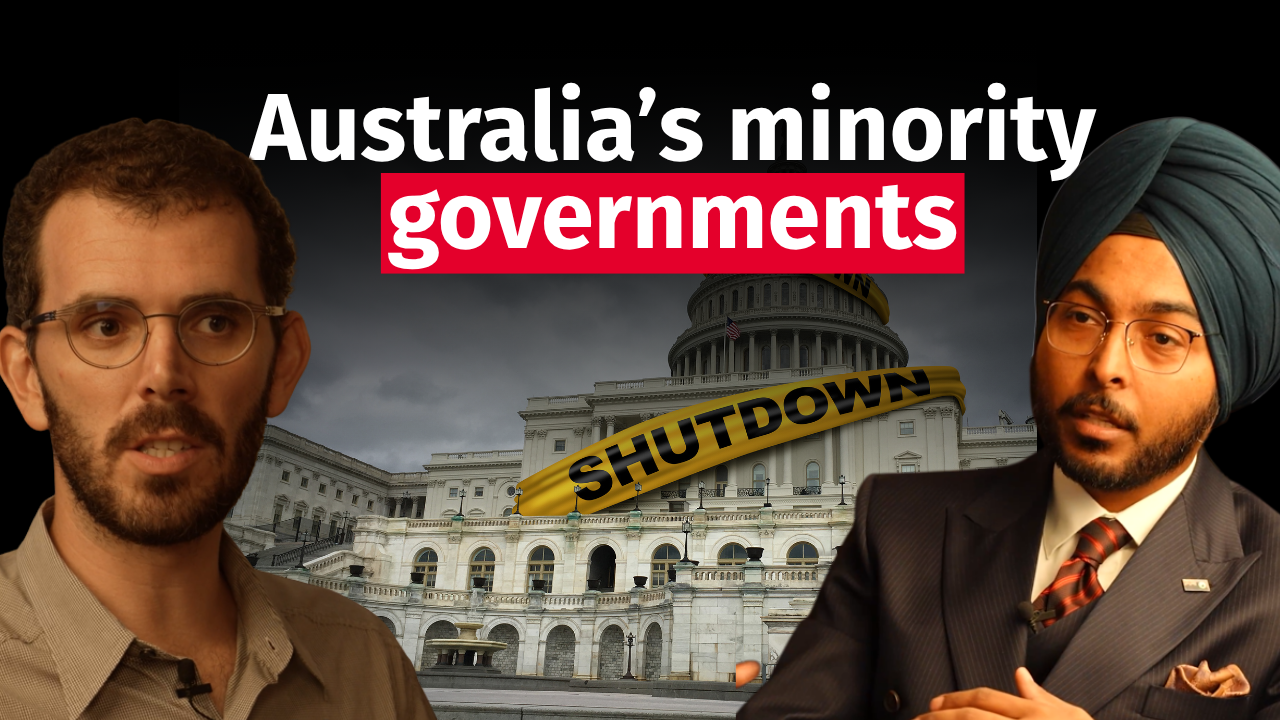
Watch the complete Podcast on YouTube.
Minority Government: A Challenge or an Opportunity?
The increasing fragmentation of votes raises the likelihood of minority governments a scenario where no single party holds a majority.
While some view this as instability, others see it as a strength.
Potential Benefits of Minority Governments:
- Greater collaboration across parties
- More voices influencing legislation
- Reduced dominance of major party agendas
- Increased accountability through negotiation
Many European democracies operate successfully under such systems, demonstrating that diverse representation can coexist with effective governance.
The Role of Minor Parties in a Modern Democracy
Beyond independents, a range of minor parties often labelled as “freedom-based” or issue-driven—are also shaping the political conversation.
Figures like Clive Palmer and Pauline Hanson represent segments of the electorate seeking alternatives to mainstream politics.
These parties play several roles:
- Offering alternative policy perspectives
- Challenging established power structures
- Giving voice to underrepresented viewpoints
However, with increased choice comes the responsibility for voters to critically assess motivations, transparency, and alignment with public interest.
Breaking the Two-Party Dominance
For decades, Australian politics has been largely defined by two major parties. While they differ in certain areas, critics argue that they often share similarities particularly in their relationships with large industries and corporate interests.
The rise of independents and minor parties signals a gradual shift:
- Power is becoming more distributed
- Voters are demanding greater accountability
- Political engagement is becoming more localised and participatory
This diversification could reshape governance, encouraging policies that better reflect the needs of everyday Australians rather than entrenched interests.
A More Engaged Democracy
Perhaps the most encouraging aspect of this shift is the renewed public engagement in democracy.
People are:
- Participating more actively in local politics
- Supporting grassroots campaigns
- Seeking meaningful representation
This level of involvement strengthens democratic systems and ensures that leadership remains connected to the people it serves.
Final Thoughts: Leadership, Integrity, and Community
As Australia navigates this evolving political landscape, one thing remains clear diverse voices and open dialogue are essential for progress.
A healthy democracy is not defined by uniformity, but by its ability to accommodate differing perspectives while working towards common goals. Whether through independents, minor parties, or evolving major parties, the focus must remain on integrity, accountability, and the well-being of communities.
Join the Conversation
If you are passionate about leadership, community wellbeing, and shaping a safer, stronger future, we invite you to take the next step.
Join us at the National Child & Family Safety Leadership Summit 2026 on 22nd May 2026.
This promises to be a moving and inspiring event, bringing together leaders, professionals, and changemakers committed to protecting and empowering children and families.
Be part of the conversation. Be part of the change.