
The Politics of Persecution: Why Governments Target Religious Minorities
Across history and across continents, one troubling pattern continues to emerge: when political power feels threatened, minority communities often become convenient targets. Whether the persecution of spiritual practitioners in China, the violence against Christian communities in parts of Nigeria, or the suppression of other religious groups globally, the mechanisms behind such oppression are strikingly similar.
Understanding why these persecutions occur is essential not only for recognising injustice but also for protecting freedom of belief and human dignity.
Power, Ideology, and the Creation of Enemies
Religious persecution rarely begins purely with theological disagreement. More often, it stems from the political pursuit of power.
Leaders or ruling groups sometimes mobilise people by promoting ideological narratives that portray certain communities as threats. These narratives create division and cultivate fear. Once a group is labelled as “dangerous” or “disloyal”, discrimination and repression can follow.
This dynamic can be seen in multiple contexts. In parts of Nigeria, extremist factions have distorted religious teachings to justify violence against Christian communities. The goal is not simply religious dominance, but influence, control, and territorial power.
Similarly, in authoritarian political systems, independent belief systems can be viewed as rival sources of loyalty. Governments that demand ideological conformity may perceive spiritual movements as potential threats even when those movements are peaceful.
Watch the complete Podcast on YouTube.
Why Religious Movements Alarm Authoritarian Governments
In democratic societies, leaders compete for public support through elections. Power is influenced by public opinion and the rule of law. But in authoritarian systems, the political calculation is different.
Instead of asking what voters want, ruling elites often ask a different question: What strengthens the power of the party or the regime?
Groups that exist outside the control of the state especially those that gather large numbers of people—may be viewed with suspicion. Religious communities, spiritual movements, or independent civic organisations create social networks that operate beyond government authority.
For regimes focused on maintaining absolute control, these networks can appear threatening.
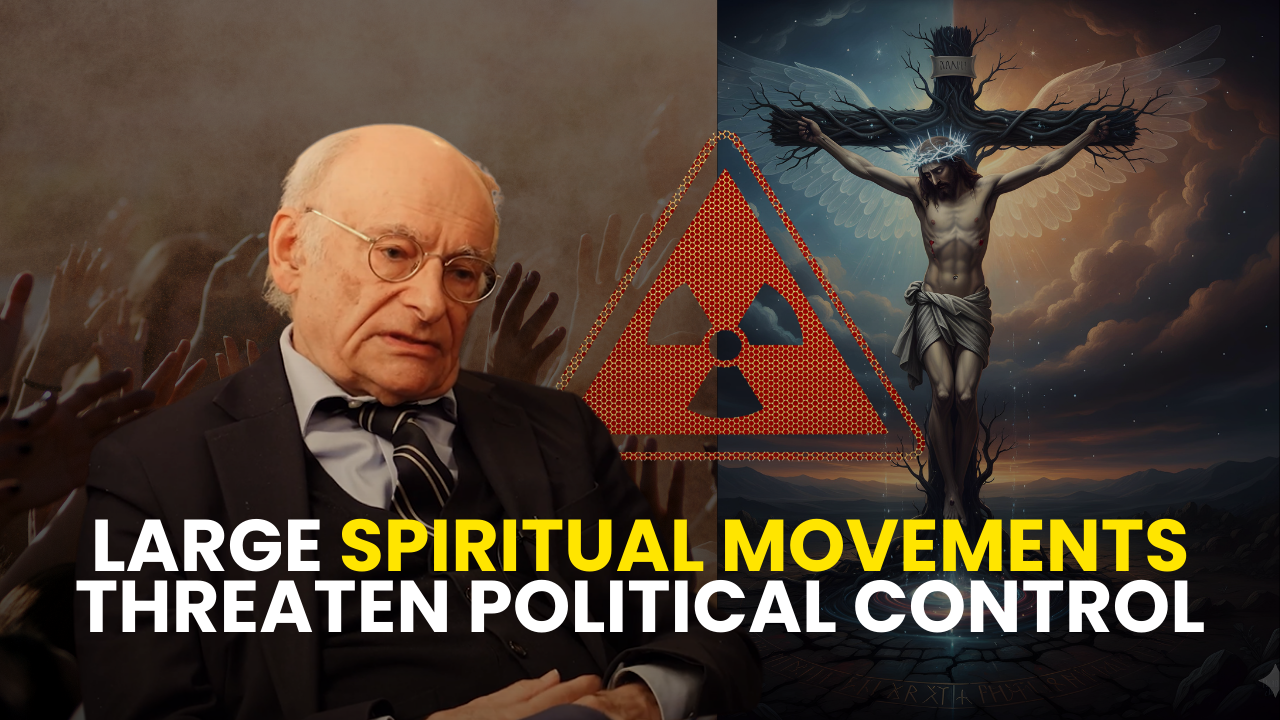
A clear example occurred in China during the late 1990s with the rise of Falun Gong, a spiritual discipline combining meditation, gentle exercises, and moral teachings. Practitioners gathered in parks and public spaces across the country, practising exercises similar to yoga.
By some estimates, tens of millions of people participated. What began as a health and spiritual practice soon sparked debate within the Chinese Communist Party.
Some officials argued that the movement was harmless and even beneficial, improving public health and reducing strain on the medical system. Others feared that the sheer scale of participation represented an ideological challenge.
From the perspective of a one-party state, the concern was not that practitioners were actively opposing the government. The concern was that citizens might develop loyalties and beliefs that did not originate from the party itself.
In such systems, ideological independence can be interpreted as political risk.
The Dangerous Logic of Control
When governments perceive independent communities as threats, repression can follow. This repression often follows a familiar pattern:
- Labelling the group as dangerous or subversive
- Controlling the narrative through propaganda
- Justifying surveillance, arrests, or violence
- Claiming the measures are necessary for stability
This strategy creates an “enemy” that helps justify expanded state power.
Sadly, it is a pattern that has repeated throughout history. Minority groups become scapegoats. Religious identity becomes politicised. And ordinary people families, mothers, community members suffer the consequences.
The Role of Women in Resisting Injustice
While persecution often dominates headlines, another story quietly unfolds in communities around the world: the resilience of women.
Women frequently become the protectors of culture, belief, and community during times of repression. Through caregiving, advocacy, education, and quiet acts of courage, they sustain families and preserve traditions even in the most difficult circumstances.
Many movements for justice, human rights, and social change have been shaped not only by visible leaders but by women whose contributions were rarely recognised in their time.
Their strength reminds us that change does not always begin in parliaments or courts it often begins in homes, neighbourhoods, and communities.
Join Us at Our Upcoming Events
Join Us at the National Child & Family Safety Leadership Summit 2026 will bring together leaders, practitioners, policymakers, researchers and community voices from across the country. This important gathering creates space for meaningful dialogue on the most pressing issues impacting children and families including domestic violence, coercive control, child protection, and community wellbeing.
We look forward to welcoming you to this moving and inspiring celebration of women’s achievements and contributions. Don’t miss this opportunity to hear from one of WA’s most influential scientific leaders, Miquela Riley.