
The Future of Queensland Agriculture: Challenges, Opportunities and Food Security
Queensland agriculture sits at a critical crossroads. While global demand for Australian produce remains strong, farmers across the state are navigating rising costs, workforce shortages, extreme weather and shifting land use pressures.
Understanding the challenges facing Queensland farming is essential not just for producers, but for policymakers, communities and consumers alike.
Queensland Agriculture: A Complex and Diverse Sector
Agriculture is often spoken about as one single industry. In reality, it is a network of diverse and highly nuanced commodity groups.
Organisations such as the Queensland Farmers’ Federation represent peak bodies across multiple agricultural sectors, including:
- Grazing and livestock production
- Cotton farming
- Horticulture
- Dairy
- Sugar cane
- Intensive farming systems
Each of these sectors faces unique pressures depending on geography, labour needs and exposure to global markets.
The complexity of Queensland agriculture means there is no “one-size-fits-all” solution.
Rising Costs and Shrinking Margins
One of the most pressing issues post-COVID has been the dramatic increase in the cost of production.
Across most farms in Queensland, operating costs have risen between 50 and 60 per cent. For sectors such as horticulture where supermarket prices have remained relatively stagnant for nearly a decade this creates severe margin pressure.
When costs increase but sale prices remain fixed, profitability is squeezed.
This terms-of-trade imbalance is particularly challenging for producers who are price-takers rather than price-setters.
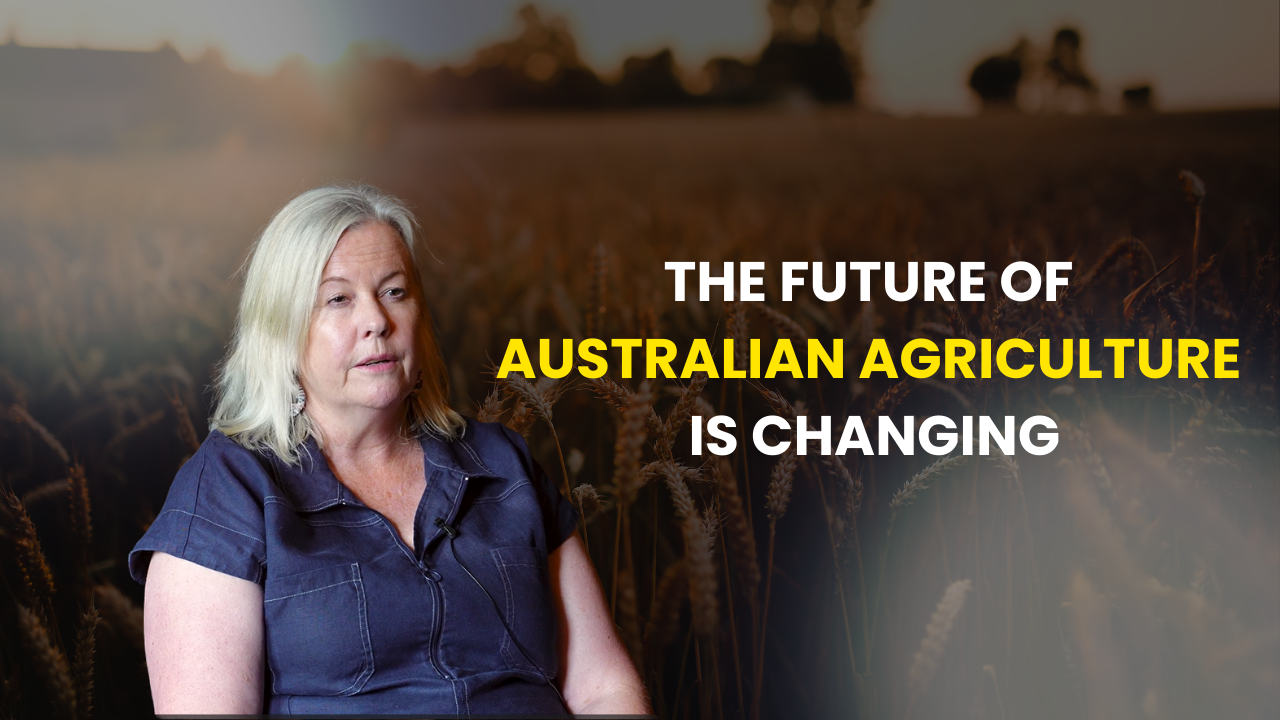
Watch the complete Podcast on YouTube.
Workforce Shortages in Queensland Farming
Workforce shortages remain a structural issue for Australian agriculture.
Labour-intensive sectors such as horticulture are especially vulnerable. Seasonal harvesting requires large numbers of workers at specific times of the year. However, demographic trends suggest workforce shortages may persist for another 10 to 15 years.
Without reliable labour supply:
- Crops go unpicked
- Productivity declines
- Financial pressure intensifies
This is not simply a rural issue it directly impacts national food supply and pricing.
Changing Land Use and Food Security Risks
Demand for land in Queensland is rapidly increasing.
Across the eastern seaboard, traditional agricultural land including cane farms, dairy properties and horticulture blocks is being converted into residential developments.
While urban expansion meets housing demand, it also raises important questions:
- How much productive farmland are we willing to lose?
- What does this mean for long-term food security?
- Are we adequately valuing agricultural land?
Australia has historically enjoyed strong food security. However, sustained land conversion, combined with other pressures, requires careful planning to protect future supply.
Extreme Weather and Climate Pressures
Queensland is Australia’s most disaster-impacted state in terms of extreme weather events.
Flooding, severe storms and repeated summer weather events have created cumulative impacts on farming enterprises. When producers face significant damage year after year, recovery becomes increasingly difficult.
Extreme weather affects:
- Infrastructure
- Soil health
- Crop reliability
- Insurance costs
- Long-term viability
Building resilience into Queensland’s agricultural systems is no longer optional it is essential.
Global Reputation and ESG Strength
Despite these challenges, Queensland and Australian agriculture remain globally respected.
Data from the Australian Bureau of Statistics highlights Australia’s strong ESG (Environmental, Social and Governance) credentials compared with international peers.
This reputation matters.
Global consumers increasingly demand:
- Sustainably produced food
- Ethical supply chains
- Transparent environmental practices
Queensland producers are well positioned to meet this demand and that creates opportunity.
Strong global demand for Australian produce continues to underpin long-term potential.
A Sector of Challenge and Opportunity
Queensland agriculture faces:
- Rising production costs
- Workforce shortages
- Land use pressures
- Extreme weather events
Yet it also holds:
- Strong international demand
- High ESG standards
- Innovation potential
- Land-use diversification opportunities
The future will require leadership, policy clarity and community awareness.
Agriculture is not simply a rural issue it underpins Queensland’s economy, food security and regional resilience.
Join Us at Our Upcoming Events
Join us at the WA International Women’s Day 2026 – Leaders Breakfast Event. We honour remarkable women. They shaped Western Australia’s history. For instance, they led through activism and caregiving. Moreover, they built communities.
Join Us at the National Child & Family Safety Leadership Summit 2026 will bring together leaders, practitioners, policymakers, researchers and community voices from across the country. This important gathering creates space for meaningful dialogue on the most pressing issues impacting children and families including domestic violence, coercive control, child protection, and community wellbeing.
We look forward to welcoming you to this moving and inspiring celebration of women’s achievements and contributions. Don’t miss this opportunity to hear from one of WA’s most influential scientific leaders, Miquela Riley.