The Politics of Faith: When Belief Becomes a Political Tool
In modern democracies, faith and politics often intersect. At times this relationship can be constructive grounded in shared values of justice, compassion, and service. Yet when faith is politicised or weaponised, it becomes a powerful tool for division rather than unity.
This is the complex reality of the politics of faith a space where identity, belief, power, and narrative collide.
Faith in Public Life: A Historical Reality
Faith has long played a role in Australia’s public institutions. The recitation of the Lord’s Prayer in Parliament, the presence of faith-based political parties, and the moral frameworks that inform policy debates all reflect this history. Religion has never been absent from public life.
Australia is proudly multicultural and multi-faith. Communities of Christian, Muslim, Jewish, Hindu, Sikh, Buddhist and other traditions contribute richly to our national story. In a democracy, people of faith like anyone else bring their values into their work, including politics.
The challenge arises not from faith itself, but from how it is used.
The Weaponisation of Faith
When faith becomes a political weapon, it is used to alienate, discredit, or marginalise.
A politician may be celebrated as a “progressive woman of faith” when it suits a narrative. Yet if that same individual takes a principled stand perhaps crossing the floor on a matter of conscience their faith may suddenly be portrayed as a liability.
This double standard reveals an uncomfortable truth: identity can be embraced when convenient and attacked when expedient.
Weaponising faith often involves:
- Framing religious belief as incompatible with democracy
- Portraying minority faiths as “foreign” or suspect
- Suggesting that moral conviction equates to extremism
- Reducing complex individuals to a single aspect of identity
This approach undermines not only the individual but the integrity of public discourse.
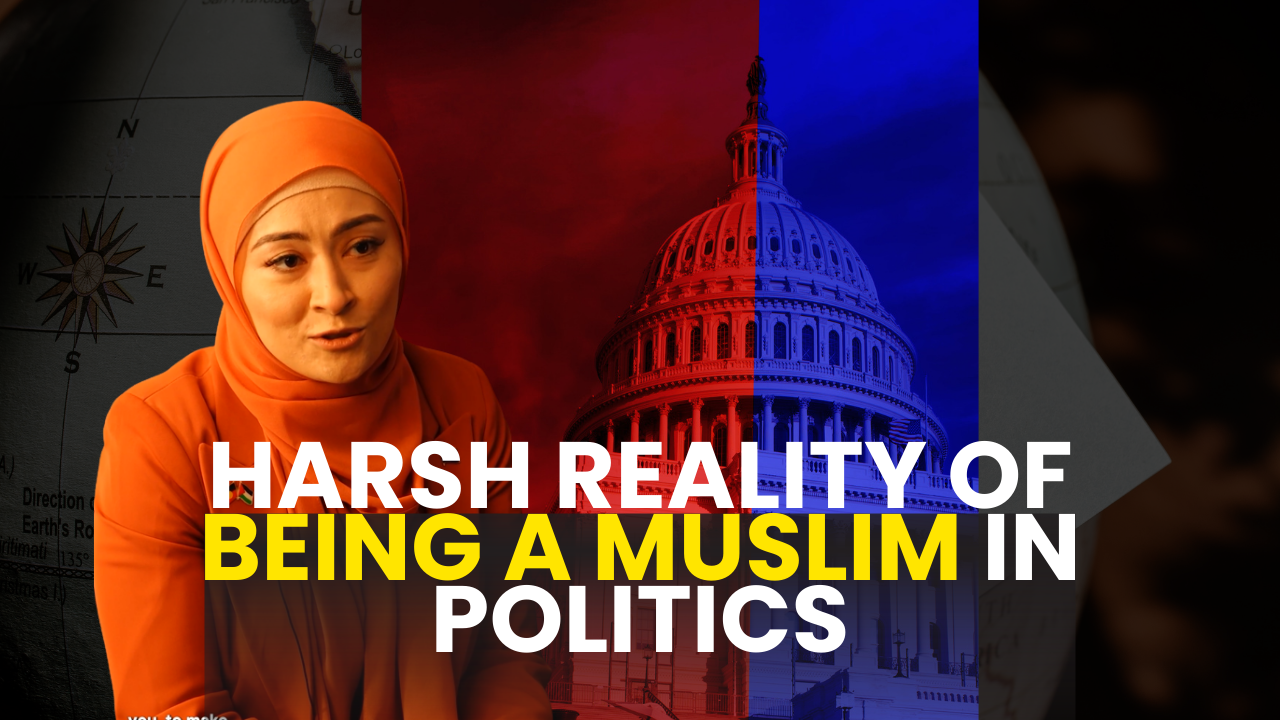
Watch the complete Podcast on YouTube.
Minority Faith and the Politics of “Othering”
For minority communities including Muslim Australians the politicisation of faith can take on an additional layer.
When incidents occur involving an individual who identifies with a minority religion, entire communities may be asked to answer for it. Public representatives from that faith may be treated as spokespersons for millions of diverse believers.
Yet no faith community is monolithic. Within any religion, there are varying interpretations, cultures, traditions and practices. As with all groups, there are good and bad individuals. One person’s conduct whether admirable or reprehensible cannot define an entire faith.
To hold a whole community accountable for the actions of one person contradicts the fundamental principle of individual responsibility upon which our legal and democratic systems are built.
The Good, the Bad, and the Ugly
The Good
Faith can inspire:
- Service to others
- Advocacy for justice
- Commitment to ethical leadership
- Resilience in times of adversity
Many of history’s greatest reform movements from civil rights to social welfare were rooted in deeply held moral convictions.
The Bad
Faith becomes problematic when:
- It is used selectively to appeal to voter blocs
- It is simplified into slogans
- It becomes a shield against accountability
The Ugly
The ugliest form emerges when faith is:
- Deliberately weaponised to smear or vilify
- Used to create fear about minority communities
- Exploited to divide rather than unite
This is not a failure of religion. It is a failure of politics.
A Mature Democracy Requires Better
A healthy democracy should be capable of robust debate without descending into identity attacks. We must be able to disagree even passionately without weaponising personal belief.
Faith, like culture, ethnicity or gender, is part of who a person is. It should neither grant immunity from scrutiny nor make someone a target for suspicion.
If we are serious about pluralism, we must accept that:
- People of faith belong in public life
- Minority faiths are no less Australian
- Moral conviction does not threaten democracy
- Diversity strengthens our institutions
Celebrating Women of Faith, Courage and Community
Across Queensland’s history, women have drawn upon faith, resilience and conviction to shape families, communities and public life. Some led from parliamentary chambers. Others led from kitchens, classrooms, community halls and places of worship.
Too often, the quiet labour of motherhood, caregiving and community building goes unrecognised yet it forms the backbone of social progress.
As we reflect on the politics of faith and the power of principled leadership, we are reminded that true change is nurtured not only in debate, but in service.
Join Us at Our Upcoming Events
Join us at the WA International Women’s Day 2026 – Leaders Breakfast Event. We honour remarkable women. They shaped Western Australia’s history. For instance, they led through activism and caregiving. Moreover, they built communities.
Join Us at the National Child & Family Safety Leadership Summit 2026 will bring together leaders, practitioners, policymakers, researchers and community voices from across the country. This important gathering creates space for meaningful dialogue on the most pressing issues impacting children and families including domestic violence, coercive control, child protection, and community wellbeing.
We look forward to welcoming you to this moving and inspiring celebration of women’s achievements and contributions. Don’t miss this opportunity to hear from one of WA’s most influential scientific leaders, Miquela Riley.