Intergenerational Care in Australia: Early Childhood, Social Media and Ageing with Dignity
Australia is facing a profound intergenerational challenge.
From early childhood education and care to protecting young people in the social media age, and from supporting working mothers to caring for an ageing population families are carrying more than ever before.
Across the spectrum, one truth stands out:
Care is the invisible infrastructure of our society.
And too often, it is under-supported, under-recognised, and underfunded.
Early Childhood Education and Care: A System Under Strain
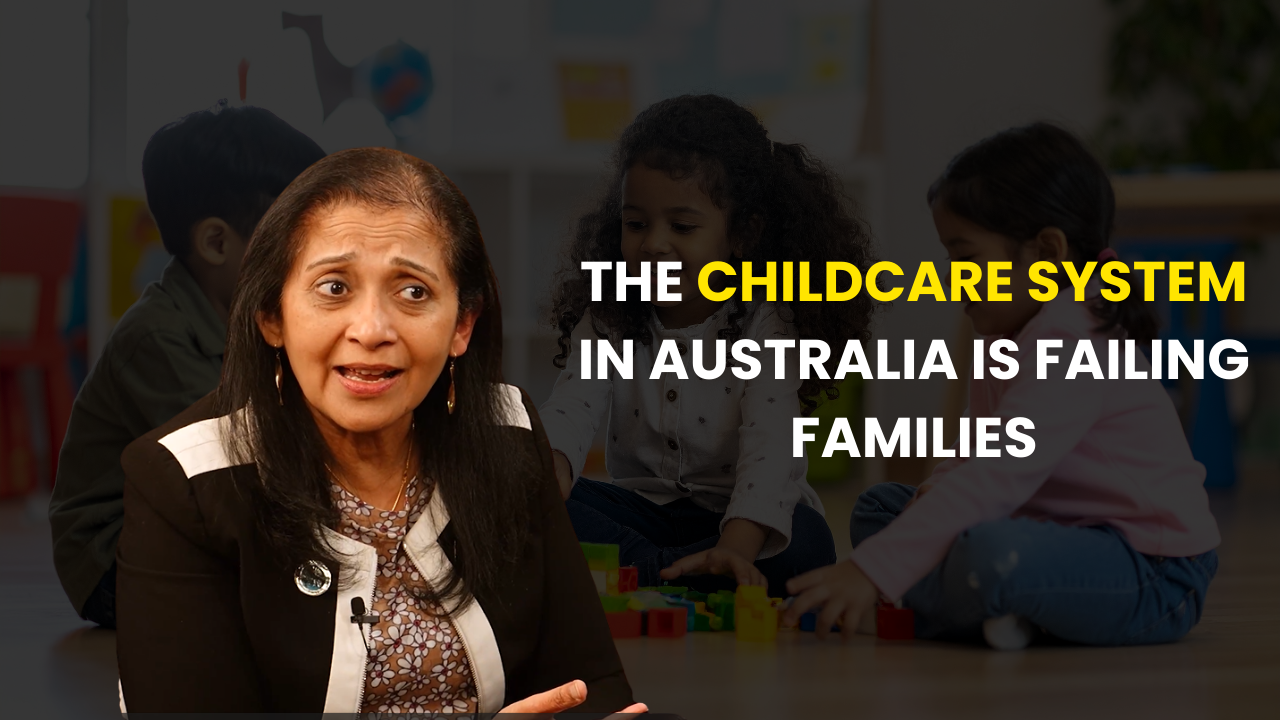
Early childhood care and development is one of the most critical investments any nation can make. The first five years shape cognitive development, emotional regulation and lifelong learning capacity.
Yet for many Australian families, childcare is prohibitively expensive.
Parents particularly women face impossible questions:
- Do I return to work full-time?
- Is part-time financially viable?
- How much will childcare cost after rebates?
- Will I be working just to cover fees?
While government subsidies exist, many families still experience significant out-of-pocket costs. Meanwhile, large childcare providers continue to generate substantial profits.
This raises an uncomfortable policy question:
Should essential care services operate primarily for profit?
When sectors like childcare, education and aged care are treated as market commodities, families can feel squeezed between public need and private gain.
Early childhood education is not a luxury it is foundational infrastructure. When it becomes inaccessible, workforce participation suffers and gender inequality deepens.
Watch the complete Podcast on YouTube.
Protecting Young People in the Social Media Ag
Today’s children are growing up in an environment saturated with information and misinformation.
Social media brings connection, creativity and access to knowledge. But it also exposes young people to:
- Online bullying
- Unrealistic comparisons
- Harmful content
- Algorithm-driven misinformation
- Sleep disruption and anxiety
Families are navigating digital parenting without a clear roadmap. Schools attempt to respond, but consistency between home and school is often missing.
Protecting youth in the social media age requires:
- Digital literacy education
- Clear device boundaries
- Parental modelling
- National policy conversations around platform accountability
This is not about fear. It is about equipping young Australians to engage critically and safely in a digital world.
An Ageing Australia: Living Longer, Living Well
Australians are living longer a testament to medical advancement and improved living standards.
But longevity brings complexity.
As people age, many face conditions such as:
- Arthritis
- Osteoporosis
- Dementia and Alzheimer’s disease
- Falls and hip fractures
- Cancer and chronic illness
Living well as a senior requires more than medical treatment. It requires:
- Accessible home modifications
- Community support
- Mobility assistance
- Respite care
- Affordable health services
When an elderly parent moves in with family, the household transforms. It can be deeply enriching — strengthening bonds across generations but it also increases emotional, financial and physical demands.
The Reality of Intergenerational Households
In many Australian homes today, three generations live under one roof.
Parents caring for:
- Young children
- Foster children
- An elderly parent
This “sandwich generation” often manages work, school runs, medical appointments, and complex care needs simultaneously.
The burden intensifies when disability or dementia enters the picture. While systems such as the National Disability Insurance Scheme (NDIS) and Aged Care Assessment processes exist, families frequently report:
- Administrative complexity
- Delays in approvals
- Service gaps
- Emotional exhaustion
Australia has strong frameworks but implementation gaps remain.
Care should not depend on how well someone can navigate bureaucracy.
The Care Economy: Who Is It Really Serving?
There is growing discomfort around the commercialisation of essential services.
Childcare.
Aged care.
Education.
These are not luxury goods.
When service providers become opaque, ownership structures unclear, and profit margins high, public trust erodes.
Care industries shape the most vulnerable stages of life. Transparency, accountability and public interest must remain central.
A Whole-of-Life Approach to Policy
What Australia needs is not piecemeal reform, but an intergenerational lens:
- Invest deeply in early childhood
- Support working parents equitably
- Strengthen digital wellbeing education
- Expand community-based ageing support
- Close implementation gaps in disability and aged care systems
- Recognise unpaid carers as essential contributors
Care connects every stage of life. When policy fails at one end of the spectrum, the strain appears at the other.
Join Us at Our Upcoming Events
Join us at the WA International Women’s Day 2026 – Leaders Breakfast Event. We honour remarkable women. They shaped Western Australia’s history. For instance, they led through activism and caregiving. Moreover, they built communities.
Join Us at the National Child & Family Safety Leadership Summit 2026 will bring together leaders, practitioners, policymakers, researchers and community voices from across the country. This important gathering creates space for meaningful dialogue on the most pressing issues impacting children and families including domestic violence, coercive control, child protection, and community wellbeing.
We look forward to welcoming you to this moving and inspiring celebration of women’s achievements and contributions. Don’t miss this opportunity to hear from one of WA’s most influential scientific leaders, Miquela Riley.