From Makeup Artist to HR Leader: What Organisations Can Learn About Empathy, Aesthetics and Emotional Intelligence
In today’s evolving workplace, Human Resources is no longer just about policies and paperwork. It is about people. It is about navigating vulnerability, complexity and change with empathy and clarity.
Interestingly, some of the most powerful HR skills are not always learned in boardrooms. They are often shaped in deeply human, one-to-one environments even in places as unexpected as the makeup chair.
The Power of One-to-One Conversations
When you are a makeup artist, you work closely physically and emotionally with individuals in highly vulnerable moments.
It might be:
- A bride overwhelmed on her wedding day
- A model nervous before stepping onto the catwalk
- Someone struggling with self-confidence
- A client wanting to feel seen, valued or transformed
In those moments, you are not simply applying makeup. You are building rapport. You are calming anxiety. You are creating psychological safety.
These are the same skills required of an effective HR leader.
HR professionals regularly sit in emotionally charged spaces:
- Redundancy conversations
- Performance concerns
- Patterns of sickness or burnout
- Personal disclosures about health, family or mental wellbeing
The ability to make someone feel at ease, to hold space with empathy, and to navigate complex emotions while maintaining professional boundaries is not a “soft” skill. It is a sophisticated leadership capability.
Emotional Intelligence: The Hidden Load of HR
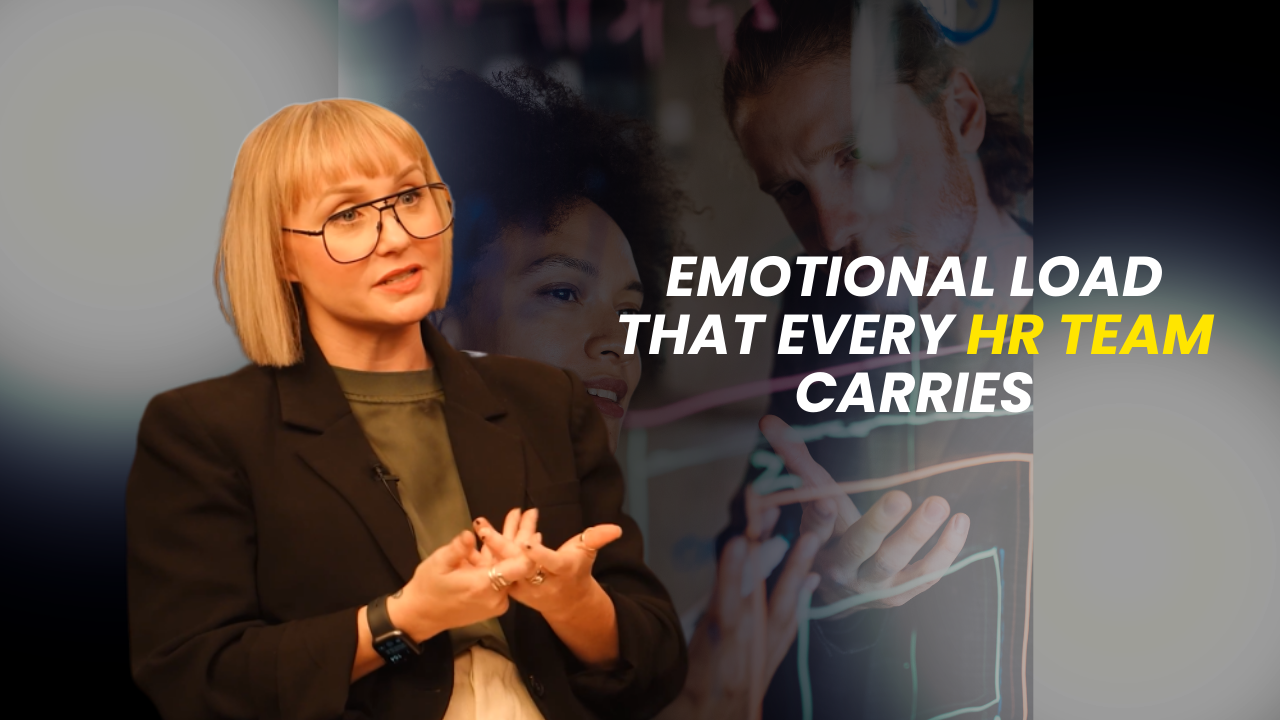
One of the least recognised realities in organisations today is the emotional load carried by HR professionals.
They are often the ones:
- Hearing confidential personal stories
- Supporting managers through difficult decisions
- Balancing organisational risk with human care
- Absorbing frustration from employees
- Mediating generational and cultural differences
And yet, HR is frequently misunderstood.
There remains a persistent myth that HR exists only to “protect the employer” or enforce rules. Historically, the personnel function may have been more transactional and compliance-driven. However, modern HR leadership has evolved significantly.
Today’s HR teams are strategic partners. They help shape culture, embed wellbeing practices, guide leaders through legislative change and create environments where people can bring their whole selves to work.
Watch the complete Podcast on YouTube.
The Art of Presentation: Branding, Aesthetics and Organisational Identity
There is another parallel between makeup artistry and HR leadership: attention to detail and aesthetics.
In makeup artistry, presentation matters. The way someone looks can influence how they feel. The finer details colour, texture, balance all communicate something.
Similarly, in business:
- Your brand communicates your values.
- Your visual identity reflects your purpose.
- Your workplace culture signals what you stand for.
A thoughtful rebrand is not about surface level polish. It is about clarity of identity. It is about asking:
- Why do we exist?
- What do we represent?
- How do we want people to feel when they engage with us?
Organisations, like individuals, “dress” themselves every day through their communications, leadership behaviours and physical environments.
Attention to these details is not vanity it is alignment.
Why HR Is Sometimes Seen as “The Bad Guy”
Despite the evolution of the profession, HR still faces scepticism.
Why?
There are several reasons:
- Historical perception – The legacy of transactional, compliance-focused personnel departments lingers.
- Difficult conversations – HR is often present in moments of conflict, performance management or redundancy.
- Negative experiences – One poor interaction with an unsupportive HR function can shape long-lasting perceptions.
However, the landscape is shifting.
Today’s workplaces are navigating generational change at an unprecedented pace. Younger employees expect:
- Work-life integration
- Open conversations about mental health
- Flexibility and inclusion
- Emotionally intelligent leadership
Many senior leaders were shaped in more hierarchical, authoritarian models. This creates tension.
HR sits in the middle helping leaders adapt while supporting employees’ evolving expectations.
It is a complex balancing act.
The Future of HR: Human-Centred Leadership
The future of HR lies in emotional intelligence, strategic thinking and courageous conversations.
It requires:
- The confidence to hold one-to-one dialogue
- The empathy to understand vulnerability
- The clarity to align organisational purpose
- The resilience to carry emotional weight responsibly
Just as a makeup artist helps someone step confidently into a significant moment, an effective HR leader helps organisations and individuals navigate defining transitions.
And much like community builders and caregivers throughout history, this work is often unseen — yet profoundly impactful.
Join Us at Our Upcoming Events
Join us at the WA International Women’s Day 2026 – Leaders Breakfast Event. We honour remarkable women. They shaped Western Australia’s history. For instance, they led through activism and caregiving. Moreover, they built communities.
Join Us at the National Child & Family Safety Leadership Summit 2026 will bring together leaders, practitioners, policymakers, researchers and community voices from across the country. This important gathering creates space for meaningful dialogue on the most pressing issues impacting children and families – including domestic violence, coercive control, child protection, and community wellbeing.
We look forward to welcoming you to this moving and inspiring celebration of women’s achievements and contributions. Don’t miss this opportunity to hear from one of WA’s most influential scientific leaders, Miquela Riley.