
Free Markets, Smart Policy and Wealth Creation in Australia
Australia has long prided itself on being a nation that rewards hard work, innovation and enterprise. Yet the conversation about how best to create wealth for the country continues to evolve. At the centre of the debate lies a familiar question: how much government intervention is enough and how much is too much?
For many, the answer sits somewhere in the middle. A thriving economy is rarely built on extremes. Instead, it grows from a balance between free market energy and thoughtful policy that keeps competition fair and sustainable.
Why Innovation Drives Prosperity
History shows that innovation sits at the heart of economic growth. New ideas lead to new industries, new jobs and new opportunities. From mining and agriculture to fintech and renewable energy, Australia’s strongest sectors have always been those willing to adapt and experiment.
A free market environment gives businesses the space to take risks, test ideas and grow. When entrepreneurs feel confident to invest and compete, productivity rises and the broader economy benefits.
However, markets do not exist in a vacuum. Without guardrails, competition can shrink and power can concentrate in the hands of a few dominant players. This is where policy plays a vital role.
The Role of Government in a Free Market Economy
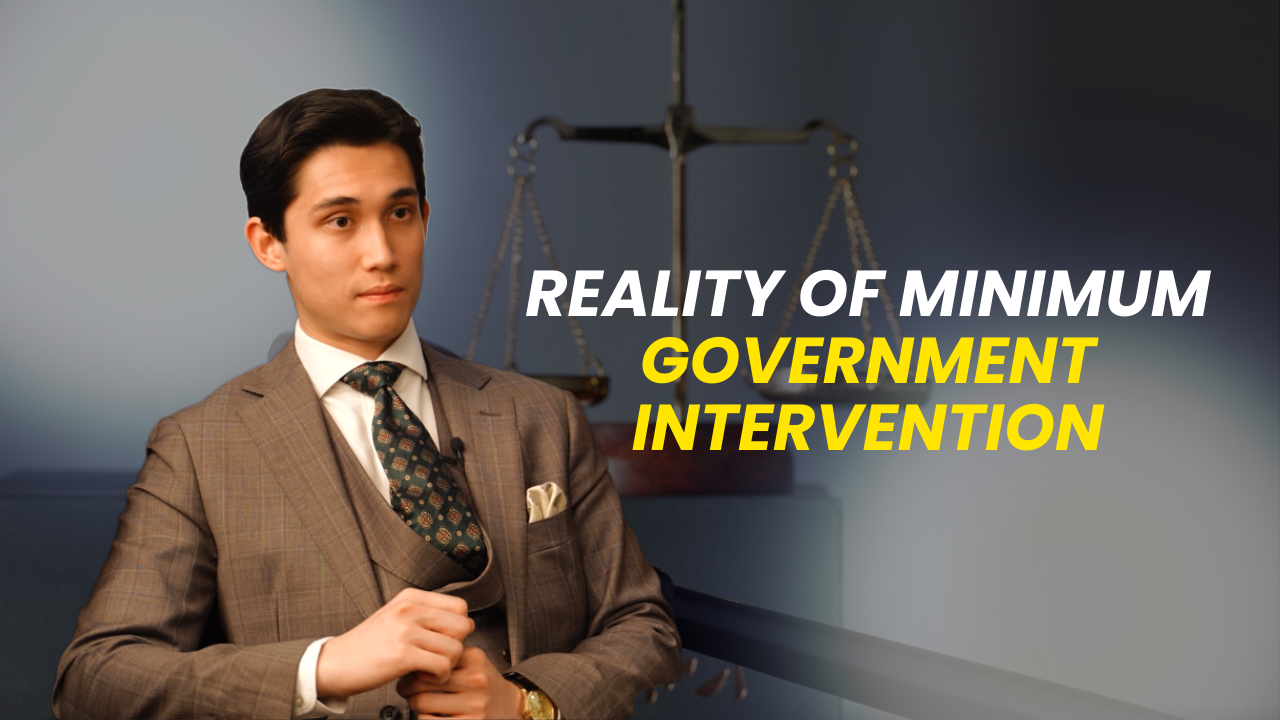
Minimum government intervention does not mean no intervention. Instead, it means creating conditions where healthy competition can thrive.
Smart policy focuses on:
- Preventing monopolies and excessive market concentration
- Encouraging fair competition
- Supporting innovation and research
- Providing stable regulatory frameworks
- Protecting consumers and small businesses
When done well, policy becomes an enabler rather than a barrier.
A clear example in Australia is the long-standing Four Pillars policy in banking, designed to prevent mergers between the big four banks. The goal is simple: ensure no single institution becomes so dominant that competition disappears. This type of policy shows how targeted regulation can strengthen, rather than weaken, a free market.
Watch the complete Podcast on YouTube.
Economic Policy Must Reflect National Maturity
One size does not fit all when it comes to economic policy. The right approach depends on where a country sits in its development journey and which sectors are driving growth.
Emerging industries often need support and investment. Mature industries may need competition reforms. Technology sectors may benefit from flexible regulation, while essential services may require stronger oversight.
Australia’s challenge is to stay adaptable. As industries evolve and global competition intensifies, policy must move with the times. The most successful economies are those that continuously refine the balance between freedom and responsibility.
The Human Side of Economic Decisions
Economic policy is not only about numbers, markets and growth charts. It is also about values. It requires moral courage to make decisions that balance opportunity with fairness and prosperity with long-term stability.
The choices made today will shape the opportunities available to future generations. Creating wealth is not just about increasing GDP; it is about building a resilient, innovative and inclusive society.
Looking Ahead
Australia’s future prosperity will depend on maintaining a healthy mix of free enterprise, strong competition and thoughtful leadership. Encouraging innovation while safeguarding fairness is not always simple, but it remains essential for sustainable growth.
The conversation about economic policy, leadership and the future of our nation continues — and it is one that benefits from diverse voices and shared experiences.
Join Us at Our Upcoming Events
Join us at the WA International Women’s Day 2026 – Leaders Breakfast Event. We honour remarkable women. They shaped Western Australia’s history. For instance, they led through activism and caregiving. Moreover, they built communities.
Join Us at the National Child & Family Safety Leadership Summit 2026 will bring together leaders, practitioners, policymakers, researchers and community voices from across the country. This important gathering creates space for meaningful dialogue on the most pressing issues impacting children and families – including domestic violence, coercive control, child protection, and community wellbeing.
We look forward to welcoming you to this moving and inspiring celebration of women’s achievements and contributions. Don’t miss this opportunity to hear from one of WA’s most influential scientific leaders, Miquela Riley.