
From Policing to Prevention: How Community-Led Child Safety Education Is Changing Lives
Child protection is often seen as reactive responding after harm has already occurred. But what if prevention was embedded deeply within communities, spoken in the language of children, and shaped by the very families it seeks to protect?
This is the story of a woman who moved from frontline policing into prevention based education and in doing so, helped transform how children in regional Western Australia engage with safety messages.
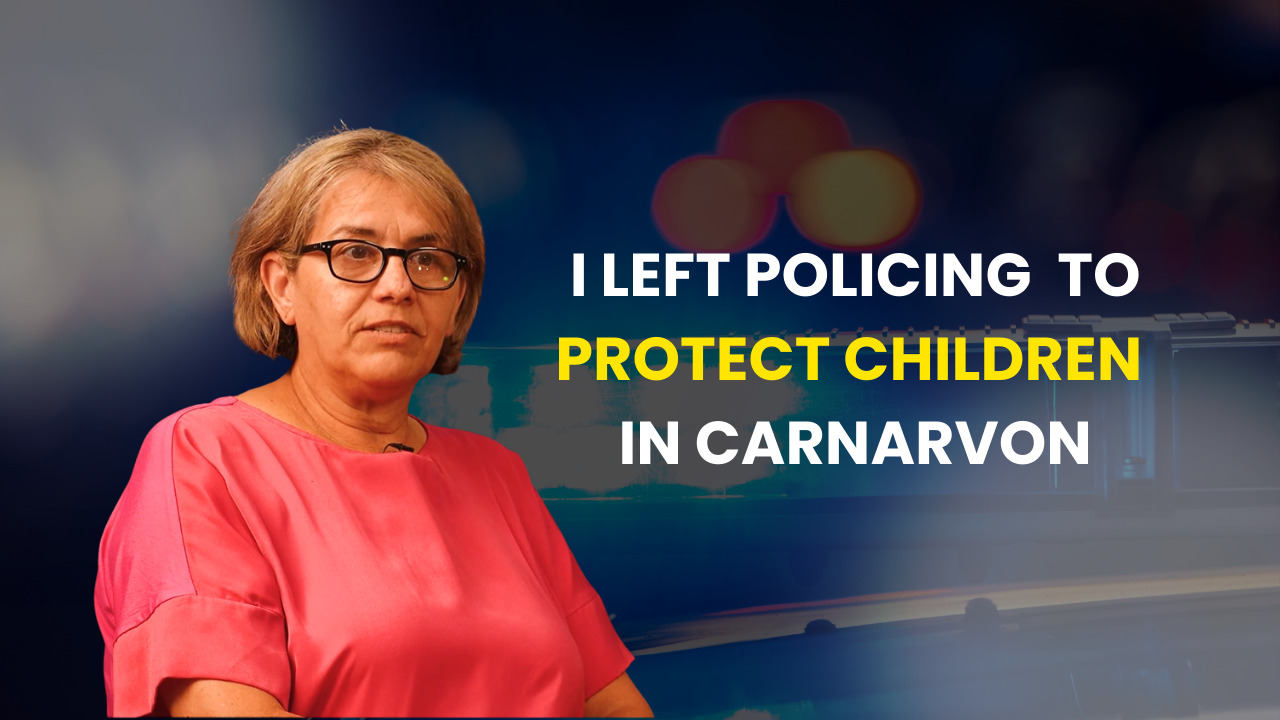
A Decade in Carnarvon: Policing, Community and Women’s Services
After returning to Carnarvon in Western Australia, ten years were spent serving as a police officer deeply embedded in the local community. During that time, there was extensive involvement with women and children particularly those experiencing family violence and vulnerability.
For eight of those ten years, leadership was provided as Chair of the Carnarvon Family Support Service (now CFSS WA Limited). The organisation delivered essential services including:
- Women’s Refuge
- Domestic Violence Outreach
- Aboriginal Family Violence Prevention Service
- Sobering Up Centre
- Public Tenancy Support
- Financial Counselling
- Protective Behaviours Education
- Men’s Anger Management
These services form what many refer to as “the backend to policing” the critical support structures that police rely upon but do not operate themselves.
It became clear that while law enforcement plays a vital role, long-term change lies in education and prevention.
From Crisis Response to Child-Focused Prevention
After transitioning from policing into leadership within CFSS WA Limited, a new opportunity emerged: prevention.
With funding support from the Department of Communities, and informed by direct experience with child protection and sexual abuse cases, a crucial gap was identified.
Children were being told important safety messages.
But they were not connecting with them.
Workshops were delivered in schools. Parents were educated. Protective behaviours were explained. Yet something was missing. The messages felt abstract. They were not landing in a way that resonated.
So a different approach was taken.
Watch the complete Podcast on YouTube.
Writing a Story That Children Could See Themselves In
The solution was simple, but powerful: write a children’s storybook grounded in place and identity.
The result was Keeping Kids Safe in Carnarvon a locally written and locally informed storybook developed in consultation with:
- Children from Carnarvon
- Traditional Owners
- Elders and community members
The book is structured in two parts:
Part One: Connection to Place
Children see:
- A map of Carnarvon
- Familiar streets and landscapes
- Where they live and play
- Their school and community spaces
This first half anchors the story in belonging and recognition.
Part Two: Protective Behaviour Messages
Only once children feel connected does the book introduce key safety principles:
- Body autonomy
- Trusted adults
- Recognising unsafe situations
- The power of speaking up
This place-based model has made a profound difference.
Earlier this year, a young girl in Year One chose the book as her favourite for Book Week and dressed as one of its characters a small but deeply meaningful indicator that the message is resonating.
Prevention works best when it feels familiar, empowering and culturally grounded.
Why Community-Led Child Safety Education Matters
Research consistently shows that early intervention and protective behaviour education reduce long-term harm. However, the method of delivery is critical.
Effective child abuse prevention education must be:
- Age-appropriate
- Culturally sensitive
- Community-informed
- Engaging and relatable
Generic programmes rarely achieve the same depth of impact as locally developed initiatives.
By embedding prevention within storytelling and identity, children are not simply taught safety they internalise it.
Women Leading Change in Child Protection and Community Safety
The work of prevention often happens quietly.
It happens in classrooms, in playgroups, in parent workshops. It happens in regional towns. It happens in community halls. It happens in conversations between mothers, teachers, police officers and elders.
And frequently, it is led by women.
Women who:
- Advocate for safer systems
- Build services from the ground up
- Educate families
- Protect children
- Lead community organisations
Their leadership may not always attract headlines, but it shapes generations.
Join Us at Our Upcoming Events
Join us at the WA International Women’s Day 2026 – Leaders Breakfast Event. We honour remarkable women. They shaped Western Australia’s history. For instance, they led through activism and caregiving. Moreover, they built communities.
Join Us at the National Child & Family Safety Leadership Summit 2026 will bring together leaders, practitioners, policymakers, researchers and community voices from across the country. This important gathering creates space for meaningful dialogue on the most pressing issues impacting children and families including domestic violence, coercive control, child protection, and community wellbeing.
We look forward to welcoming you to this moving and inspiring celebration of women’s achievements and contributions. Don’t miss this opportunity to hear from one of WA’s most influential scientific leaders, Miquela Riley.