
Introduction
Australia’s skills shortage is not just a recruitment problem. It is a leadership, infrastructure and technology challenge. Across sectors such as healthcare, property, construction, community services and business, organisations are struggling to find enough skilled people to meet growing demand.
For many leaders, the immediate answer is to compete harder for the same talent. But that approach often pushes wages up without solving the deeper issue. To create a stronger workforce, Australia needs to think beyond short-term hiring. We need to improve technology adoption, build internal training pathways and create more opportunities for people to develop the skills employers need.
The Skills Shortage Is a Supply Problem
The conversation around workforce shortages often comes back to supply and demand. Australia needs more skilled workers, but increasing migration alone will not solve the problem. Skilled migration can help, but it also creates pressure on housing, transport, healthcare and other infrastructure.
This means the solution must be broader. Australia needs to build the right conditions for people to live, work and contribute effectively. That includes housing supply, better planning, stronger training systems and more practical pathways into skilled roles.
Why Technology Adoption Matters
One of the biggest missed opportunities in Australia is poor technology adoption. Many organisations are still not making full use of tools that could improve efficiency, reduce manual work and help teams focus on higher-value tasks.
Technology will not solve the skills shortage overnight, but it can help organisations work smarter. In many workplaces, teams are too busy to explore better systems, so they keep doing things the same way. This creates a cycle where staff remain overloaded, productivity suffers and recruitment pressure increases.
Leaders need to ask a simple question: if we cannot find enough people immediately, what can we do to make the work easier, faster and more effective?
Watch the complete Podcast on YouTube.
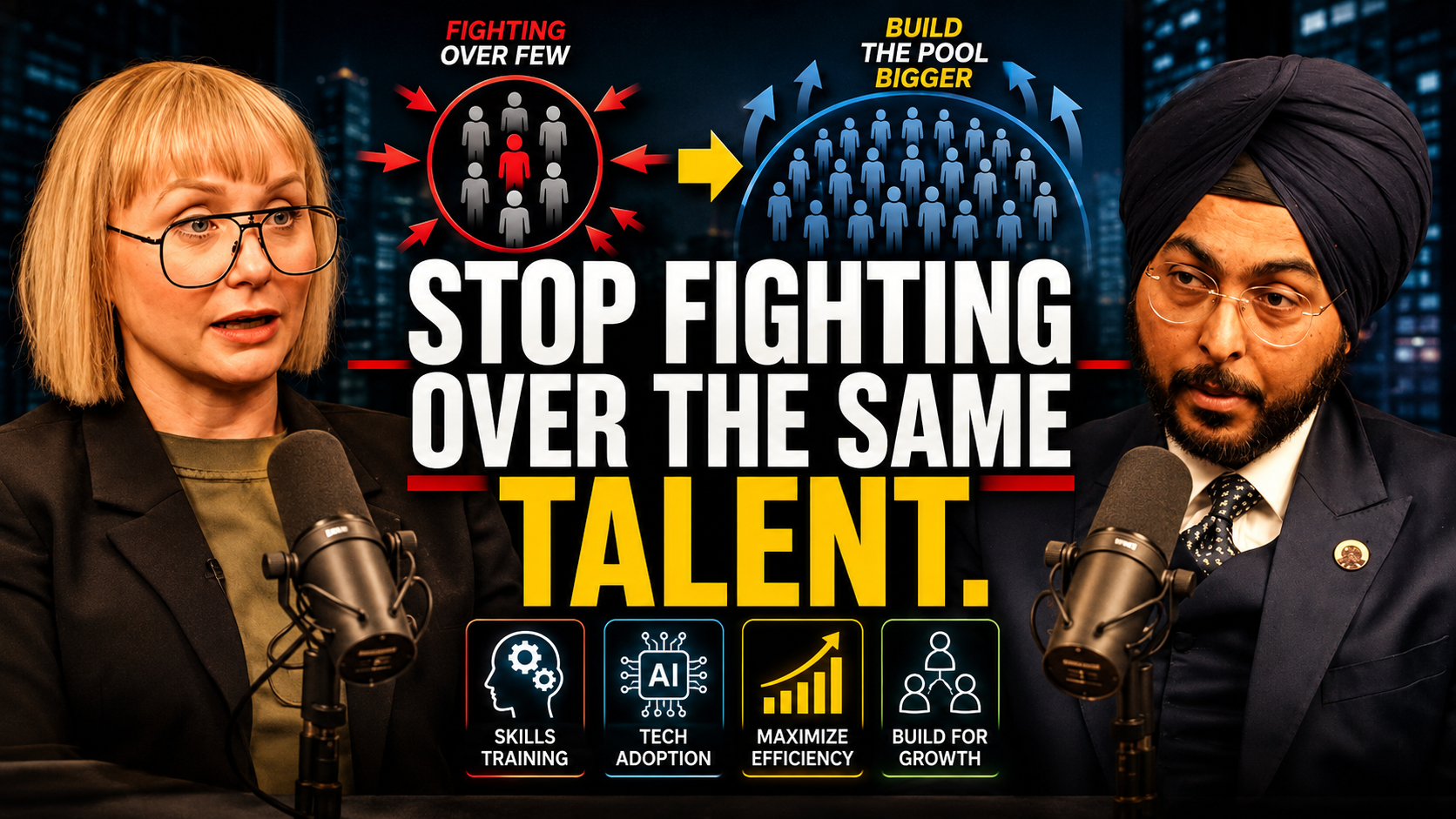
Stop Fighting Over the Same Talent Pool
Many organisations compete for the same small group of experienced workers. This often leads to people moving between competitors for slightly higher pay, while the overall skills shortage remains unchanged.
A better approach is to make the talent pool bigger.
Instead of only hiring people who already have every technical skill, organisations can recruit for attitude, problem-solving, communication, adaptability and teamwork. Technical skills can often be taught, especially when employers are willing to invest in structured internal training.
This shift allows businesses to create their own pipeline of talent rather than relying only on the external market.
Building Skills From Within
Internal training programmes, informal traineeships and on-the-job learning can help people move into roles they may not have previously considered. Many capable people want to build their careers but cannot afford to stop working for a year to complete a course.
Employers can play a powerful role by creating practical pathways for these people. When organisations hire for potential and then provide the right support, they not only fill roles but also build loyalty, confidence and long-term capability.
This approach is especially valuable for niche roles where experienced candidates are difficult to find.
What Leaders Should Do Now
Australian leaders need to stop seeing recruitment as the only answer. The future workforce will be built through a mix of better systems, smarter use of technology and a stronger commitment to developing people.
Organisations should review where technology can reduce pressure, identify roles where skills can be taught internally, and create pathways for people with the right mindset to enter and grow. The goal is not simply to hire more people. The goal is to build more capability.
Conclusion
Australia’s skills shortage will not be solved by one policy, one hiring campaign or one increase in migration. It requires a shift in thinking. We need to work smarter, adopt better tools and create more opportunities for people to build the skills our country needs.
To continue this important conversation around leadership, workforce capability, safety and community impact, we invite you to attend the National Child & Family Safety Leadership Summit 2026 on 22nd May 2026.
Join us for a moving and inspiring event that brings together leaders, professionals and changemakers committed to building safer, stronger and more supportive communities.