Australia’s Economic Future: Why Long-Term Leadership Matters
Australia is often described as a prosperous first-world nation, with a high standard of living, strong institutions and abundant natural resources. But beneath that prosperity sits a difficult question: are we building the kind of economy that can sustain this lifestyle for the next 10, 20 or 30 years?
For decades, Australia has relied heavily on commodities, agriculture, mining, cattle, land, energy exports and raw materials. These industries are important. They have helped build the country and they continue to support regional communities, jobs and national wealth.
But the challenge is clear: if Australia continues to rely mainly on what it digs up, grows or ships out, will it be able to compete with countries that are producing advanced technology, high-value manufacturing, defence systems, medical innovation, artificial intelligence and complex industrial products?
This is where the national conversation must shift from short-term politics to long-term economic strategy.
A First-World Lifestyle Needs a First-World Economy
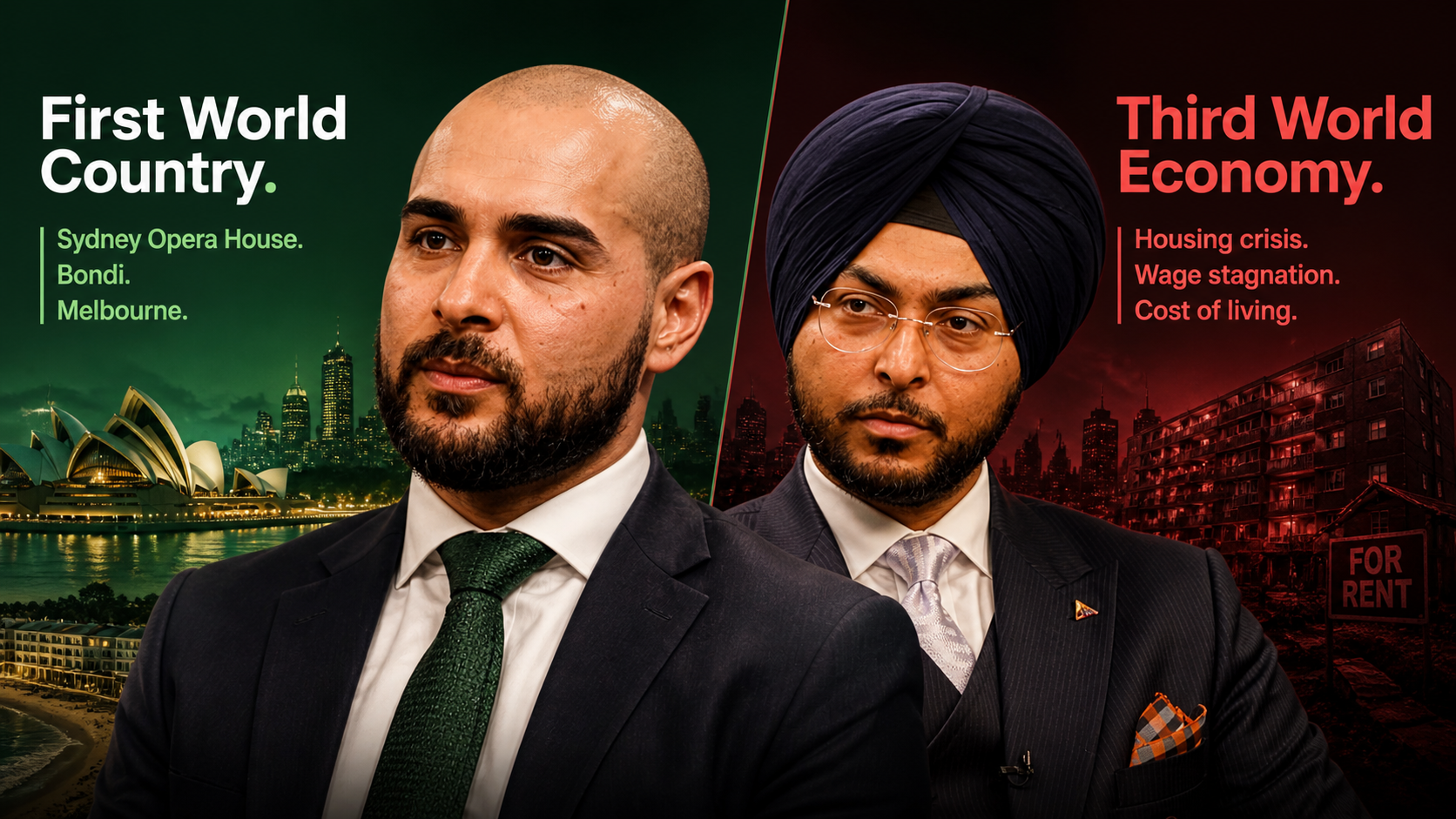
One powerful observation is that Australia risks becoming a first-world country with a third-world economy. In simple terms, this means we enjoy the lifestyle of a wealthy developed nation, but too much of our productive base remains focused on raw materials and lower-value exports.
Australia produces cattle, minerals, crops and energy. These are valuable, but they are often the starting point of a value chain rather than the end product.
The real wealth is often created by countries that transform raw materials into high-value goods. Germany has advanced manufacturing. The United States leads in technology, defence, software and innovation. France has strengths in aerospace, luxury goods, energy and engineering. Japan, South Korea and Singapore have built powerful economies through technology, manufacturing and strategic planning.
Australia has the talent, resources and stability to do far more. But doing more requires vision.
The Problem with Short-Term Political Thinking
One of Australia’s biggest challenges is the political cycle. Governments often think in three-year terms because elections reward short-term wins. But economic transformation does not happen in three years.
A serious national growth strategy must look 10, 20 and even 30 years ahead.
It must ask:
What industries should Australia lead in?
How do we turn raw materials into high-value products?
How do we create skilled jobs for future generations?
How do we protect national sovereignty through stronger domestic capability?
How do we ensure regional communities benefit from economic growth?
How do we make Australia more competitive on the world stage?
These questions cannot be answered through slogans. They require disciplined policy, serious investment and national leadership that looks beyond the next election.
Watch the complete Podcast on YouTube.
Australia Must Understand What It Has
Australia may not be the United States, China or India. It does not have the population size or industrial scale of those global powerhouses. But that does not mean Australia is powerless.
In fact, Australia has enormous strategic advantages.
It has food security potential. It has minerals the world needs. It has agricultural strength. It has energy resources. It has world-class universities. It has stable institutions. It has access to the Indo-Pacific region. It has land, space, talent and global relationships.
The question is not whether Australia has value.
The question is whether Australia knows how to use that value at the negotiating table.
Better Deals, Better Strategy, Better Outcomes
Australia needs to become more strategic in how it makes deals with the world.
For example, agriculture remains one of Australia’s major strengths. Cattle, food production and farming are not outdated industries. They are national assets. As populations grow and food demand increases across Asia, Australia could be in a powerful position.
But simply exporting raw products is not enough.
Australia should be asking how it can build stronger trade agreements, expand food processing, create premium export brands, invest in regional infrastructure and develop long-term partnerships that benefit Australian workers, farmers and businesses.
The goal should not only be to sell more. It should be to capture more value.
That means more local jobs, more processing, more manufacturing, more logistics capability and more ownership of the value chain.
From Raw Materials to High-Value Products
If Australia wants to secure its economic future, it must move further up the value chain.
Instead of only exporting minerals, Australia should explore more refining, processing, battery manufacturing and advanced materials production.
Instead of only exporting agricultural products, Australia should expand food technology, premium packaged goods, processing and global branding.
Instead of relying on imported manufactured goods, Australia should rebuild strategic manufacturing in areas such as defence, energy, medical supplies, transport, construction materials and critical infrastructure.
Instead of watching technology develop overseas, Australia should invest in innovation, research, artificial intelligence, robotics, cybersecurity and future industries.
This does not mean abandoning traditional industries. It means strengthening them by adding value.
Economic Growth Is Also a National Security Issue
A strong economy is not just about wealth. It is also about security.
Countries that cannot make essential goods become dependent on others. Countries that cannot process their own resources lose bargaining power. Countries that cannot create skilled jobs risk losing talent. Countries that rely too heavily on imports become vulnerable during global shocks.
Australia learned during recent global disruptions that supply chains can break quickly. Fuel, medical equipment, building materials, machinery parts and essential goods can become scarce when the world is under pressure.
That is why economic policy must be connected to national security, family wellbeing and community resilience.
A strong economy protects families. It creates jobs. It funds schools, hospitals, roads, emergency services and social support. It gives young people hope. It gives regional communities opportunity. It gives the country independence.
Leadership Requires Courage
Australia needs leaders who are willing to think beyond party politics and election cycles.
This does not mean every government will agree on every policy. But the country needs a shared understanding that long-term economic growth is essential to national survival.
Australia cannot afford to drift.
It needs a serious plan for productivity, manufacturing, trade, skills, energy, agriculture, technology and national resilience.
It needs to recognise what it already does well, while also building the industries of the future.
It needs to stop seeing itself as only a supplier of raw materials and start acting like a country capable of producing world-class, high-value products and services.
Building a Future Worth Passing On
The real question is not just what kind of economy Australia has today. The real question is what kind of country we want to leave behind for our children.
Will future generations inherit a nation that still enjoys first-world living standards?
Will they have access to meaningful jobs, safe communities and strong local industries?
Will Australia have the confidence to stand at the global table and negotiate from a position of strength?
Will we be a country that simply sells what is under the ground and on the land, or will we become a nation that creates, builds, innovates and leads?
These are not abstract economic questions. They are questions about families, children, communities and national responsibility.
Join Us at the National Child & Family Safety Leadership Summit 2026
Australia’s future depends on courageous leadership, strong communities and long-term thinking. Economic security, national resilience and family safety are deeply connected.
We invite you to attend the National Child & Family Safety Leadership Summit 2026 on 22nd May 2026.
Join us for a moving and inspiring gathering of leaders, advocates, professionals and community voices committed to creating a safer, stronger and more resilient future for Australian children and families.
Together, we can begin the conversations that matter and turn them into meaningful action.