
AI and the Future of Work: Why Caution and Optimism Must Go Hand in Hand
Artificial intelligence is no longer a distant concept it is already reshaping how we work, communicate and solve problems. From healthcare and education to finance and customer service, AI is becoming deeply embedded in modern life. Yet with every technological leap comes a familiar tension: excitement about opportunity and anxiety about disruption.
The current conversation around AI reflects this divide. On one side are the optimists, who see AI as a transformative tool capable of boosting productivity, unlocking innovation and solving complex challenges. On the other are sceptics, concerned about job losses, misinformation, ethics and the pace of change.
The truth, as history suggests, is likely somewhere in the middle.
Every Major Technology Shift Has Faced Fear and Hype
Whenever a major new technology emerges, society tends to follow a predictable cycle. There is excitement, rapid investment, inflated expectations and, often, a period of correction. Some businesses thrive, others fail, and public sentiment swings between enthusiasm and fear.
This pattern is not unique to AI. The same happened with railways, electricity, radio, television, the internet and smartphones. Each was once viewed as disruptive or even threatening. Yet over time, these innovations became part of everyday life and ultimately created more opportunities than they removed.
Research into historical technology trends consistently shows that innovation tends to generate more jobs than it destroys. While certain roles disappear, new industries, services and professions emerge in their place.
Why AI Will Change Jobs Not Eliminate Human Value
It is understandable that people feel uneasy about AI. Human beings are naturally cautious about what they do not fully understand. In evolutionary terms, that instinct helped us survive. Today, that same instinct can make us hesitant about rapid technological change.
But AI is best understood not as a replacement for people, but as a tool that changes how work is done.
Routine, repetitive and administrative tasks are most likely to be automated. This could include data entry, basic reporting, scheduling, document processing and other time consuming functions. While this shift may affect some jobs, it also creates space for workers to focus on higher-value tasks the kind that require judgement, empathy, creativity and human connection.
In sectors such as aged care, healthcare, education and community services, technology may improve systems and efficiency, but it cannot replace the compassion and trust that people provide.
For example, AI can help monitor the wellbeing of elderly Australians through sensors, alerts and medication reminders. It can support carers and families by flagging risks early. But when it comes to reassurance, dignity and emotional support, human care remains irreplaceable.
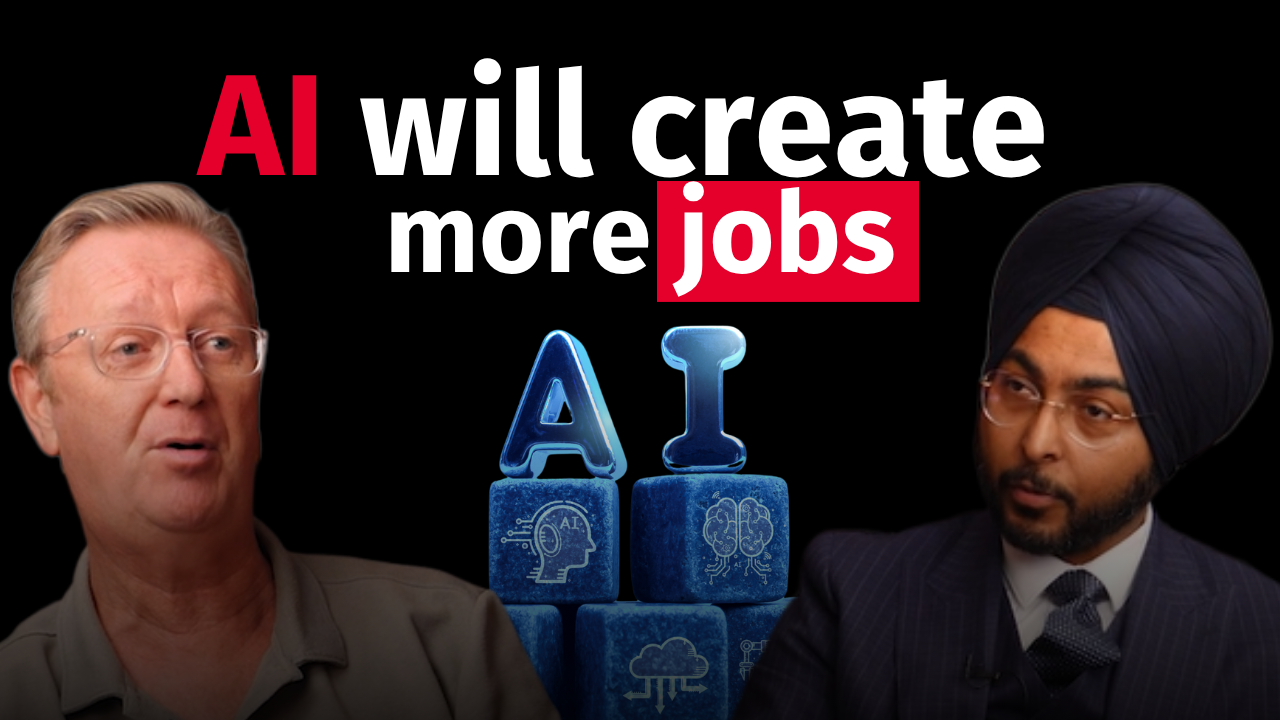
Watch the complete Podcast on YouTube.
Preparing for an AI-Driven Economy
The real challenge is not whether AI will change work it will. The challenge is how governments, businesses and communities prepare for that change.
To ensure AI benefits everyone, Australia must focus on:
- investing in digital literacy and lifelong learning
- supporting workers through retraining and upskilling
- creating ethical AI frameworks and safeguards
- encouraging innovation while protecting vulnerable communities
- strengthening sectors where human skills are essential
The future of work will belong to those who can adapt, learn and combine technology with human strengths.
Why Human Leadership Matters More Than Ever
As AI becomes more powerful, qualities such as empathy, wisdom, integrity and community leadership will matter even more. Technology can enhance systems, but it cannot replace the people who nurture resilience, create belonging and hold communities together.
That is why conversations about leadership, care and inclusion remain so important especially when we reflect on the women who have shaped our society, often through quiet strength and everyday acts of service.
Join Us at Our Upcoming Events
Join Us at the National Child & Family Safety Leadership Summit 2026 will bring together leaders, practitioners, policymakers, researchers and community voices from across the country. This important gathering creates space for meaningful dialogue on the most pressing issues impacting children and families including domestic violence, coercive control, child protection, and community wellbeing.
We look forward to welcoming you to this moving and inspiring celebration of women’s achievements and contributions. Don’t miss this opportunity to hear from one of WA’s most influential scientific leaders, Miquela Riley.