
Australia’s Economic Potential: Removing Barriers to Unlock Growth
Australia stands at a crossroads. Rich in natural resources, blessed with vast agricultural land, and positioned strategically in the Asia-Pacific, the nation has all the ingredients for sustained prosperity. Yet, as many in mining, agriculture, and industry will attest, realising this potential has become increasingly difficult.
The central tension is simple: how can Australia unlock its economic opportunities while navigating an environment of increasing regulation and constraint?
The Opportunity: A Nation Built for Growth
Australia’s economic strength has always been rooted in three key sectors:
- Mining and resources – critical minerals, iron ore, gold, and energy exports
- Agriculture – feeding both domestic and global populations
- Infrastructure and manufacturing – enabling productivity and trade
These sectors are not just industries they are wealth generators capable of supporting future generations. With global demand for resources rising, particularly in clean energy transitions, Australia is uniquely positioned to lead.
But opportunity alone is not enough. It must be accessible, efficient, and actionable.
The Challenge: Regulation vs Productivity
Many industry leaders describe the current environment as one where progress is slowed by excessive regulation. Projects that once took a few years now stretch into decades.
Consider this:
- Mining projects can take up to 10 years to move from discovery to production
- Infrastructure development often faces prolonged approvals and compliance hurdles
- Farmers encounter increasing layers of rules impacting land use and productivity
This creates a system where innovation is stifled, investment is delayed, and momentum is lost.
The frustration is not about governance itself but about balance. When regulation becomes an obstacle rather than a safeguard, economic potential is diminished.
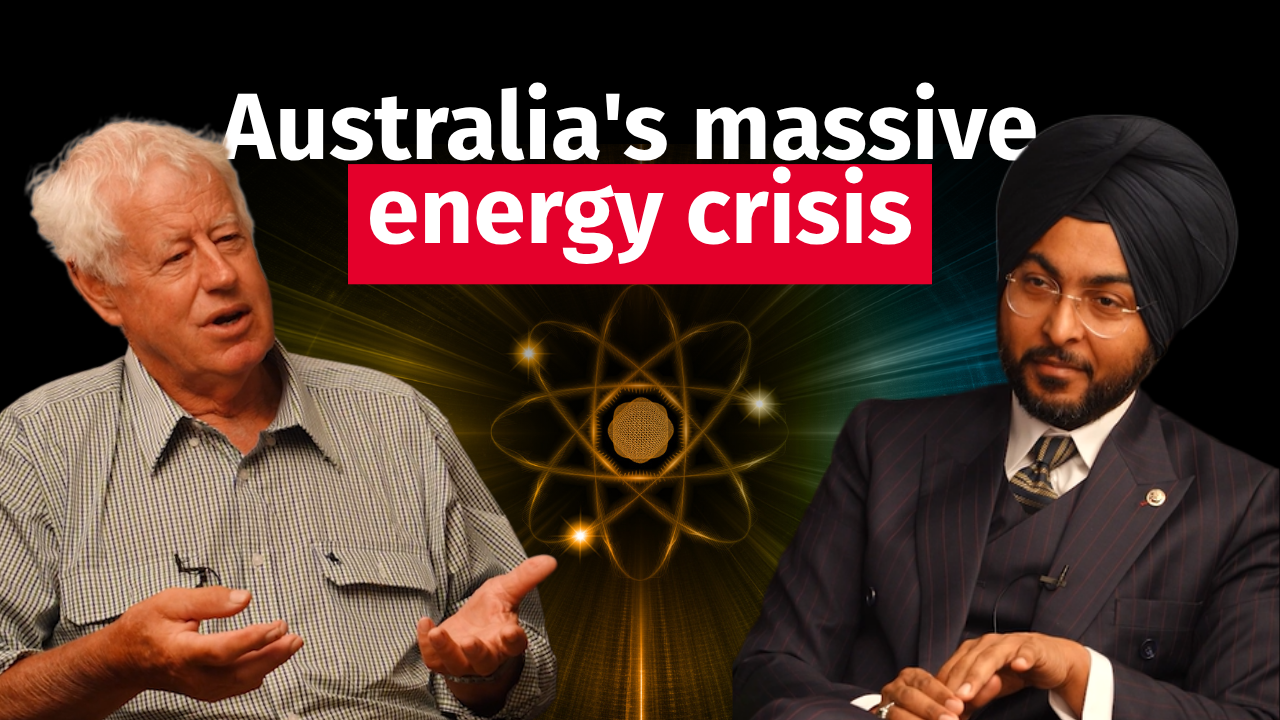
Watch the complete Podcast on YouTube.
Lessons from History: Speed, Freedom, and Executio
History offers powerful lessons in what can be achieved when barriers are removed.
During World War II, nations mobilised at unprecedented speed. In the United States, companies like Ford Motor Company transformed production capabilities almost overnight. The Willow Run plant famously produced a bomber every hour within just a few years of its construction.
Australia, too, demonstrated remarkable capability manufacturing aircraft, machinery, and equipment at scale.
The takeaway is not to replicate wartime conditions, but to recognise a principle:
When systems enable action rather than delay it, extraordinary outcomes become possible.
The Energy Equation: Cost and Competitiveness
Economic prosperity is deeply tied to energy.
- Affordable energy → Competitive industries → Economic growth
- Expensive energy → Reduced competitiveness → Economic stagnation
Australia currently faces rising energy costs, driven in part by policy decisions and emissions targets. While environmental responsibility is critical, the challenge lies in ensuring that economic sustainability is not sacrificed in the process.
A balanced approach is essential one that supports both environmental goals and industrial competitiveness.
Rebuilding Capability: Beyond a Service Economy
There is growing concern that Australia is becoming overly reliant on a service-based economy. While services are vital, a strong nation typically maintains a balance between:
- Production
- Manufacturing
- Services
Without this balance, resilience weakens. The ability to build, produce, and innovate domestically becomes limited.
Reinvesting in sovereign capability whether in manufacturing, agriculture, or infrastructure is key to long term stability.
A Path Forward: Enabling, Not Restricting
To unlock Australia’s full potential, a shift in mindset may be required:
- Streamlined approvals for critical projects
- Clear, consistent policies that encourage investment
- Collaboration between government and industry
- Focus on outcomes rather than process-heavy controls
The role of government is not diminished in this vision it is refined.
Not as a barrier, but as an enabler of progress.
Final Thoughts: Leadership, Responsibility, and the Future
Economic growth is not just about numbers it’s about people, families, and future generations. When industries thrive, communities grow. When opportunities expand, lives improve.
This is where leadership matters most not only in government and industry, but across society.
Join the Conversation
If these ideas resonate with you—if you believe in building stronger systems, safer communities, and a more resilient future then we invite you to be part of something meaningful.
Join us at the National Child & Family Safety Leadership Summit 2026 on 22nd May 2026.
This will be a moving and inspiring event, bringing together leaders, professionals, and advocates committed to creating safer environments for children and families across the nation.
Be part of the dialogue. Be part of the change.