
Productivity, Tax Policy, and Business Growth: Why the System Needs Rethinking
Introduction
In today’s economic climate, productivity growth has become one of the most pressing challenges for businesses and policymakers alike. Across industries, business owners are asking a fundamental question: why does growth sometimes feel like a penalty rather than a reward?
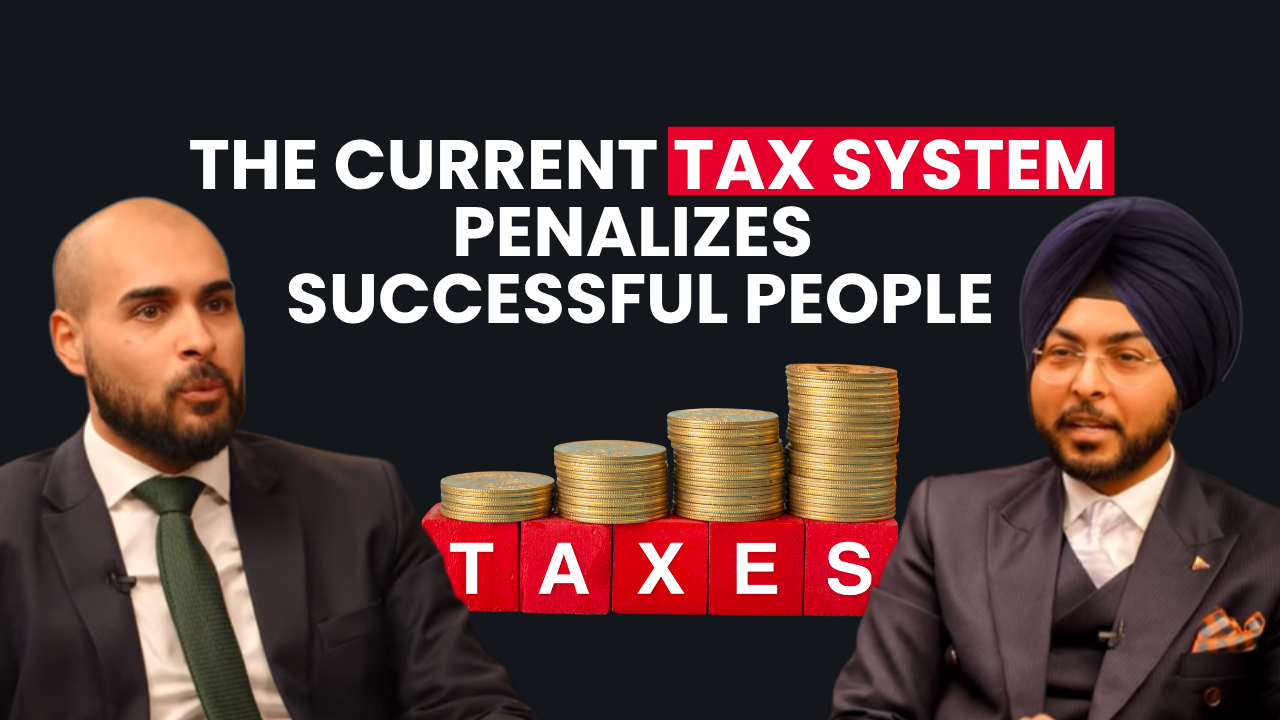
In this conversation, we explore the intersection between productivity and tax policy particularly the impact of state-based taxes such as payroll tax and how they influence business decision-making. The discussion highlights a growing concern among business leaders: while governments aim to encourage innovation through incentives like R&D tax offsets, other tax structures may unintentionally discourage hiring, expansion, and long-term investment.
Understanding this tension is crucial if we are to build a more productive, competitive, and sustainable economy.
What Is Productivity and Why Does It Matter?
How do we define productivity in business?
Productivity is essentially about getting more output from the same or fewer inputs. For businesses, this means producing more value whether through goods, services, or innovation without proportionally increasing costs.
Higher productivity leads to:
- Increased profitability
- Better wages for employees
- Stronger economic growth
- Greater global competitiveness
Yet, despite its importance, productivity growth has slowed in many developed economies, raising serious concerns about long-term prosperity.
Watch the complete Podcast on YouTube.
The Role of Tax Policy in Productivity
Can tax systems influence business productivity?
Absolutely. Tax policy plays a critical role in shaping business behaviour. Ideally, a well-designed tax system should:
- Encourage investment
- Support job creation
- Reward innovation
- Promote economic efficiency
However, when taxes are perceived as punitive rather than supportive, they can have the opposite effect.
Understanding State-Based Taxes
What are state-based taxes?
State-based taxes are levied by individual states rather than the federal government. These include:
- Payroll tax
- Land tax
- Stamp duties
Historically, these taxes were introduced to provide states with revenue after certain taxing powers were transferred to the federal level.
Payroll Tax: A Barrier to Growth?
Why is payroll tax controversial?
Payroll tax, originally introduced as a post-war revenue measure, has become one of the largest sources of state income. However, many businesses view it as a penalty on employment.
From a business perspective:
- Hiring more staff increases tax liability
- Wage growth leads to higher taxes
- Expansion can trigger additional financial burdens
This creates a paradox: the very act of growing a business results in increased taxation, which can discourage expansion.
How does payroll tax impact productivity?
Many business owners report hesitation in hiring or scaling operations due to payroll tax obligations. The mindset often becomes:
This hesitation directly affects productivity by:
- Limiting workforce expansion
- Reducing innovation capacity
- Slowing economic activity
In effect, a tax designed to generate revenue may unintentionally suppress growth.
The Contradiction: Incentives vs Penalties
How do R&D incentives fit into the picture?
Governments often provide R&D tax incentives to encourage innovation. These incentives aim to:
- Support experimentation
- Encourage new product development
- Drive technological advancement
However, there is a clear contradiction:
- Businesses are rewarded for innovation
- Yet penalised for hiring and scaling
This misalignment creates confusion and inefficiency within the system.
Rethinking the Tax System
Is there a better approach?
Some experts propose restructuring the tax system to improve efficiency and productivity. Potential solutions include:
- Shifting state taxes to the federal level
- Increasing GST (Goods and Services Tax) to compensate
- Introducing more uniform, broad-based taxes
- Reducing reliance on employment-based taxes
The goal is to create a system that:
- Encourages growth rather than discourages it
- Aligns incentives with productivity outcomes
- Simplifies compliance for businesses
The Bigger Issue: National Productivity
Are current policies addressing the real problem?
While discussions around wealth taxes, superannuation changes, and new levies continue, many argue that these do not address the core issue: productivity stagnation.
True economic progress requires:
- Encouraging businesses to expand
- Supporting workforce development
- Aligning tax policy with growth objectives
Without this alignment, productivity will remain constrained, regardless of how many new taxes are introduced.
Final Thoughts
The relationship between productivity and taxation is complex, but one thing is clear: businesses thrive when growth is rewarded, not penalised. If policymakers are serious about improving productivity, they must ensure that tax systems support not hinder economic activity.
A more balanced, forward-thinking approach to taxation could unlock significant potential for businesses, employees, and the broader economy.
Join Us at Our Upcoming Events
Join Us at the National Child & Family Safety Leadership Summit 2026 will bring together leaders, practitioners, policymakers, researchers and community voices from across the country. This important gathering creates space for meaningful dialogue on the most pressing issues impacting children and families including domestic violence, coercive control, child protection, and community wellbeing.
We look forward to welcoming you to this moving and inspiring celebration of women’s achievements and contributions. Don’t miss this opportunity to hear from one of WA’s most influential scientific leaders, Miquela Riley.