
AI Is Changing Entry-Level Jobs: How Young Professiona
ls Can Still Learn, Grow and SucceedIntroduction: The Changing Landscape of Entry-Level Jobs
Artificial intelligence is rapidly reshaping the future of work, particularly when it comes to entry-level jobs. Tasks that once required hours of research, data collection, and manual effort can now be completed in minutes using AI tools. While this shift brings efficiency, it also raises an important question: how will young professionals gain the experience they need to grow?
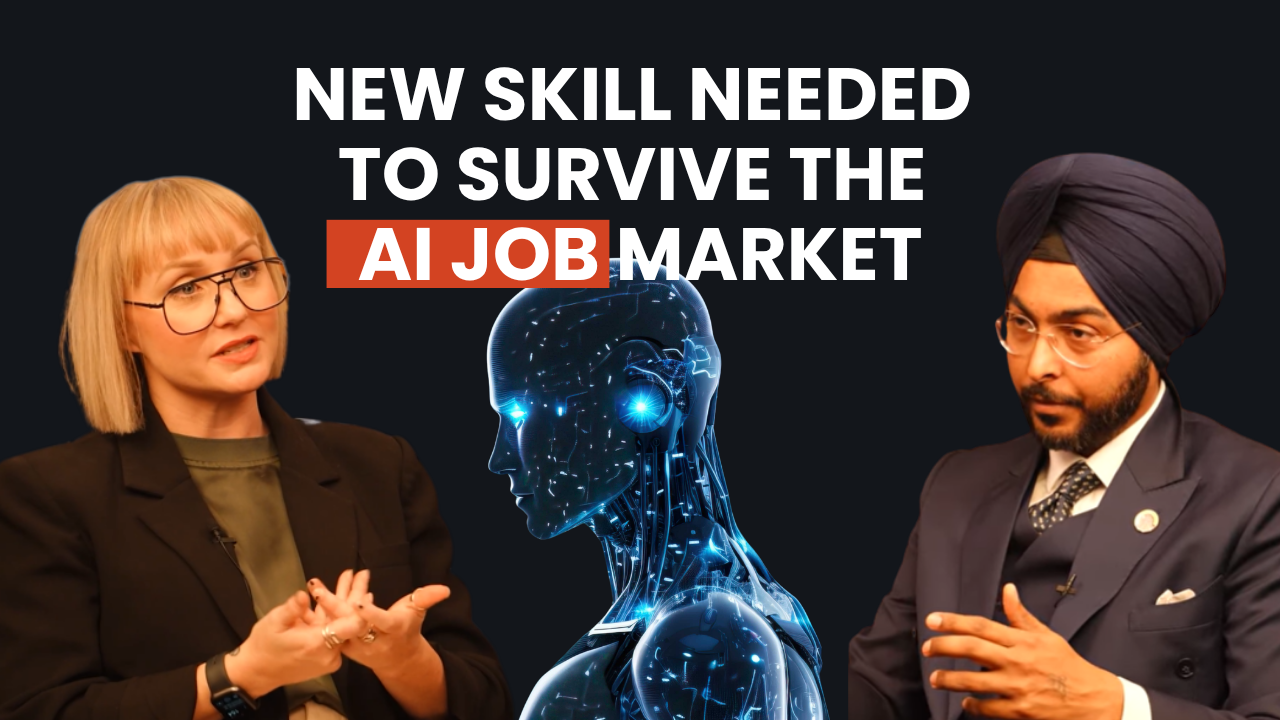
In a recent conversation, we explored this challenge through the lens of real workplace experience where learning traditionally came from starting as an intern, making mistakes, and being guided by mentors. As AI begins to replace or reduce these early-stage roles, the pathway to developing practical skills is evolving. The focus is no longer just on gathering information, but on how to interpret, question, and apply it effectively.
Are Entry-Level Jobs Really Disappearing?
AI is not eliminating jobs entirely but it is transforming them.
Previously, entry-level roles often involved:
- Researching information
- Compiling reports
- Performing repetitive administrative tasks
Today, AI can perform many of these functions faster and more efficiently. This means organisations may require fewer people for such roles, leading to increased competition among graduates.
However, this does not mean opportunity is gone it means the nature of opportunity is changing.
The Real Risk: Losing the Learning Curve
Traditionally, early career growth followed a clear path:
- Intern → Junior → Assistant → Manager
This progression allowed individuals to:
- Learn through trial and error
- Receive mentorship
- Develop judgement over time
With fewer entry level opportunities, there is a risk that young professionals may miss out on:
- Practical exposure
- Guided feedback
- Real-world decision-making experience
This “missing middle” could impact long-term workforce development if not addressed.
Watch the complete Podcast on YouTube.
Digital Natives: A New Advantage
One positive shift is that younger generations are becoming digital natives.
They are:
- Naturally comfortable with technology
- Faster at adapting to new tools
- More intuitive when interacting with AI systems
In fact, many young people may become better at prompting AI than older professionals. They understand how to:
- Ask precise questions
- Experiment with outputs
- Navigate digital platforms seamlessly
But technical familiarity alone is not enough.
The Most Important Skill: Critical Thinking
As AI becomes more powerful, the most valuable human skill is not access to information—it is the ability to evaluate it.
The real challenge is:
- How do you know if AI output is correct?
- How do you distinguish quality from noise?
- How do you identify bias or misinformation?
This is where critical thinking becomes essential.
Future professionals must learn to:
- Cross-check information
- Question assumptions
- Identify inconsistencies
- Apply judgement, not just automation
In a world of misinformation and rapid data generation, discernment is the new expertise.
From Data Collection to Decision Making
The workplace is shifting from:
- “Spend a day researching”
to:
- “Gather insights quickly and interpret them effectively”
Managers are now expected to mentor employees not on:
- How to find information
But on:
- How to analyse, synthesise, and apply it
This represents a fundamental change in learning:
- Less focus on process
- More focus on thinking
The Role of Organisations: Investing in Early Talent
Businesses also have a responsibility in this transition.
If entry-level roles shrink, organisations must:
- Create structured learning pathways
- Invest in mentoring programmes
- Provide hands-on opportunities
- Encourage guided experimentation with AI
Without this investment, industries risk a future talent shortage at senior levels.
Simply put:
If we don’t build from the bottom, we weaken the entire pipeline.
How Graduates Can Adapt and Thrive
For young professionals entering the workforce, the strategy is clear:
1. Learn How to Prompt AI Effectively
Understand how to ask better questions, not just get faster answers.
2. Develop Critical Thinking
Always validate, question, and refine outputs.
3. Seek Mentorship
Even if roles are changing, guidance remains invaluable.
4. Build Real-World Experience
Through internships, projects, volunteering, or freelance work.
5. Focus on Interpretation, Not Just Information
Your value lies in what you do with information—not just finding it.
Conclusion: A New Era of Work, Learning and Opportunity
AI is not the end of entry-level careers it is the beginning of a new kind of learning journey. While the traditional pathways may be shifting, the need for human judgement, curiosity, and critical thinking has never been greater.
The future workforce will not be defined by how much information individuals can gather, but by how well they can understand, challenge, and apply it.
Join Us at Our Upcoming Events
Join Us at the National Child & Family Safety Leadership Summit 2026 will bring together leaders, practitioners, policymakers, researchers and community voices from across the country. This important gathering creates space for meaningful dialogue on the most pressing issues impacting children and families including domestic violence, coercive control, child protection, and community wellbeing.
We look forward to welcoming you to this moving and inspiring celebration of women’s achievements and contributions. Don’t miss this opportunity to hear from one of WA’s most influential scientific leaders, Miquela Riley.