
Truth, Freedom and the Fragility of Democracy: Why History Still Matters Today
History has a way of reminding us that the freedoms we enjoy are neither inevitable nor permanent. Across centuries and continents, power has rarely been surrendered peacefully. It has been seized, defended and, too often, soaked in blood.
And yet, in countries like Australia, we witness something extraordinary: the peaceful transfer of power. Ballots are counted. Governments change. Boxes are packed. One side leaves, another arrives. There may be disappointment, perhaps a few tears and a few too many drinks, but the institutions endure.
It feels normal. It feels stable. But historically speaking, it is close to miraculous.
When Democracy Fails: Lessons from 1984
In 1949, George Orwell published Nineteen Eighty-Four, a novel that continues to shape political thinking across generations. For many, reading 1984 as a young person is unsettling. For others, it becomes formative.
Orwell introduced concepts that have become part of our cultural vocabulary:
- The “Ministry of Truth” rewriting history
- “Doublethink” — holding two contradictory beliefs at once
- The “memory hole” — erasing inconvenient facts
- The policing of speech through Newspeak
These ideas are not merely literary devices. They are warnings. They challenge us to consider how language, truth and power intersect.
When societies begin to decide which truths are permissible and which must disappear, freedom erodes quietly. Not with tanks in the streets, but with edits, omissions and silence.
The 1984 Sikh Genocide: A Modern Tragedy
The year 1984 was not only fictional dystopia. It was also a year of devastating reality.
Following the assassination of Prime Minister Indira Gandhi, organised mobs targeted Sikh communities across India. Electoral rolls were reportedly used to identify Sikh households. In a matter of days, thousands were killed.
Homes were marked. Families were dragged from their houses. Many died simply because of their name, faith or identity.
It is uncomfortable to confront. Yet it illustrates something vital: even in the late twentieth century, even in large democracies, stability can fracture. Institutions can fail. Majorities can turn on minorities.
History does not belong solely to medieval dynasties or ancient empires. It belongs to our parents’ lifetimes.
Watch the complete Podcast on YouTube.
The Illusion of Permanence
If you study the history of Europe, England, China or the Middle East, one pattern repeats: power is rarely transferred peacefully. Dynasties fall and rivals are eliminated not politely asked to vacate the palace.
Against that backdrop, modern democratic handovers are remarkable. In Australia, governments change without bloodshed. Political opponents do not disappear. Civil servants remain. Courts function.
We are, in many ways, beneficiaries of the “lottery of life”.
But complacency is dangerous.
Democracy depends on:
- A shared commitment to truth
- Freedom of speech
- Strong institutions
- Civic responsibility
- The protection of minorities
When any of these weaken, history shows us what can follow.
Why Truth and Free Speech Matter
A high view of truth is not ideological. It is foundational.
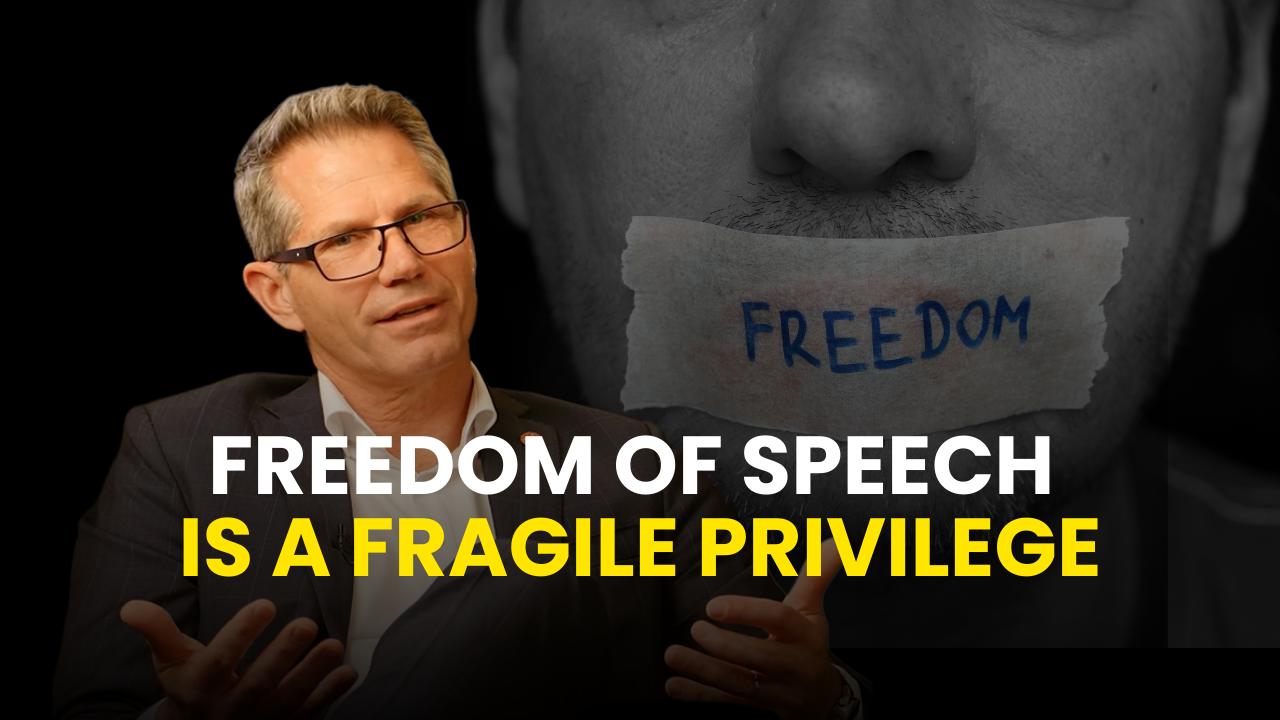
Freedom of speech allows ideas to be challenged rather than suppressed. It allows errors to be corrected rather than buried. It prevents the creation of “memory holes” where inconvenient realities are erased.
When citizens are free to question authority, debate policy and express dissent, democracies remain resilient. When speech narrows, when language is manipulated, when uncomfortable conversations are silenced, institutions begin to hollow out from within.
We must resist the temptation to believe, “It can’t happen here.”
History suggests it can happen anywhere.
The Role of Women in Safeguarding Democracy
While much of history focuses on political leaders and public power struggles, it often overlooks another force quieter, yet profoundly influential.
Women have shaped democratic culture not only through elected office or activism, but through:
- Raising children with civic values
- Sustaining communities in times of upheaval
- Advocating for education and equality
- Preserving cultural memory
- Building networks of care
Motherhood, caregiving and community leadership are not peripheral roles in history they are foundational ones.
Democracy is not sustained solely in parliaments. It is sustained in homes, schools, churches, community halls and neighbourhoods.
And women have long stood at the heart of those spaces.
Join Us at Our Upcoming Events
Join us at the WA International Women’s Day 2026 – Leaders Breakfast Event. We honour remarkable women. They shaped Western Australia’s history. For instance, they led through activism and caregiving. Moreover, they built communities.
Join Us at the National Child & Family Safety Leadership Summit 2026 will bring together leaders, practitioners, policymakers, researchers and community voices from across the country. This important gathering creates space for meaningful dialogue on the most pressing issues impacting children and families including domestic violence, coercive control, child protection, and community wellbeing.
We look forward to welcoming you to this moving and inspiring celebration of women’s achievements and contributions. Don’t miss this opportunity to hear from one of WA’s most influential scientific leaders, Miquela Riley.