Rethinking Grief and Bereavement in Australia: Why Community Matters More Than Ever
Grief is not an illness. It is not a disorder to be fixed or a problem to be managed. It is a deeply human response to loss and yet in modern Australia, grief and bereavement have become increasingly medicalised. With workplaces often offering just two days of bereavement leave, many people are expected to return to “normal” before they have even begun to process their loss.
This approach stands in stark contrast to many cultural traditions around the world, where death and mourning are recognised as community events. In countries like Australia, where health and social services are strong, we have unintentionally stepped back as communities assuming professionals will take care of grief. But death, dying and loss have always belonged to the community first.
It’s time to rethink how we support grieving individuals in our workplaces, schools, and neighbourhoods and restore compassion at the centre of bereavement care.
The Problem with Medicalising Grief
For many years, grief was treated as something pathological something that needed diagnosing and professional intervention. The default response after a death in the family often became: “You must see a psychologist” or “You need grief counselling.”
While professional mental health support is essential for some, research has shown that the majority of people do not require clinical intervention to navigate grief.
Large-scale bereavement research across Australia demonstrated:
- 90% of people can cope with grief through community support
- 60% experience what is considered ‘normal’ grief
- 30% experience moderate grief and may need additional community-based support
- Only 10% require specialist mental health intervention
This research reshaped how bereavement policies are developed internationally. It challenged the assumption that grief is primarily a clinical issue and instead reinforced what communities have known for generations: healing happens in relationship.
Grief is a social event with a professional component not a professional event with a social component.
Cultural Approaches to Grief: What We Can Learn
Across many cultures, mourning is shared, visible and communal.
In parts of the Middle East, burial happens quickly and the community gathers immediately. In Māori and Indigenous communities, mourning rituals involve collective presence, storytelling and shared responsibility. Irish traditions also centre around communal wake practices.
These traditions provide space for:
- Shared storytelling
- Collective crying and laughter
- Practical support
- Spiritual ritual
- Communal meals
- Time
In contrast, Western workplace structures often allow just two days of bereavement leave barely enough to arrange a funeral, let alone process loss. Two days is not sufficient to recover from the administrative tasks associated with death, let alone the emotional impact.
When community takes responsibility, the grieving person is free to do one thing: grieve.
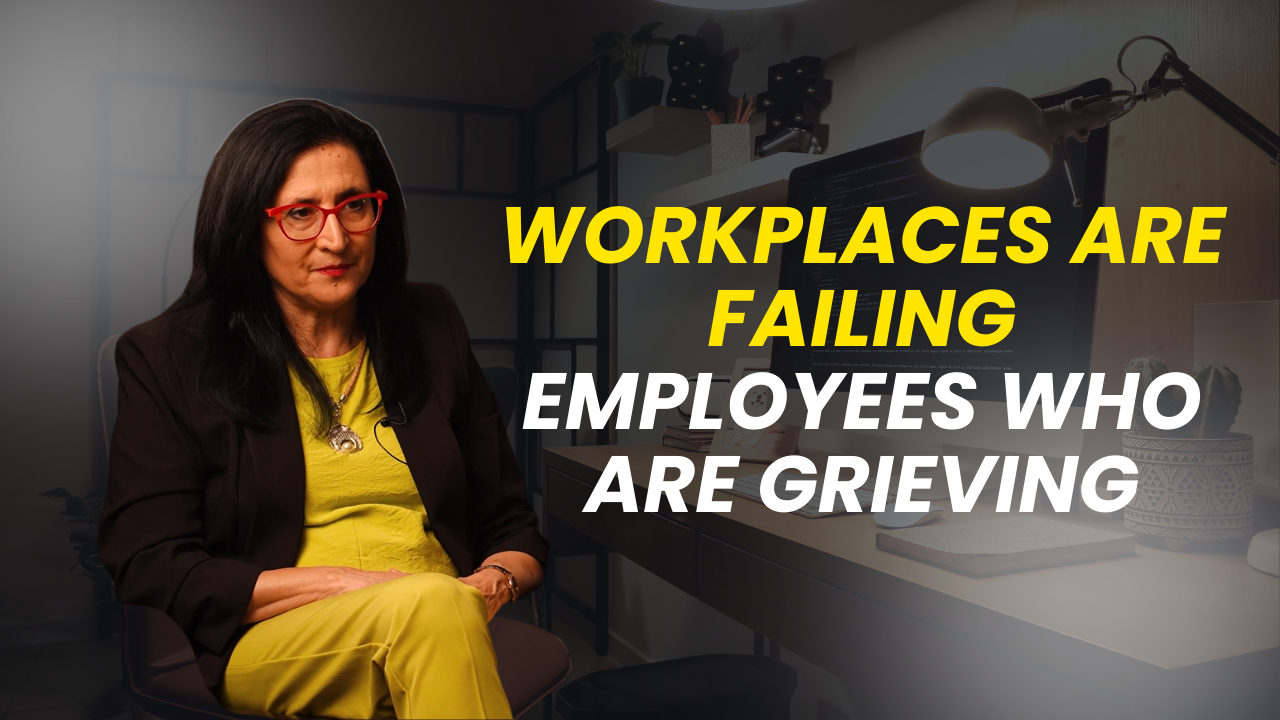
Watch the complete Podcast on YouTube.
Why Workplaces Must Do Better with Bereavement Leave
Modern employment policies often fail to reflect the reality of grief.
Employers must begin asking:
- How can we provide meaningful bereavement leave?
- How can managers be trained to respond with empathy?
- How do we support employees caring for someone who is dying?
- What does culturally appropriate bereavement support look like?
Progressive organisations are now introducing structured bereavement policies, flexible leave options, and training programs that teach leaders how to have compassionate conversations.
Workplaces are communities too and they must recognise that grief does not end after 48 hours.
Compassionate Communities: A Movement for Change
The concept of Compassionate Communities is gaining traction across Australia. The model recognises that care for people who are dying, grieving, or living with loss is everyone’s responsibility not solely the domain of health professionals.
Compassionate Communities Australia advocates for:
- Grief literacy programs in schools
- Bereavement support training in workplaces
- Community-led support networks
- Policy reform at local and state government levels
- Stronger integration between health services and communities
When communities reclaim their role in end-of-life care and bereavement support, resilience increases. People feel less isolated. And healing becomes collective rather than clinical.
Death has a medical component but it is fundamentally social. The same is true of grief.
Reclaiming Community Responsibility
In well-resourced countries like Australia, we have unintentionally outsourced care. With strong health systems and professional services, communities have stepped back, believing “experts” are better equipped to manage loss.
But no professional can replace the comfort of:
- A neighbour dropping off a meal
- A colleague sitting quietly beside you
- A friend listening without trying to fix
- A community gathering to honour someone’s life
Nobody does grief better than the community.
Strengthening community capacity is not about removing professional services. It is about restoring balance ensuring that professional support is available when needed, but that everyday compassion remains central.
Creating a Culture of Grief Literacy
To truly change the landscape, we must normalise conversations about death and loss.
This includes:
- Teaching children about grief in age-appropriate ways
- Training community leaders in compassionate response
- Encouraging workplaces to adopt meaningful bereavement policies
- Supporting local governments to implement community-based care frameworks
- Challenging the stigma around open mourning
Grief is not weakness. It is love persevering.
When we create space for people to grieve publicly and communally, we strengthen social bonds — and ultimately, our collective wellbeing.
A Call to Leadership and Compassion
If we are serious about building healthier communities, we must rethink how we approach death, dying and bereavement. Policies must reflect lived reality. Workplaces must extend empathy beyond minimum entitlements. Schools must build grief literacy. Communities must step forward again.
Compassion is not a soft skill it is social infrastructure.
Join Us at Our Upcoming Events
Join us at the WA International Women’s Day 2026 – Leaders Breakfast Event. We honour remarkable women. They shaped Western Australia’s history. For instance, they led through activism and caregiving. Moreover, they built communities.
Join Us at the National Child & Family Safety Leadership Summit 2026 will bring together leaders, practitioners, policymakers, researchers and community voices from across the country. This important gathering creates space for meaningful dialogue on the most pressing issues impacting children and families including domestic violence, coercive control, child protection, and community wellbeing.
We look forward to welcoming you to this moving and inspiring celebration of women’s achievements and contributions. Don’t miss this opportunity to hear from one of WA’s most influential scientific leaders, Miquela Riley.