


Pre-COP31 Leaders’ Summit 2026: Climate, Energy & Security
Bringing together collective voices for an open dialogue on Climate, Energy and Security for a Stable Future
About the event:
This Summit is part of the For-Purpose Leadership Series
This Summit is a high level, policy focused event, designed to support an open dialogue and strategic alignment ahead of the 31st UN Climate Change Conference of the Parties “COP 31” which is being held in Türkiye in November 2026. The key issues at COP31 are expected to include the credibility and implementation of updated national climate plans, climate finance and adaptation delivery, loss and damage, and pathways to balance emissions with economic and social stability.
Australia has been designated with a leadership role as the COP31 President of Negotiations, in order to steer discussions around COP31, with a strong focus on advancing priorities within the global process. In this context, the Pre-COP31 Leaders’ Summit will provide an early platform for an open dialogue across climate, energy, and security considerations. Hosted in Perth, Western Australia, the Summit will bring together senior executives, academics, economists, scientists and regional leaders, all bringing strong voices to explore how national and regional policy frameworks can reinforce climate outcomes, whilst strengthening energy security, economic resilience, and regional cooperation.
The core intention of this Summit is to focus on translating global climate commitments into credible, deliverable outcomes, by addressing the systems that underpin implementation. We hope to examine energy systems, critical resources and supply chains, national and regional resilience, adaptation, loss and damage, and the role of finance and institutions in delivery.
Why Attend
The Pre-COP31 Leaders Summit: Climate, Energy & Security is more than a policy forum — it is a strategic conversation ahead of a critical moment in the global climate calendar.
As countries prepare for COP31 in Türkiye, governments across Australia, the Pacific, and the wider Indo-Pacific are navigating complex choices around climate ambition, net-zero pathways, energy security, economic resilience, and regional stability. This Summit brings those perspectives together to support shared understanding, informed dialogue, and early policy alignment in advance of formal Pre-COP and COP31 processes.
Attending the Summit will give you the opportunity to:
- Engage with senior policymakers, officials, and regional leaders from across Australia, the Pacific, and partner countries involved in climate, energy, security, finance, and development policy
- Learn from Australian and international policy leaders through six focused panel discussions addressing COP31 priorities, net-zero pathways, energy systems, critical resources, resilience, security, and delivery
- Contribute to a constructive policy dialogue that reflects Australia’s leadership role and advances Pacific priorities within the global climate process
- Explore how integrated policy approaches can strengthen climate outcomes while supporting energy security, economic stability, and regional cooperation
- Help shape shared insights and policy considerations that can inform positions taken forward into Pre-COP discussions and COP31 negotiations
Whether you work in government, multilateral institutions, research, or policy development, the Summit offers a space for forward-focused dialogue that bridges jurisdictions, sectors, and perspectives — fostering relationships and insights that extend well beyond the Summit itself.
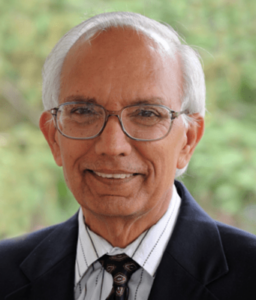
Prof. Rattan Lal
Director, CFAES Rattan Lal Center for Carbon Management and Sequestration, Professor: The Ohio State University
Prof. Rattan Lal
Professor Rattan Lal is a world-renowned soil scientist whose work has fundamentally reshaped our understanding of food security and climate change mitigation. He currently serves as a Distinguished University Professor of Soil Science at The Ohio State University and is the Director of the CFAES Rattan Lal Center for Carbon Management and Sequestration.
Over a career spanning five decades, Dr. Lal has championed the “soil-centric” approach to environmental sustainability. He is perhaps best known for his pioneering research on soil carbon sequestration, demonstrating how restoring organic matter to degraded soils can remove carbon dioxide from the atmosphere while simultaneously improving crop yields. His philosophy that the health of soil, plants, animals, people, and the environment is one and indivisible has made him a leading voice in global ecology.
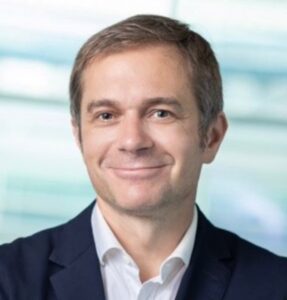
Samuel Morillon
MD Australia, New Zealand, VP Pacific: Siemens Energy | MBA INSEAD | GAICD
Samuel Morillon
Samuel Morillon is a distinguished senior executive currently serving as the Managing Director for Australia and New Zealand and Vice President for the Pacific at Siemens Energy. A strategic leader in the global energy transition, he oversees the delivery of innovative technologies and services designed to decarbonize energy systems and enhance grid stability across the Pacific region. His leadership is underpinned by an MBA from INSEAD and his status as a Graduate of the Australian Institute of Company Directors (GAICD), blending world-class business strategy with a deep commitment to high-standard corporate governance. With a career defined by navigating complex industrial landscapes, Morillon is recognized for driving sustainable growth and fostering the partnerships necessary to achieve a low-carbon future.
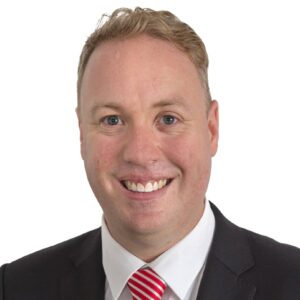
Prof. Gretta Pecl
Director, Centre for Marine Socioecology (UTAS), and Professor of Climate Change Ecology (IMAS). Lead Author for IPCC Working Group II, Assessment Report 7
Prof. Gretta Pecl
Professor Gretta Pecl is a world-renowned marine ecologist and a Professor of Climate Change Ecology at the Institute for Marine and Antarctic Studies (IMAS), University of Tasmania. As the Director of the Centre for Marine Socioecology (CMS), she leads interdisciplinary research that bridges the gap between ecological science, social equity, and policy, with a specific focus on how warming oceans are redistributing marine life globally. Her expertise is particularly vital in Tasmania, which is a global “hotspot” warming at nearly four times the global average. Professor Pecl is widely recognized for pioneering citizen science initiatives like Redmap Australia, which empowers fishers and divers to track species moving into new territories, and for her leadership in global networks such as Species on the Move.
A central figure in international climate governance, Professor Pecl served as a Lead Author for the IPCC Sixth Assessment Report (AR6) and continues her critical work as a Lead Author for the upcoming Seventh Assessment Report (AR7) cycle within Working Group II. Her contributions focus on the impacts of climate change on fisheries, tourism, and indigenous communities, emphasizing the urgent need for science-driven adaptation strategies. In 2024, she was appointed a Member of the Order of Australia (AM) for her significant service to ecological research and tertiary education. Beyond her technical research, she is a passionate science communicator and an advocate for gender equity in STEM, recognized as one of the top 20 most influential female climate scientists in the world.
Speakers Coming Soon......
Panel Discussions and Topics
The Pre-COP31 Leaders Summit: Climate, Energy & Security will host six high level policy conversations bringing together senior executives, academics, economists, scientists and regional leaders and policy experts.
Panel 1 – COP31 Priorities & Australia’s Negotiating Role
From Global Commitments to Regional Leadership
Guiding Question:
How can countries work together ahead of COP31 to align climate ambition, regional priorities, and geopolitical realities in support of constructive global negotiation outcomes?
Panel 2 – Resources, Critical Minerals & Strategic Supply Chains
Mining, Materials and the Geopolitics of the Net-Zero Economy
Guiding Question:
How can resource-rich and industrial economies collaborate to build secure, sustainable, and trusted supply chains that enable a resilient and equitable global net-zero transition?
Panel 3 – Finance, Institutions & Policy Delivery
Turning Leadership and Commitments into Real-World Outcomes
Guiding Question:
How can governments, financial institutions, and multilateral partners reform finance and delivery mechanisms to close the gap between global climate commitments and real-world implementation ahead of COP31?
Panel 4 – Net Zero Pathways, Energy Systems & Security
Designing Credible Net Zero Transitions that Deliver Reliability, Affordability and Security
Guiding Question:
How can governments design and implement credible net-zero pathways that accelerate emissions reduction while strengthening energy security, system reliability, and affordability across diverse national contexts?
Panel 5 – Climate Resilience, Food Systems & State Capacity
Strengthening Resilience to Protect Sovereignty, Food Security and Development
Guiding Question:
How can climate resilience policies strengthen state capacity, food security, and economic stability , particularly for climate-vulnerable and small island developing states?
Panel 6 – Climate, Energy & National Security
Energy, Infrastructure and Climate Risk as Security Multipliers
Guiding Question:
How should climate and energy risks be integrated into national security, infrastructure resilience, and regional stability planning in an increasingly complex and volatile global environment?