
Will AI Replace Support Coordinators? The Future of Technology in the NDIS
Artificial intelligence is rapidly transforming industries across the globe. From healthcare to finance, automation and smart systems are reshaping how we work. But what about disability services?
Will AI replace Support Coordinators? And what does this mean for participants under the National Disability Insurance Scheme (NDIS)?
It’s a question many professionals are quietly asking and one worth exploring thoughtfully.
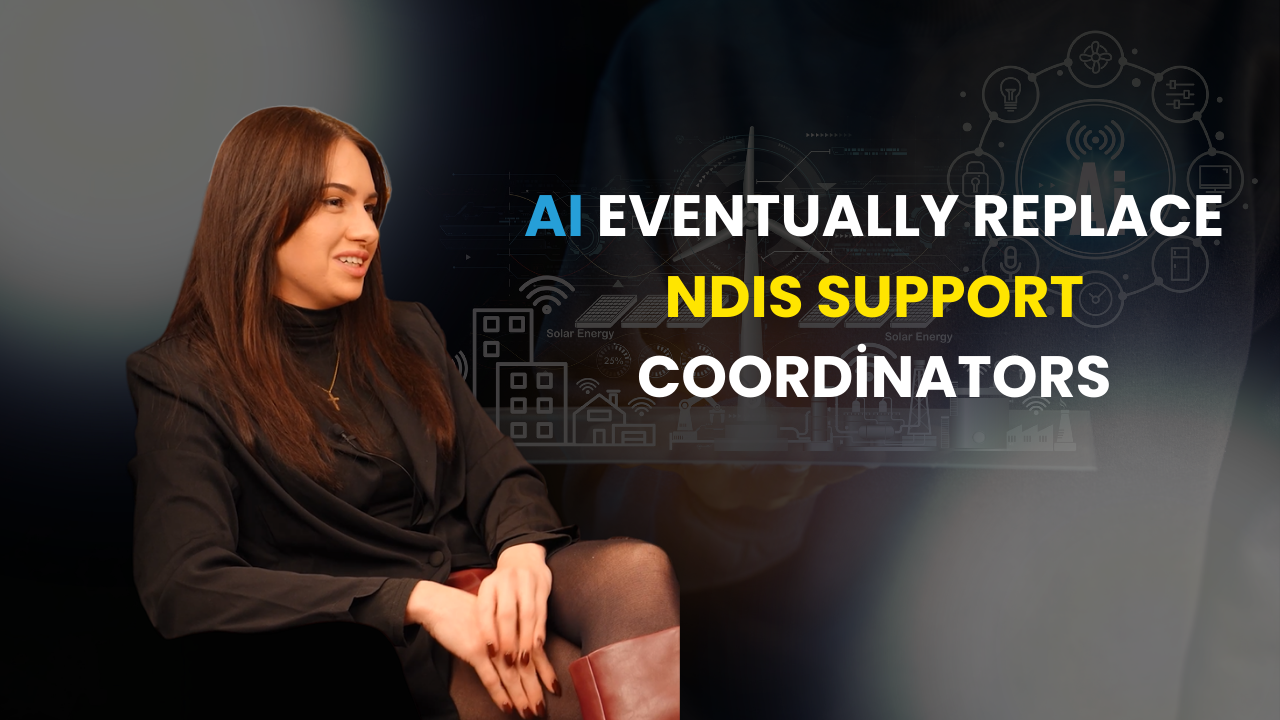
The Human Element: Why AI Cannot Replace Face-to-Face Support
Support Coordination is fundamentally relational.
It involves:
- Building trust with participants and families
- Navigating crisis situations
- Advocating during complex planning meetings
- Interpreting nuance in behaviour and communication
- Managing risk and safeguarding wellbeing
No algorithm can replicate human empathy, emotional intelligence, or the ability to read the room.
While digital tools can support administrative efficiency, they cannot replace the lived, human connection at the heart of disability support.
People still want and deserve a person sitting across from them.
The Rise of AI in Report Writing
However, AI is already influencing the sector.
Platforms such as OpenAI tools (including ChatGPT) are increasingly being used to:
- Structure Functional Capacity Assessments
- Improve clarity of language
- Align reports more closely with funding criteria
- Draft case notes more efficiently
Many professionals can now identify when a report has been AI-assisted. Yet interestingly, these reports are often returning with appropriately funded plans.
Why?
Because AI can:
- Use precise language
- Frame recommendations clearly
- Mirror the terminology planners expect
- Reduce ambiguity
In some cases, AI does not weaken reports it strengthens them.
Watch the complete Podcast on YouTube.
The Ethical Question: Transparency and Billing
This raises an important issue.
If a Functional Capacity Assessment is billed at approximately 10 hours, but AI significantly reduces drafting time, we must ask:
- Are participants receiving full value?
- Is billing reflective of clinician time and expertise?
- Should AI-assisted drafting alter pricing models?
The concern is not that AI is inherently wrong. It is whether we maintain transparency, accountability, and fairness in how services are delivered and charged.
The disability sector must lead this conversation proactively rather than reactively.
Privacy, Safeguards and Grey Areas
Another legitimate concern is data protection.
NDIS reports often contain:
- Medical histories
- Behavioural assessments
- Trauma disclosures
- Sensitive family information
Without clear sector-wide guidance, professionals risk operating in uncertain territory when using AI platforms. Questions remain around:
- Data storage
- Anonymisation
- Professional indemnity coverage
- Compliance with safeguarding standards
Technology must enhance protection not compromise it.
A Unified NDIS Digital Portal: A Future Possibility?
Perhaps the most compelling idea is systemic reform.
Imagine an integrated NDIS portal where:
- All providers contribute case notes in real time
- Therapists upload structured reports
- Support workers log verified shift notes
- Progress against goals is transparently tracked
Such a system could:
- Increase accountability
- Reduce duplication
- Minimise “creative reporting”
- Improve audit integrity
- Provide clearer participant outcomes
When all providers operate within one shared framework, no one can hide inadequate documentation or questionable practices.
However, implementation would require:
- Strong cybersecurity safeguards
- Clear governance
- Careful ethical oversight
- Consultation with frontline professionals
Technology should support, not overwhelm, the human core of disability services.
AI as an Assistant Not a Replacement
Ultimately, AI is best positioned as a co-pilot, not a pilot.
It can:
- Reduce administrative burden
- Improve report quality
- Support data analysis
- Enhance efficiency
But it cannot replace:
- Advocacy
- Empathy
- Lived experience insight
- Ethical judgement
Support Coordination is not merely transactional it is relational and protective.
And that cannot be automated.
Moving Forward with Courage and Leadership
As women working across disability services, policy, advocacy and community building, we are often at the forefront of navigating these changes balancing innovation with integrity.
The future of the NDIS will depend not just on technology, but on principled leadership.
And that leadership deserves recognition.
Join Us at Our Upcoming Events
Join us at the WA International Women’s Day 2026 – Leaders Breakfast Event. We honour remarkable women. They shaped Western Australia’s history. For instance, they led through activism and caregiving. Moreover, they built communities.
Join Us at the National Child & Family Safety Leadership Summit 2026 will bring together leaders, practitioners, policymakers, researchers and community voices from across the country. This important gathering creates space for meaningful dialogue on the most pressing issues impacting children and families including domestic violence, coercive control, child protection, and community wellbeing.
We look forward to welcoming you to this moving and inspiring celebration of women’s achievements and contributions. Don’t miss this opportunity to hear from one of WA’s most influential scientific leaders, Miquela Riley.